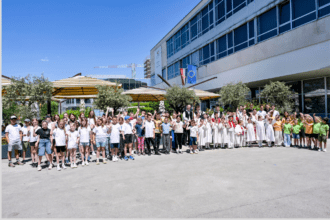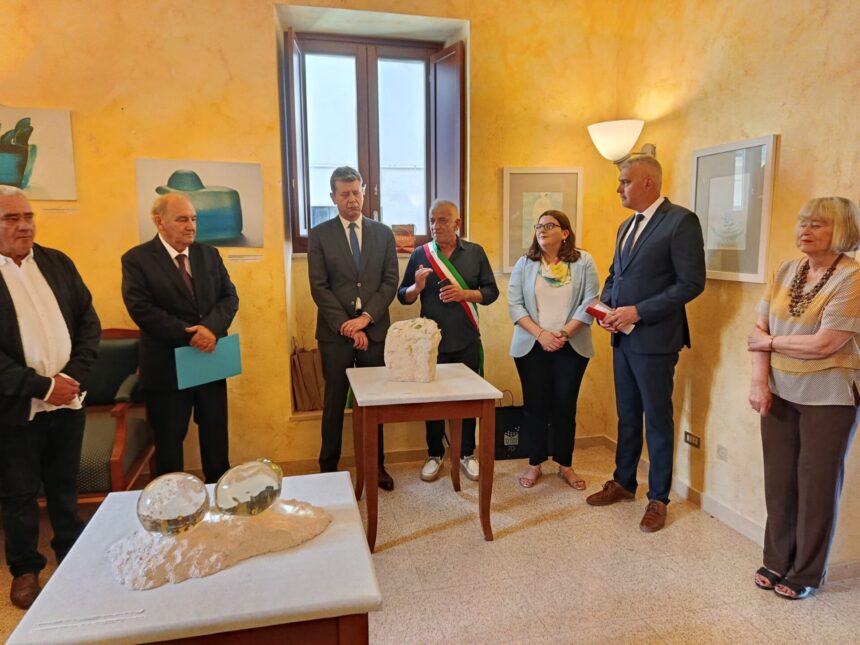
The exhibition of academic sculptor Kuzma Kovačić in Mundimitar gathered representatives of Croatia and Molise Croats, once again confirming the unbreakable ties between the homeland and its historical diaspora
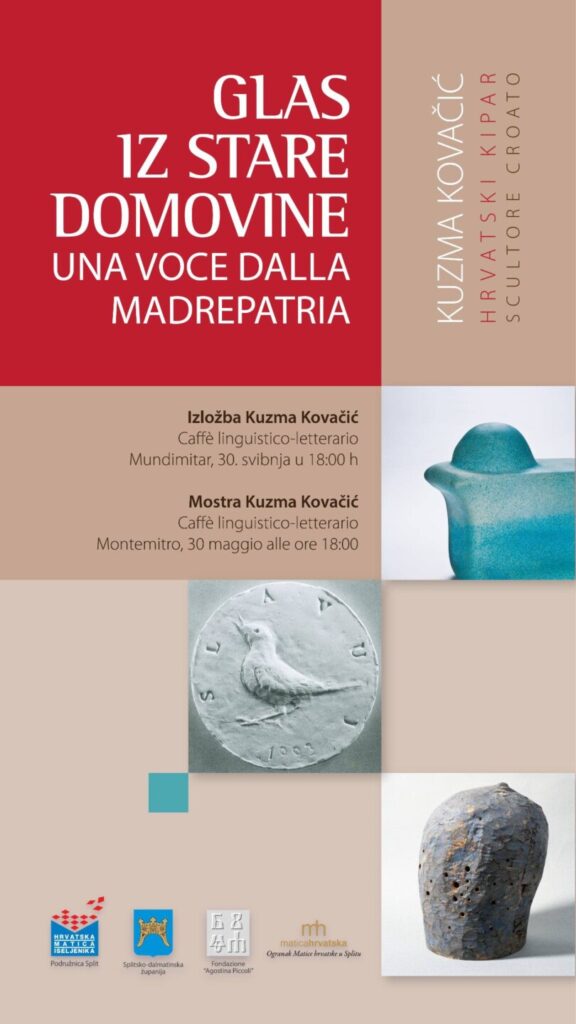
In Mundimitar (Montemitro), one of the three places in the Italian province of Molise where the Croatian language and identity are still preserved, the exhibition of academic sculptor Kuzma Kovačić “Glas iz stare domovine / Una voce dalla madrepatria” (Voice from the Homeland) was officially opened. The exhibition, organized in cooperation with the Croatian Heritage Foundation – Split Branch and the “Agostina Piccoli” Foundation, was held on Statehood Day of the Republic of Croatia and on the traditional “nazanji petak” (last Friday), a day dedicated by the Croats of Molise to their patron saint, St. Lucy.
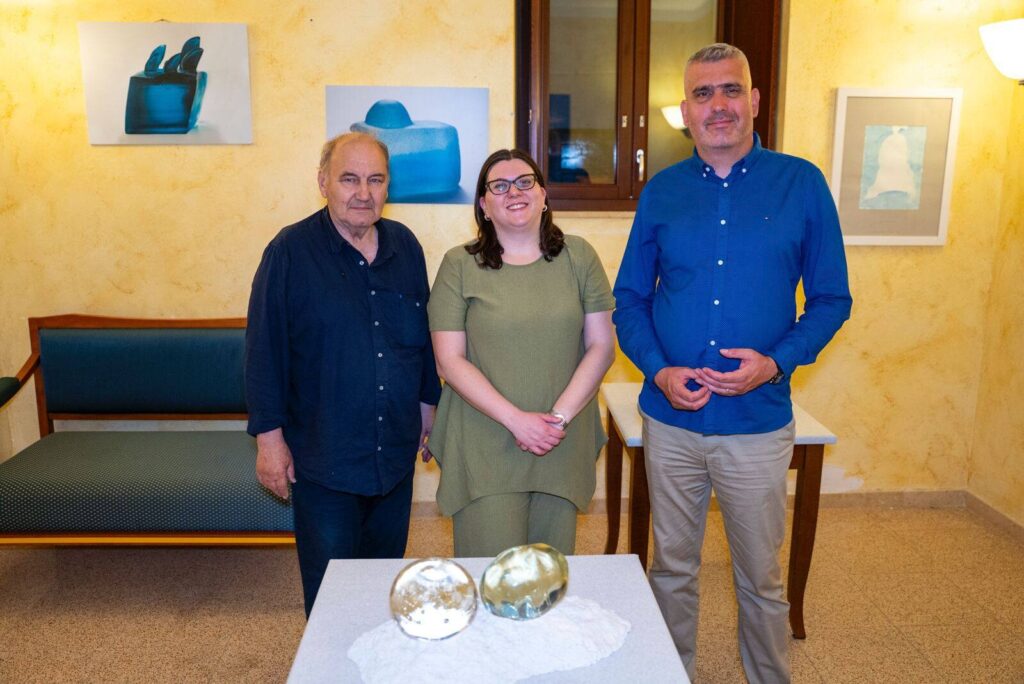
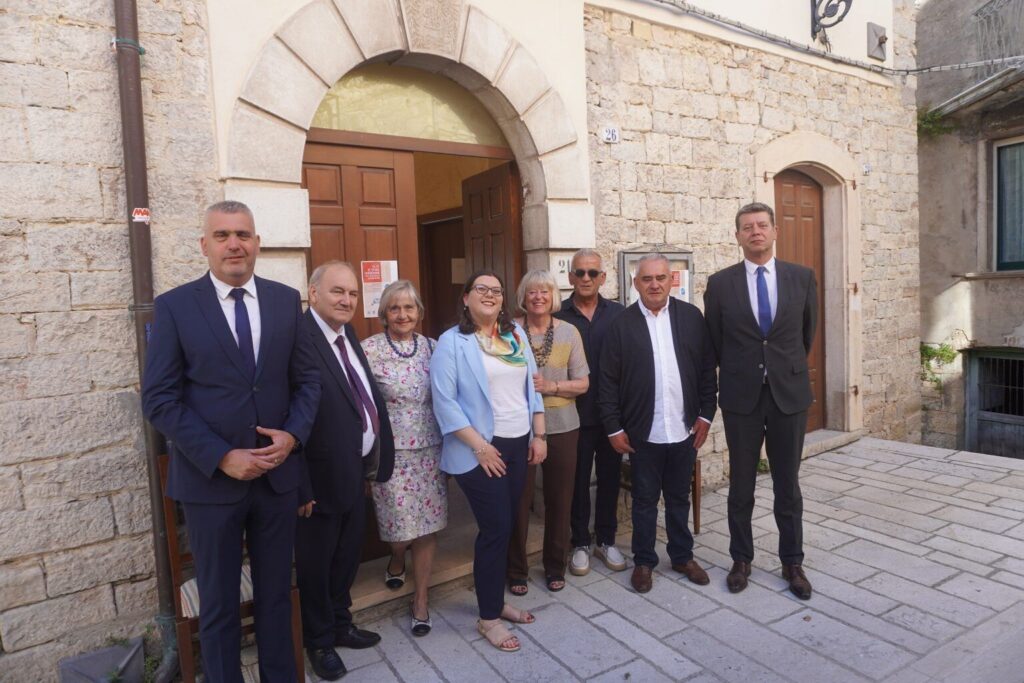
The ceremony in the Caffè linguistico-letterario venue was attended by the Ambassador of the Republic of Croatia in the Republic of Italy Jasen Mesić, Mayor of the Municipality of Mundimitar Sergio Sammartino, President of the “Agostina Piccoli” Foundation Francesca Sammartino, Head of the Croatian Heritage Foundation – Split Branch Office Ante Ćaleta, exhibition curator Dr. Milan Bešlić, Secretary of the Foundation Vesna Ljubić Sammartino, representatives of local authorities, numerous members of the Molise-Croatian community and friends of Croatian culture from Molise and beyond.
Welcoming the crowd, Mayor Sergio Sammartino noted that it is a great honor for a small community like Mundimitar to host an artist whose creativity has defined contemporary Croatian art. He thanked the organizers, the artist and the guests, and especially Ambassador Mesić, who honored the celebration of the Statehood Day of the Republic of Croatia with his presence.
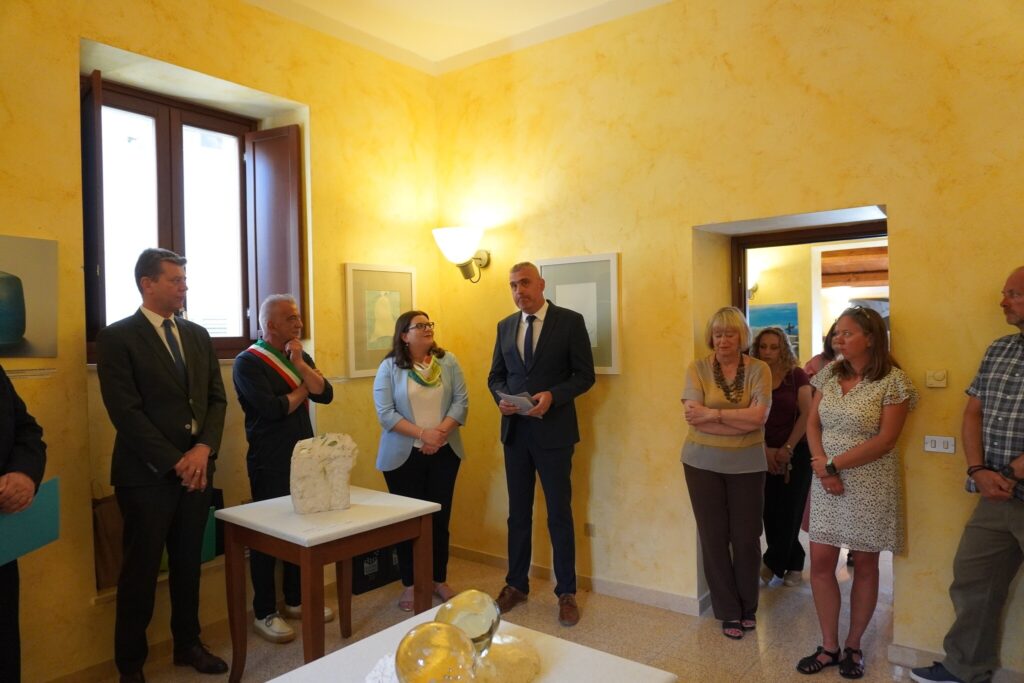
In his address, Ambassador Jasen Mesić emphasized that such cultural initiatives offer a valuable opportunity to connect the Croatian homeland with its historical communities beyond Croatia’s borders. Congratulating the participants on the Statehood Day, he pointed out that the works of Kuzma Kovačić testify to the historical, cultural and spiritual path of the Croatian people and take visitors from the artist’s early creative beginnings to monumental achievements of national and international significance. He particularly emphasized that culture and art remain one of the most important bridges connecting Croatia with its diaspora and autochthonous Croatian communities.
President of the “Agostina Piccoli” Foundation Francesca Sammartino also welcomed the participants in the “na-našo” language, recalling the importance of cultural projects that strengthen the ties between the Molise Croats and their ancestral homeland. She pointed out that for a small and fragile community like theirs, every “voice from the old homeland” is invaluable, and she described the arrival of Kuzma Kovačić as one of the most significant cultural events of the last decades. She also emphasized that art transcends linguistic boundaries and builds permanent bridges between the two shores of the Adriatic.
Speaking about the importance of preserving the language and cultural identity, the head of the Croatian Heritage Foundation – Split Branch Office, Ante Ćaleta, recalled Petar Preradović’s words that language is the guardian of national identity. Thanking the hosts for their hospitality, he highlighted that the Croats of Molise have been witnessing the strength of belonging to the Croatian cultural space for more than five centuries. Quoting Tin Ujević and his “small homelands of the heart”, he said that the hills of Molise also preserve a part of Croatian history – a place where Croats put down roots, preserved their identity and remained permanently connected with their homeland. He expressed special gratitude to the “Agostina Piccoli” Foundation and to all individuals committed to the preservation of Molise-Croatian heritage.
Curator of the exhibition, Dr. Milan Bešlić, presented Kovačić as a “contemporary classic of Croatian art”, underscoring that his works uniquely combine Mediterranean heritage, Christian spirituality, and contemporary artistic expression. He particularly referred to the sculptures The Passion of St. Lucy and The Altar of the Croatian Homeland, recognizing in them the author’s strong signature and a deep connection to Croatian cultural identity.
The artist himself addressed the audience with emotional words. Kuzma Kovačić said that, for him, the arrival among the Croats of Molise was the realization of a long-standing desire born in childhood, when he first read about this community in his grandmother’s calendar. He described the exhibition as a collection of “poetic sculptural confessions”, and the meeting with the Molise Croats as a special moment that connects the past and the present, the two shores of the Adriatic and the common Christian tradition.
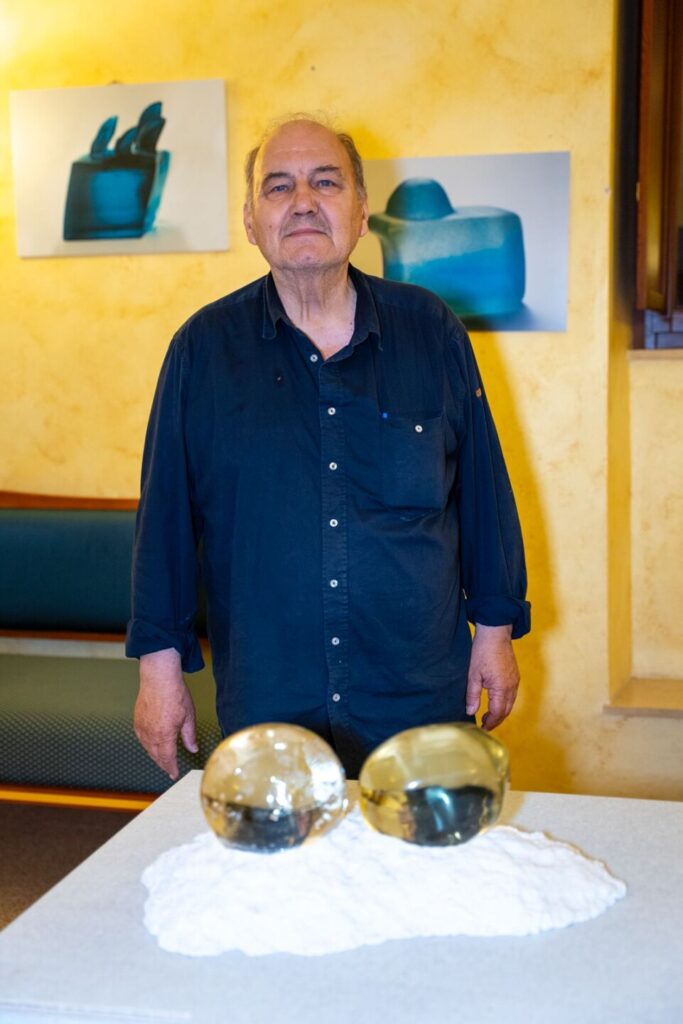
Born in 1952 in Hvar, Kuzma Kovačić is one of the most prominent contemporary Croatian sculptors, a full professor of sculpture, a member of the Croatian Academy of Sciences and Arts and the author of numerous public monuments and sacral works.
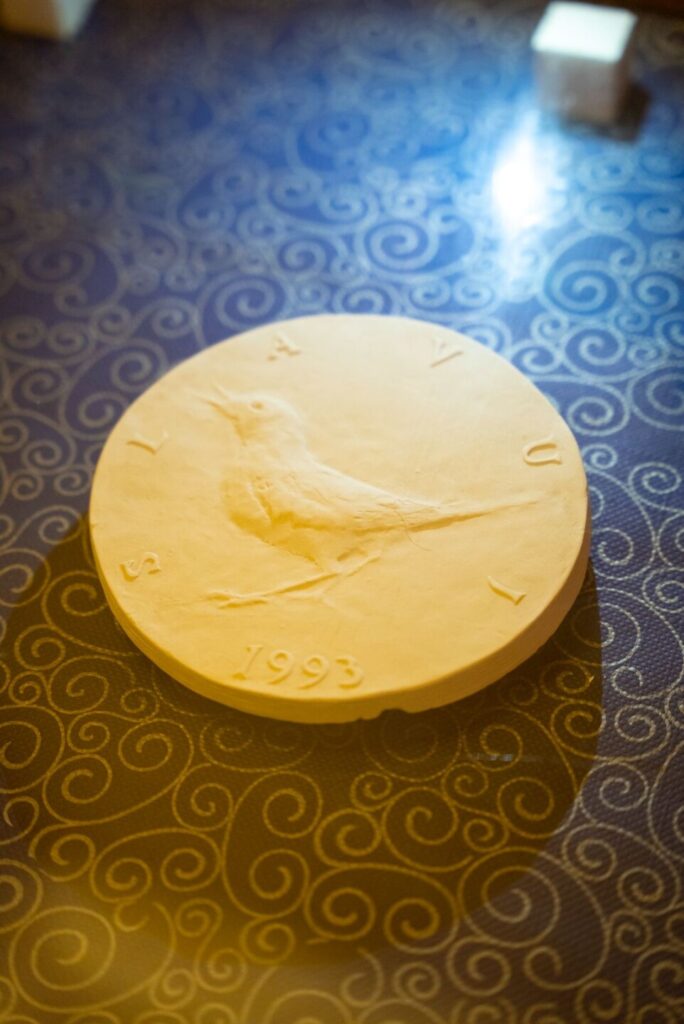
Among his most famous works is the artistic design of the Croatian kuna and lipa.
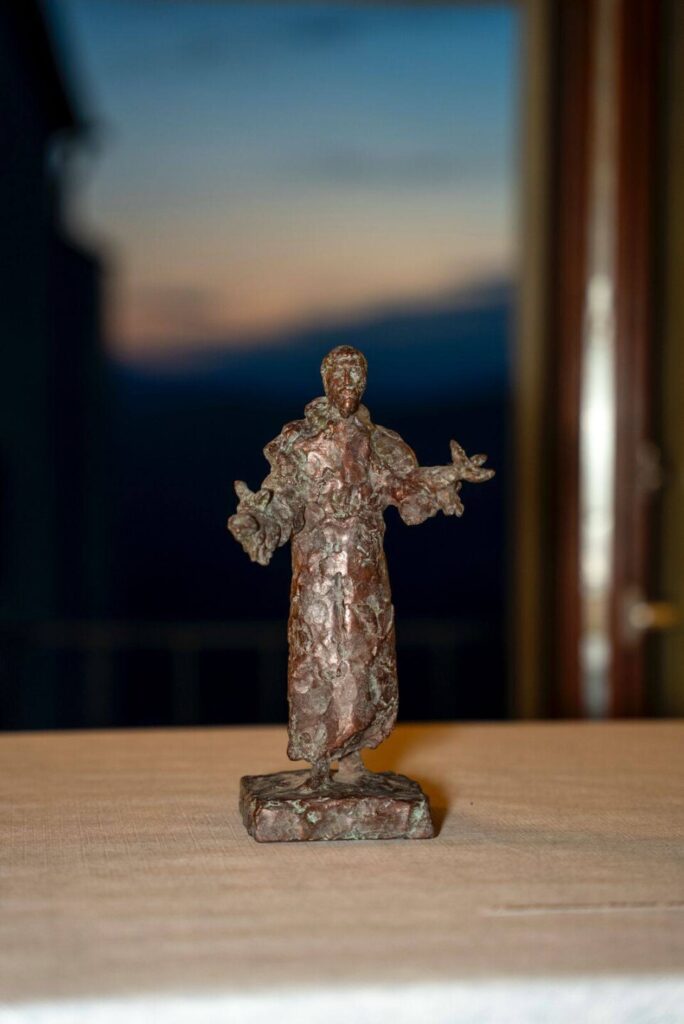
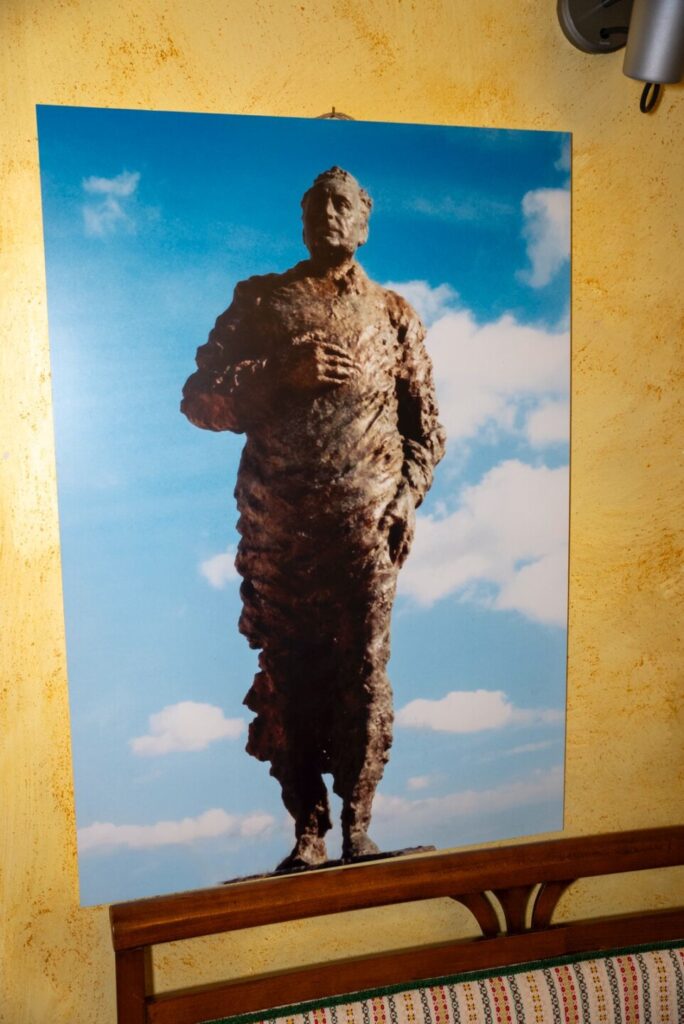
The exhibition features a selection of sculptures, watercolors, and photographs of the artist’s most famous works. Visitors can see works such as The Passion of St. Lucy, Model 1 kuna and St. Francis of Assisi, as well as watercolors inspired by Dante’s Divine Comedy. Photographs of monumental works such as the Portal of the Cathedral in Hvar, the Altar of the Croatian Homeland in Zagreb, and the monument to Pope John Paul II and the first Croatian President Franjo Tuđman were also presented.
The exhibition’s special symbolism lies in the connection between Kovačić’s creativity and St. Lucy, the patron saint of Mundimitar, who is traditionally celebrated by the Croats of Molise on “nazanji petak” (last Friday). According to tradition, their ancestors arrived on the shores of Molise more than five centuries ago with the statue of St. Lucy, carrying with them the faith, language and identity that are preserved to this day. In this context, the exhibition “Voice from the Old Homeland” has become much more than an artistic event – it is a symbol of encounter, unity, and lasting ties between the Croatian homeland and its historical diaspora in Molise.
Text: CHF / Photo: Agostina Piccoli Foundation/ CHF Split