


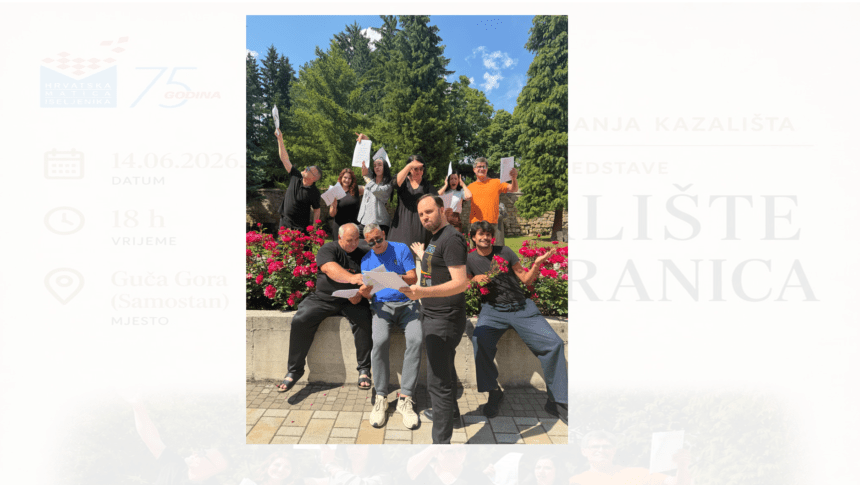
After a pause of several years, the Croatian Heritage Foundation renewed the “Creating Theater” Seminar, which was successfully held in cooperation with the Guča Gora Franciscan Monastery and in partnership with the Vitez City Youth Theater from June 8 to 14, 2026.
Under the guidance of director Ivan Mokrović, the participants went through the entire process of theatrical design over the course of seven days, from the initial acting and speaking exercises to the final public performance, which left a strong impression on the audience and confirmed the significance of such meetings.
From the beginning, the seminar was designed as a space in which theater is seen not only as an art form, but also as a means of connecting, learning and personal development. Working in small groups, joint rehearsals, exchange of experiences and constant communication among the participants created an atmosphere in which both stage skills and interpersonal trust developed. In theatrical pedagogy, such an approach is of particular importance: acting is not only about uttering the text, but also about reading, responding to the venue, the rhythm of speech, body posture, breathing and listening to on-stage partners. It was these components that gradually became the focus of the seminar in Guča Gora.
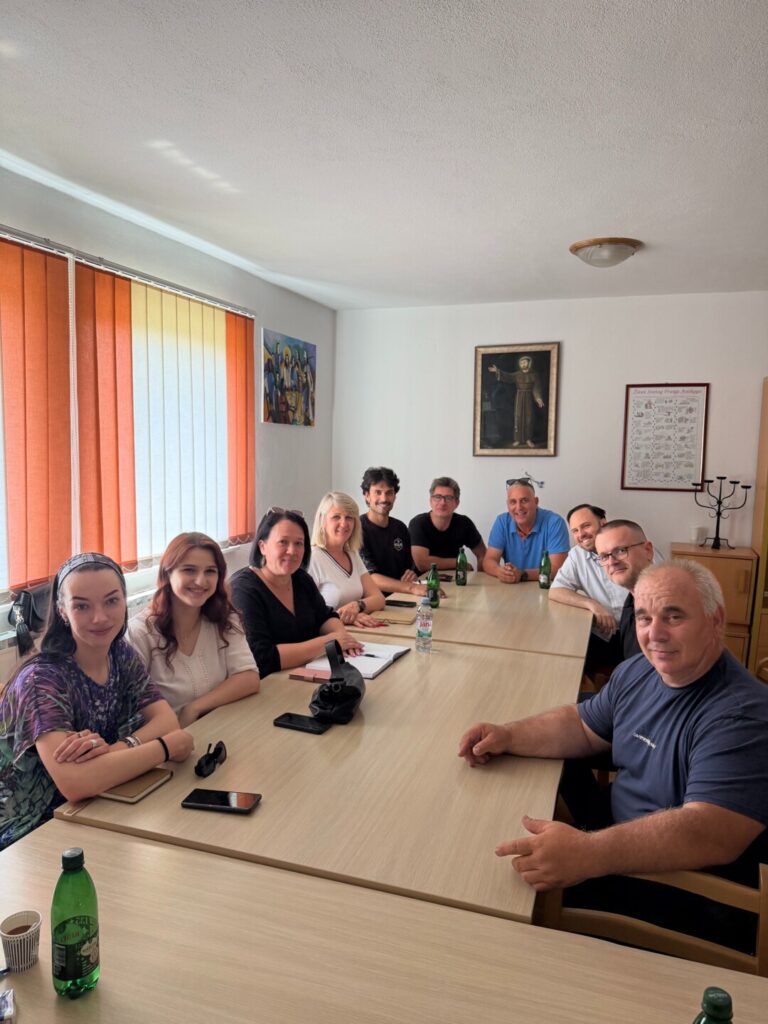
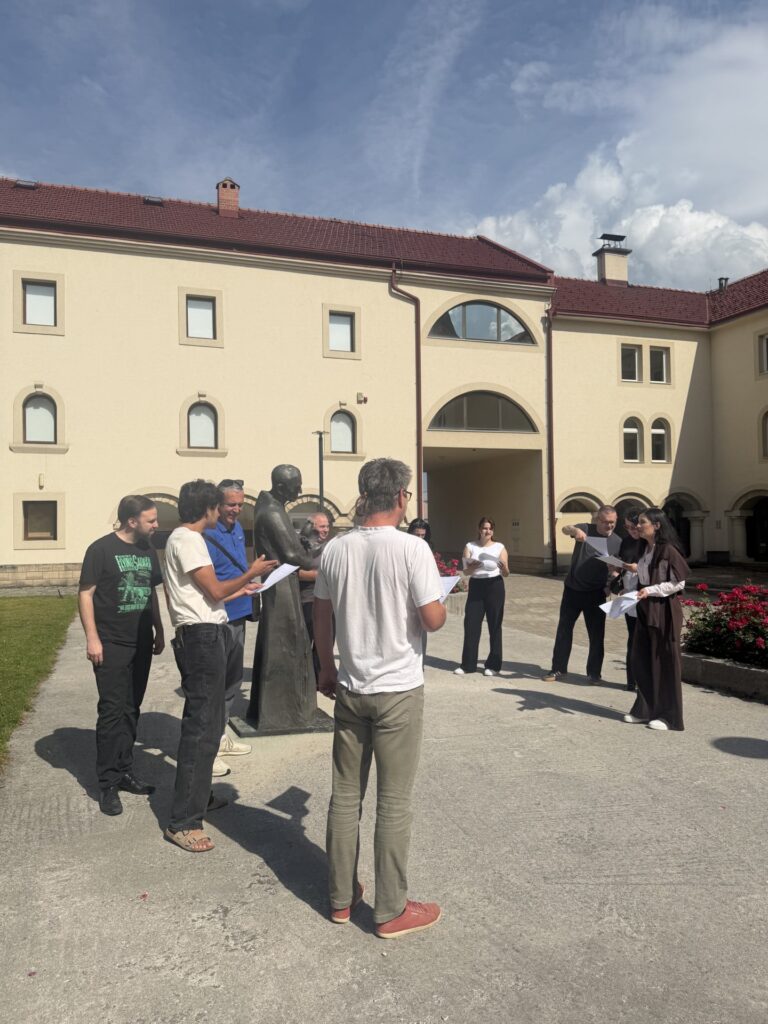
The first day of the seminar was marked by getting to know each other, becoming familiar with the venue, and sparking initial connections among the participants. Even then, it was clear that Guča Gora, with its monastery ambiance, tranquility, peace and natural beauty, was an ideal place to work on theatrical creativity. The homemade food, prepared in the monastery, further contributed to a sense of community and warmth, and the participants quickly relaxed and opened up to working together. Special support from the first moment was provided by the abbot of the monastery, Fr. Davor Petrović, who, in addition to cordial conversation and practical advice, provided additional logistical assistance.
FROM THE FIRST REHEARSALS TO HERITAGE
The seminar workshops entered a more serious phase of work on the second day. The morning and afternoon hours were devoted to intensive rehearsals, articulation exercises, stage movement, and the first performance tasks, while the evening part of the program featured more relaxed content, including a tour of the town of Vitez. In theatrical education, this combination of discipline and relaxation is important because the creative process cannot be sustained in a single tone, and time must be made for both concentrated effort and informal socializing that consolidates group dynamics. In this balance between work and socializing, the basic value of the entire project was confirmed: theater is taught not only through technique but also through attitude towards others, listening, cooperation, and trust-building in the group.
On the third day, the first outlines of the future play were already visible. The workshop leader, director Ivan Mokrović, approached the work seriously, pedagogically, and systematically, combining theoretical and practical elements in the classes. Participants received roles, exchanged opinions and jointly sought the best solutions for stage performance. However, everything remained in a pleasant atmosphere because the seriousness of the work was accompanied by laughter, directness, and the warmth of mutual acquaintance. In the afternoon, some of the participants attended the commemoration of the 33rd anniversary of the killing of eight children from Vitez, with Msgr. Slađan Ćosić, Vicar General of the Archdiocese of Vrhbosna. This moment gave the seminar additional depth and reminded the participants that theater and culture are not separate from life, but are embedded in the reality of the place that receives them.
THE ART OF SPEECH, MOVEMENT AND PLAY
On the fourth day, the sense of responsibility became even more pronounced. The participants learned that their performance would take place before numerous spectators on Sunday, June 14, which further encouraged discipline and active participation. Rehearsals continued in the morning, which was followed by an organized visit to the Franciscan Museum in Guča Gora. Participants had the opportunity to learn about the richness of the monastery’s heritage, historical artifacts, liturgical dishes, archival materials and artistic values that testify to the continuity of the Franciscan presence in the area. Such content further deepened the seminar experience, as the participants could clearly perceive that the theater is not an isolated art form, but part of the wider cultural memory. In technical terms, such a museum and historical context provided the seminar with an additional level of authenticity: the scene is not only a space of performances, but a place of encounter with heritage.
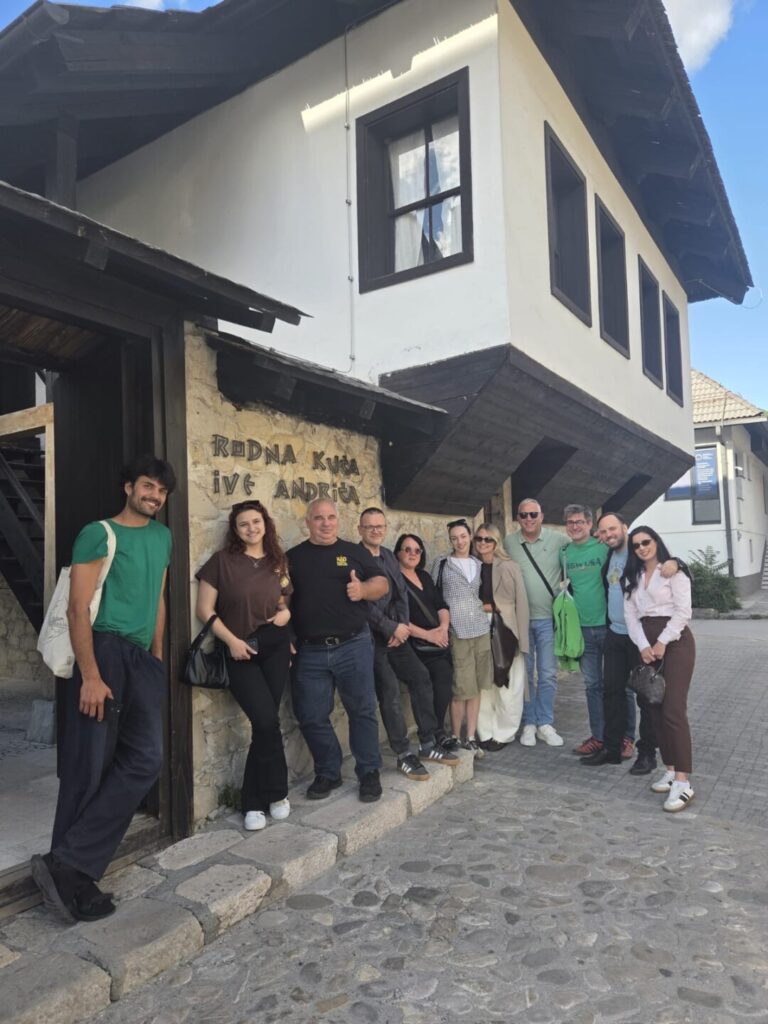
On the fifth day, the program took participants to Travnik, where they visited the Croatian Theater Travnik after the morning rehearsals. There, they enjoyed a lecture by Mr. Ante Bilić, who spoke about theatrical creativity and its role in the local cultural environment. This was followed by a tour of Travnik, including visits to the Memorial Museum and the birthplace of Ivo Andrić, one of the most famous writers from this part of the world. The evening hours were again reserved for socializing in the monastery, where the exchange of impressions and strengthening of friendship among the participants continued.
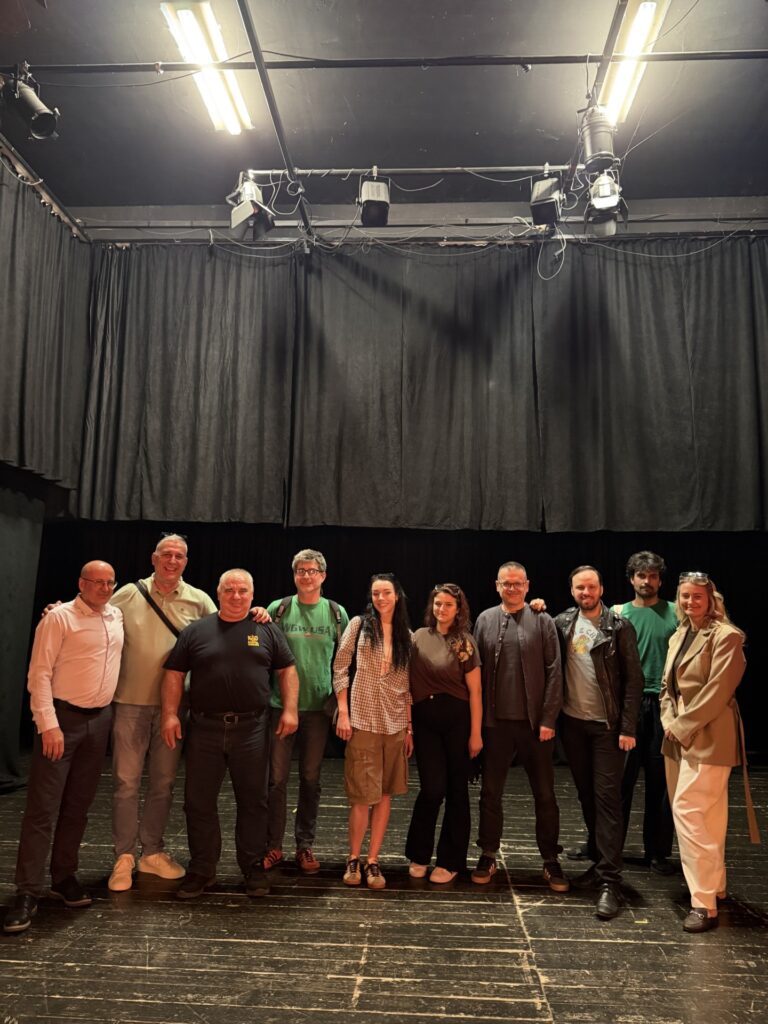
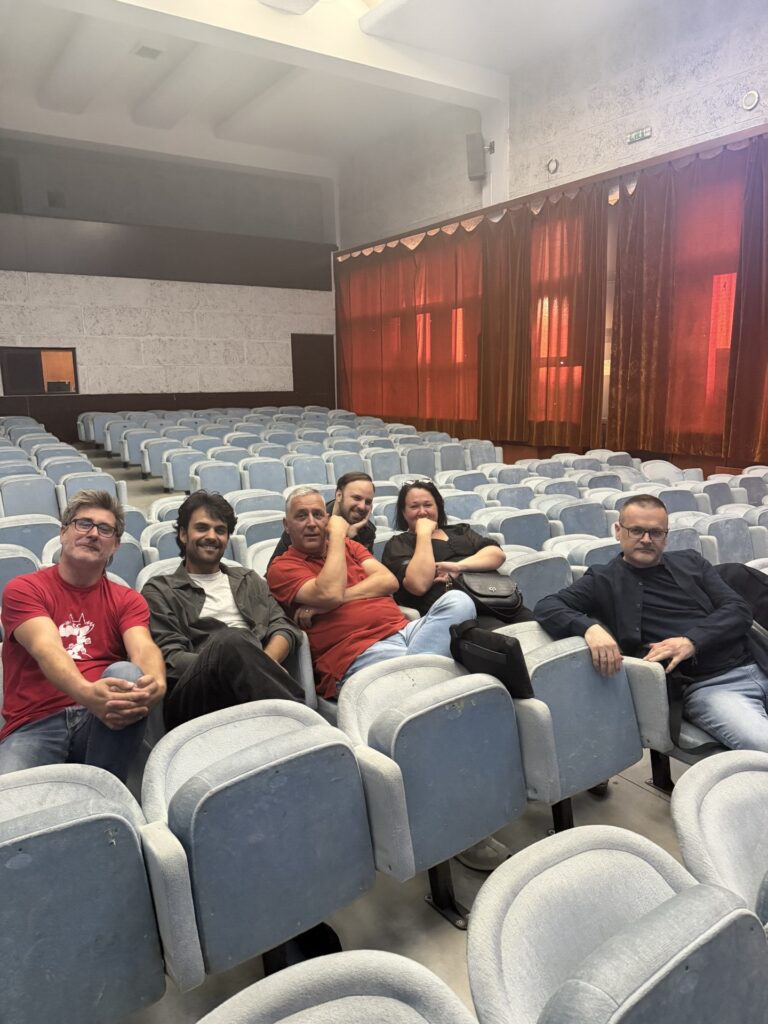
Saturday brought even more intense work. Early in the morning, preparations for the show resumed. In the afternoon, at the invitation of Mr. Ivan Sajević, they visited the Vitez City Youth Theater and enjoyed the play “Dok nas smrt ne rastavi” (Till Death Do Us Part), which further enriched their theater experience and expanded their work experience. The Vitez City Youth Theater was also a partner in organizing the Seminar.
FINAL PERFORMANCE AS THE CROWN OF MUTUAL WORK
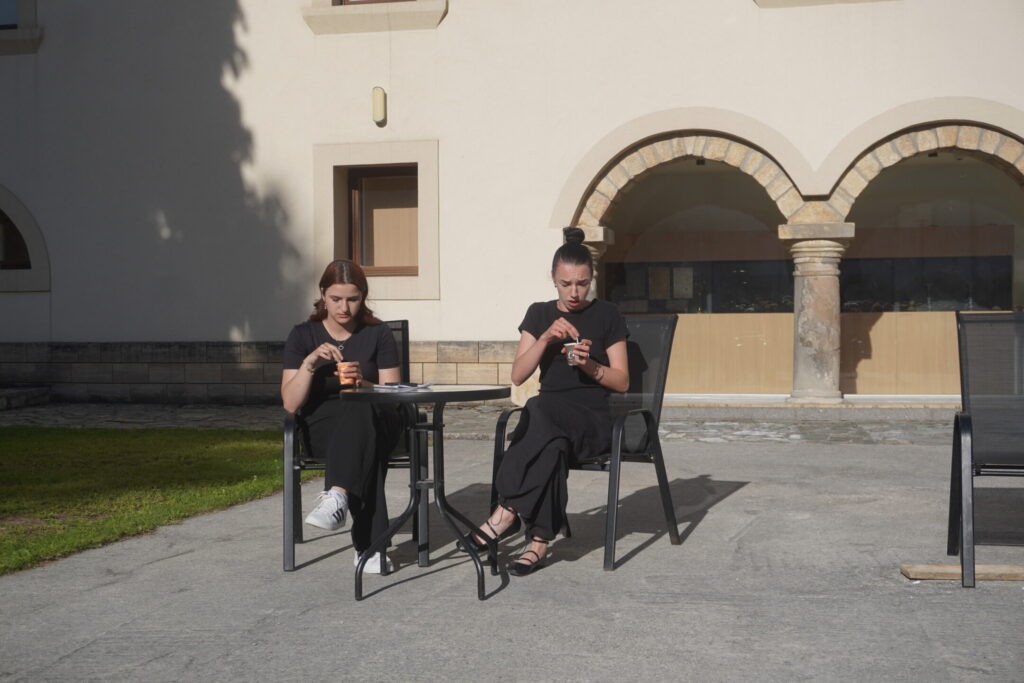
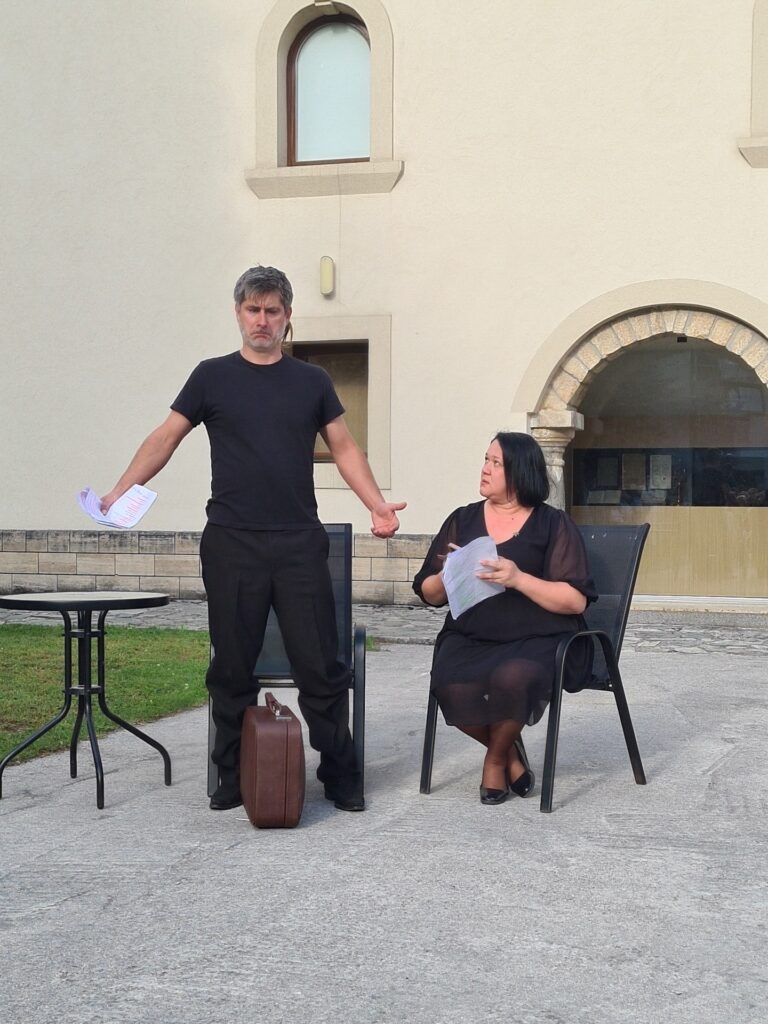
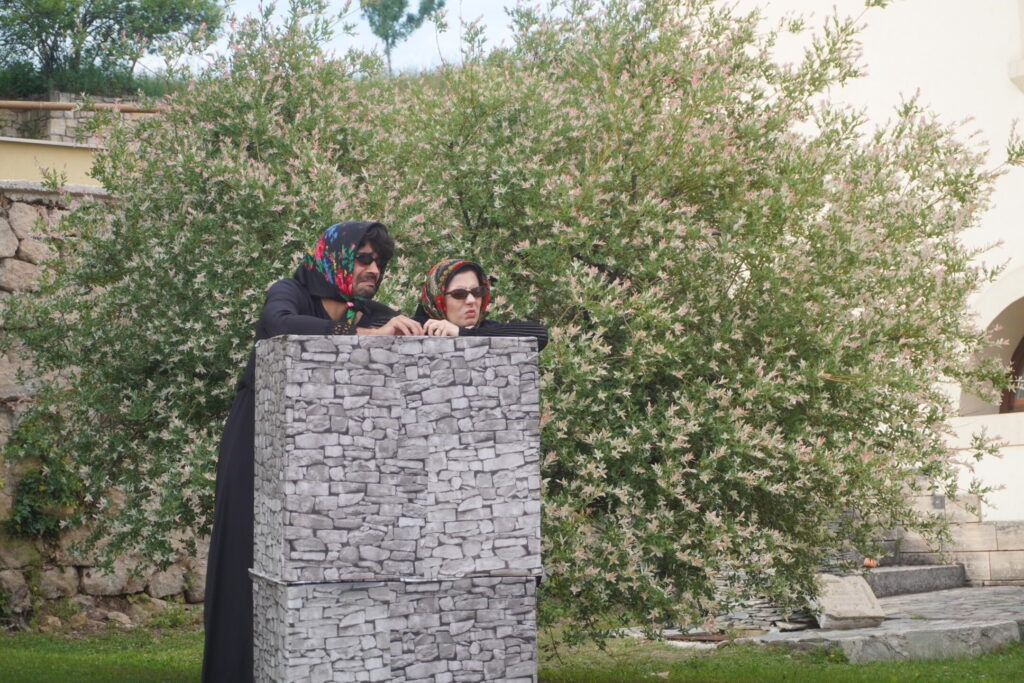
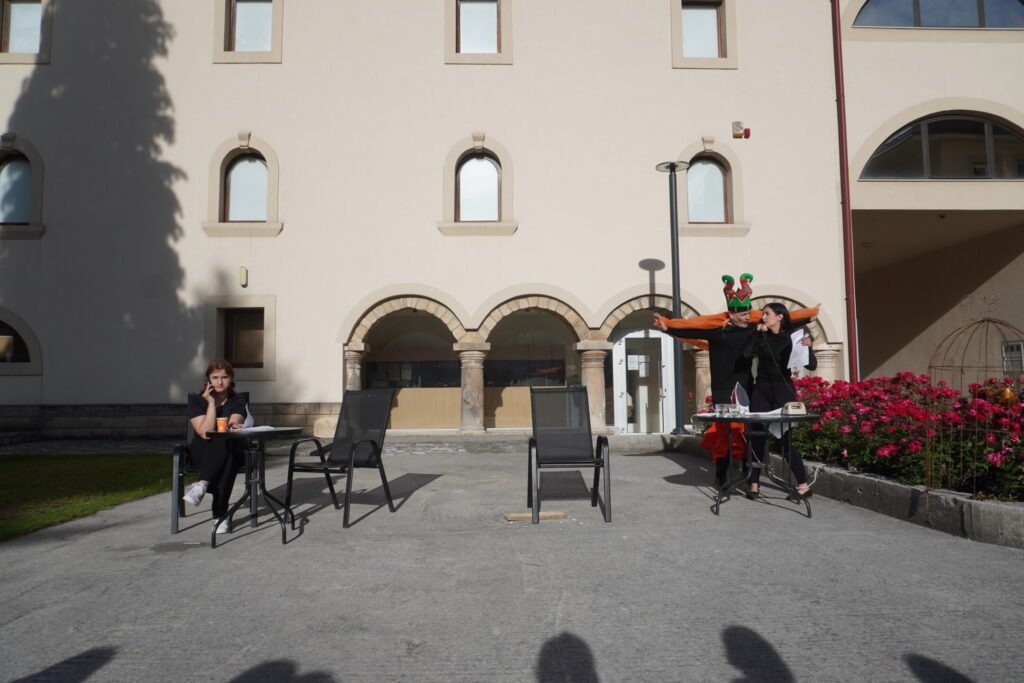
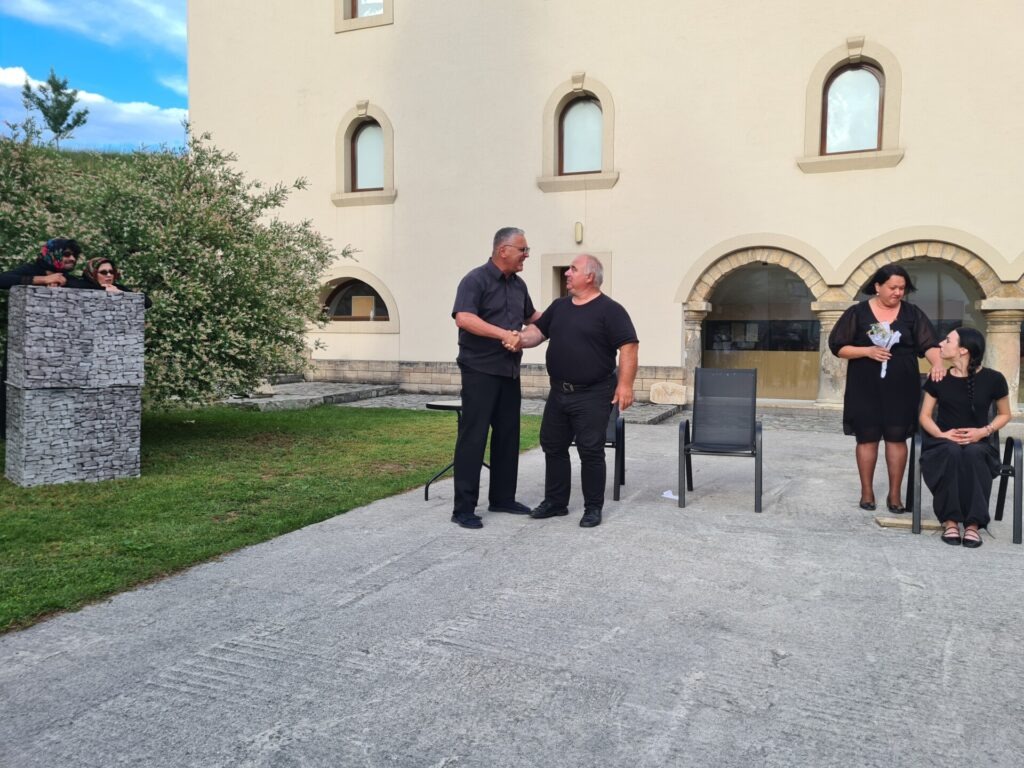
On the last day, Sunday, the entire day was dedicated to final preparations and the performance. The final performance was shaped as a series of stage-related excerpts from contemporary Croatian prose and dramaturgy, so excerpts were derived from the texts of Mate Matišić, specifically from the work “Bljesak zlatnoga zuba” (The Flash of the Golden Tooth), then excerpts from the prose of Dubravka Ugrešić, “Štefica Cvek u raljama života” (Štefica Cvek in the Jaws of Life), and scenes from the text of Nina Mitrović “Komšiluk naglavačke” (Neighborhood Upside Down). It was this dramaturgical diversity that allowed participants to present different acting forms, from the comical and ironic to the introspective and emotional, and enabled the audience to recognize contemporary Croatian theatrical expression across several of its layers. Such a selection of materials was not accidental: they are authors belonging to different poetics, but they are connected by a strong sense of language, character and social context, which gave the workshop participants a solid basis for stage exploration. The performance was followed by speeches, expressions of gratitude and short addresses. The large audience rewarded the performance with applause and laughter. This moment confirmed the success of their efforts and showed that the seminar achieved its goal: to create a play, but also to connect people.
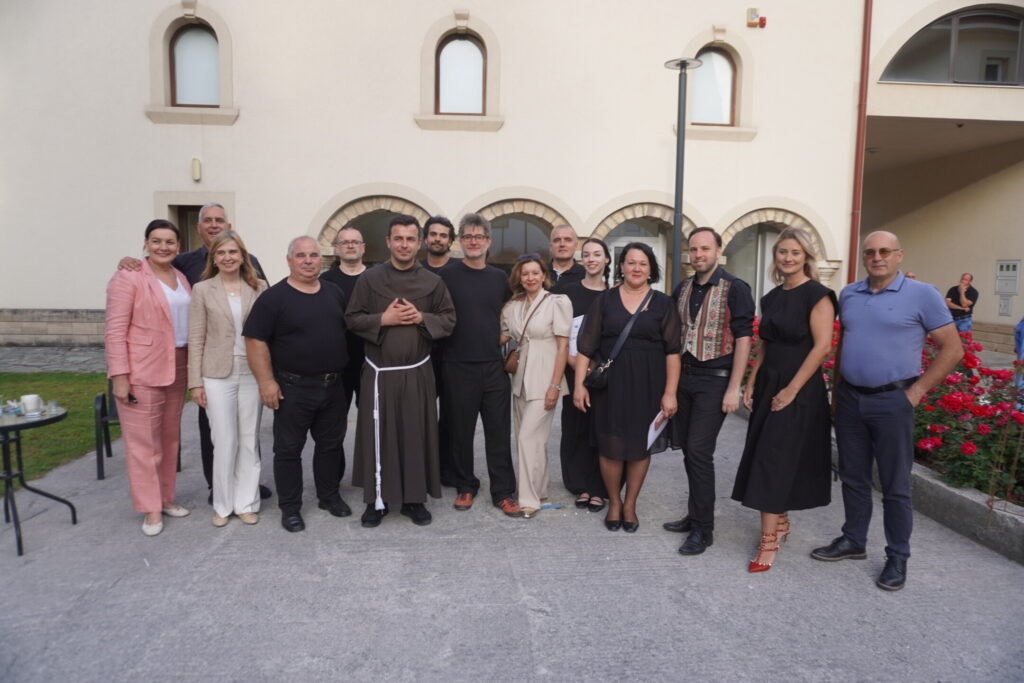
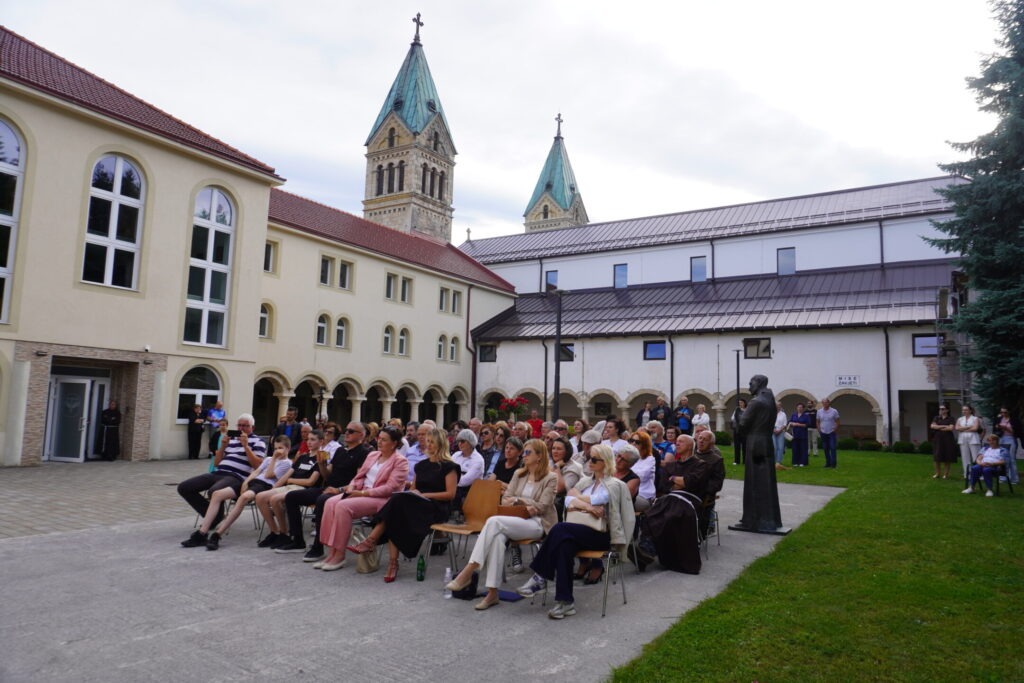
After the performance, all the participants stayed to socialize, exchanging impressions of a shared experience that, as it seemed, would outlive the seminar itself. This is where the value of such projects lies: they are not only art workshops but also encounters among people, languages, experiences, and identities. Thanks to this seminar, Guča Gora has again demonstrated how a monastery venue can become a place of creation, learning and sharing.
The “Creating Theater” seminar in Guča Gora, led by Danijela Primorac on behalf of the Croatian Heritage Foundation, was successfully concluded in an atmosphere of work, friendship and gratitude, with one of the participants writing to the Croatian Heritage Foundation in her testimony: “It was a project that built a theatrical piece, from the initial introduction to the final performance, but also created valuable human connections. With the hospitality of Fr. Davor and the pedagogical guidance of Ivan Mokrović, as well as the dedication of all participants, this seminar confirmed that theater emerges wherever there is community, trust and the will to build something lasting from words, movements and encounters.”
Text: Danijela Primorac / Photo: CHF


