


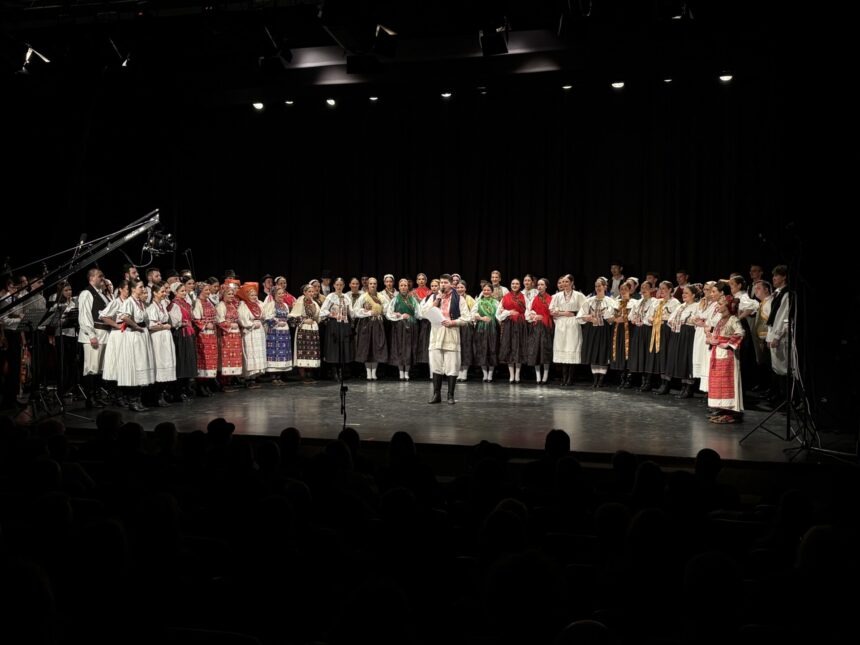
As many as 127 participants enjoyed learning, socializing and preserving Croatian cultural heritage over ten days, demonstrating what they learned at a fantastic final concert at the Refinery Hall in Sisak.
The 32nd Winter School of Croatian Folklore, organized by the Croatian Heritage Foundation, was held from January 3 to 12, 2026. More than 127 participants, who arrived this year from Argentina, the USA, Switzerland, Germany, Austria, Serbia, Bosnia and Herzegovina and Croatia, worked hard over several days and learned under the guidance of prominent folklorists, ethnochoreologists and music pedagogues.
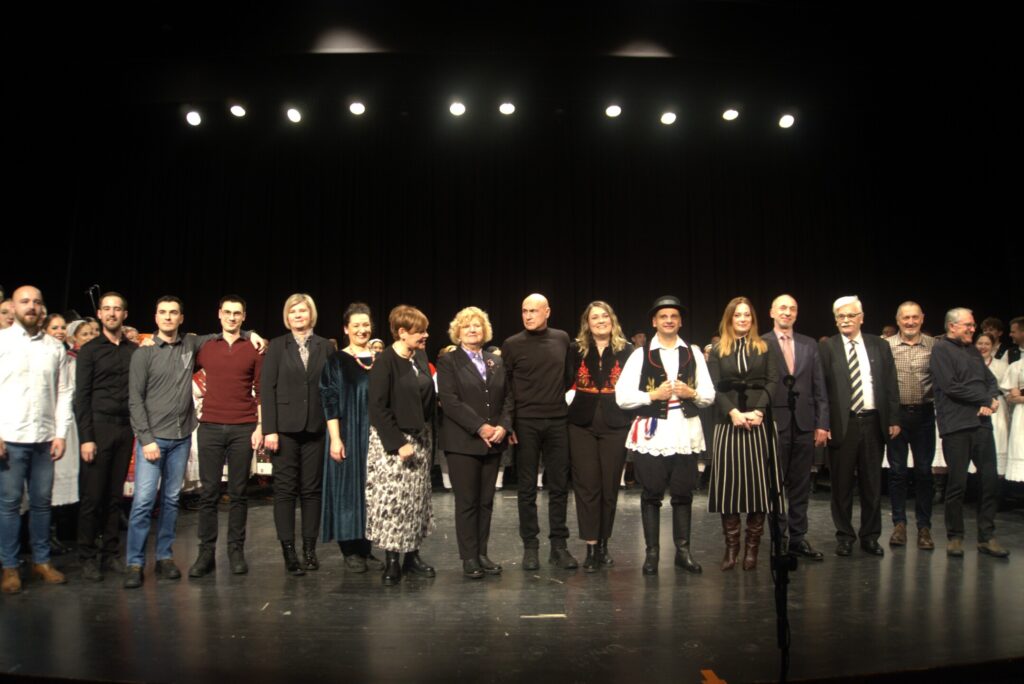
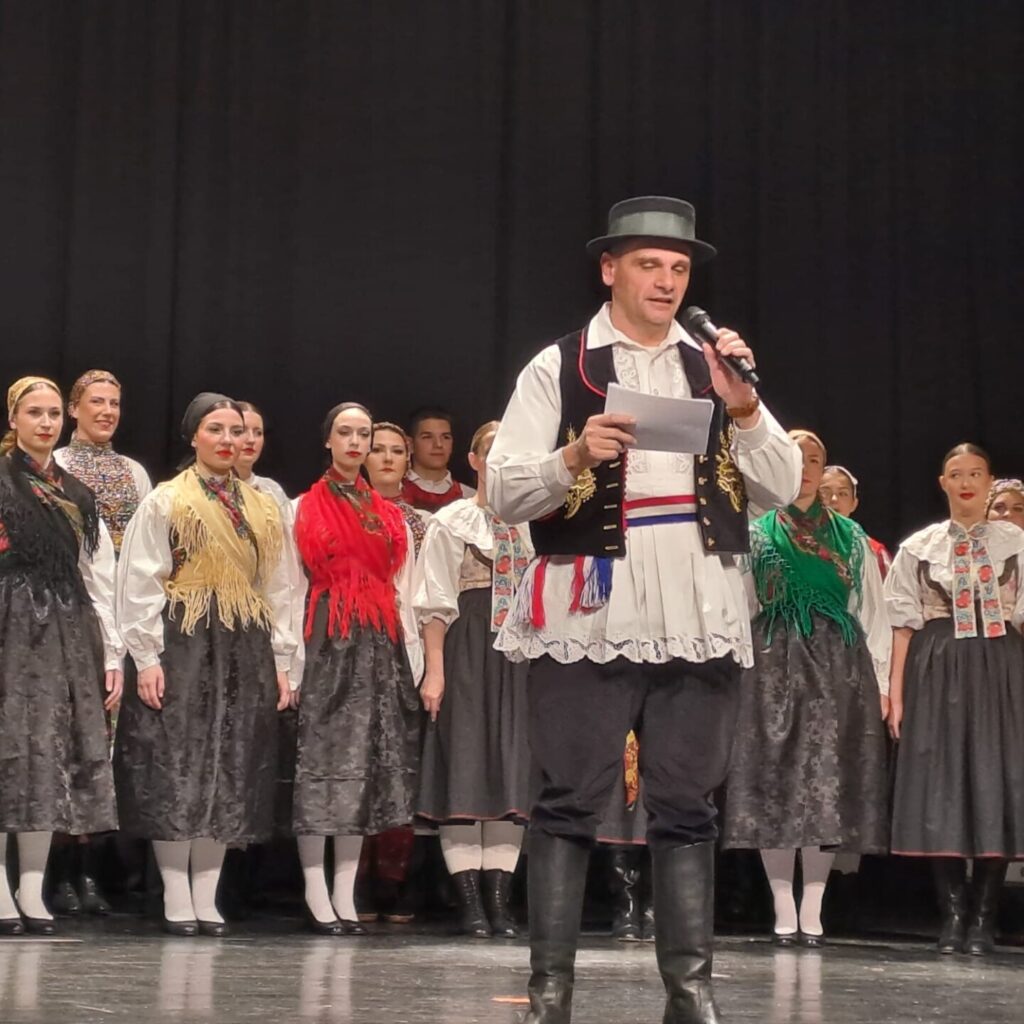
The crown of this program was once again the Final Concert at the Refinery Hall in Sisak, which, on January 12, 2026, gathered not only traditional culture enthusiasts, but also distinguished guests such as Milan Kovač, President of the Management Board of the Croatian Heritage Foundation, Dario Magdić, Deputy State Secretary of the Central State Office for Croats Abroad, Željka Josić, State Secretary at the Ministry of Demography and Immigration, Ivanka Roksandić, Envoy of the Sisak-Moslavina County Mayor Ivan Celjko, Alenka Ljubešić, Envoy of the Mayor of the City of Sisak Domagoj Orlić, and Iva Mihelić, Director of the House of Culture in Sisak. On behalf of the organizers, the participants were welcomed by the Director of the Croatian Heritage Foundation, Zdeslav Milas, M.Sc., who himself arrived at the ceremony dressed in a folklore costume.
“The School of Folklore is a project that has been taking place for fifty years, and for more than thirty, it has been organized by the CHF. During this time, it has become a permanent institution of knowledge, encounter and heritage transfer – a place where not only steps and melodies are learned, but the awareness of who we are and where we come from is shaped. I would like to thank the head of the School of Folklore Andrija Ivančan, who is also the head of the dance program, the head of the tamburitza program Tibor Bün, as well as the head of the traditional instruments’ program Vjekoslav Martinić. We are proud of our Head of the Department for Culture Lucija Starčević for her strong commitment to coordinating folklore and other cultural projects. Thank you to all the lecturers, associates and organizers who, through their dedicated work, enabled this long-standing program to last, grow and remain recognizable. And a special tribute must go to you – the participants of the School of Folklore. You are the bearers of a heritage that is not kept in a showcase, but lives on stage, in the community and in the heart. You demonstrate that folklore is not the past, but a lasting value of Croatian identity – in the homeland and beyond,” said Director Milas in his speech.
On behalf of the Central State Office for Croats Abroad, Dario Magdić addressed those gathered.
“In many communities of Croats around the world, it was these values that you learned, studied and practiced over these ten days in Sisak that were the basis for preserving the Croatian identity. Some Croats outside the Republic of Croatia may not even speak the language and may not be familiar with other areas of our culture, but for many, traditional music and dance are the most important link to Croatian identity. That is why these Schools are extremely important, because they combine expertise, knowledge and education, as well as introduce cultural elements, knowledge of music, but also entertainment. A large number of students coming from all over the world testifies to how important and valuable this project is,” said, among other things, the Deputy State Secretary of the Central State Office for Croats Abroad.
This year’s Winter School of Croatian Folklore was dedicated to dances, costumes and instruments of the Alpine region, and included the rich and diverse tradition of Zagorje, Karlovačko Pokuplje, Jaskansko prigorje and Polje, Istria, Burgenland Croats, Samobor, Zaprešić and Vrapče regions, Zagreb Prigorje and Polje, Sesvetsko, Zelinsko and Vrbovečko prigorje and Polje, as well as Međimurje and Podravina.
This time, once again, the main expert and program head of the School was Prof. Andrija Ivančan, also the head of the School’s dance program, which gathers the most participants each year. This edition of the Winter School was also special because Prof. Ivančan marks 25 years of leading the School of Croatian Folklore this year.
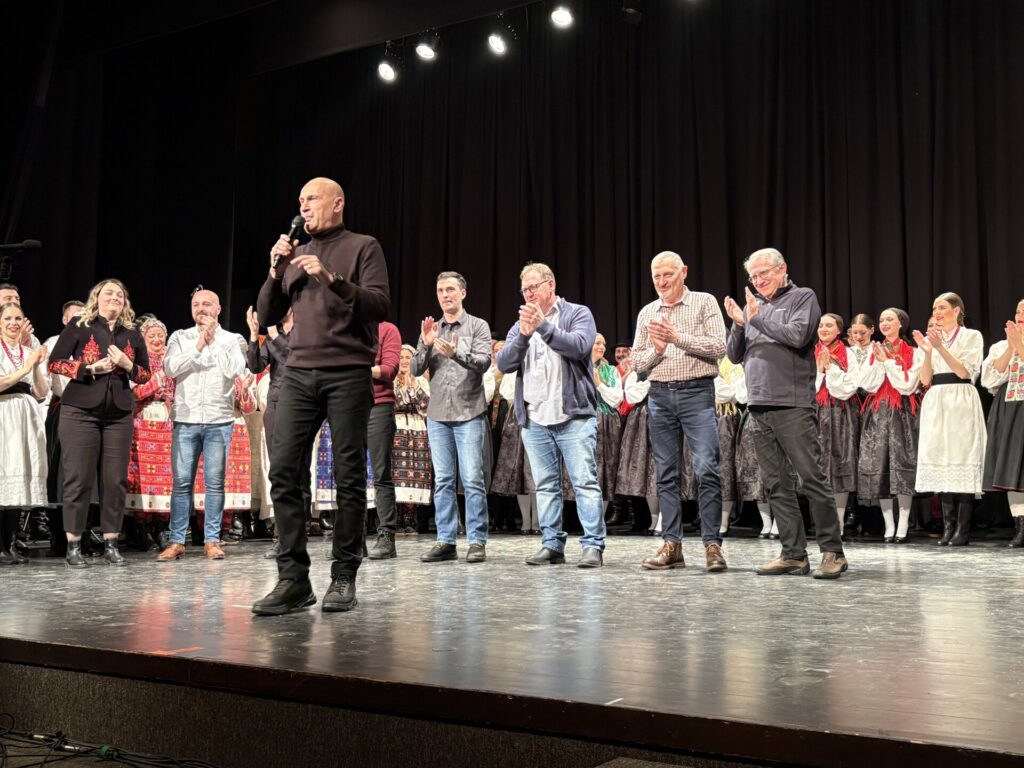
“We are particularly honored to recognize a man who has been shaping, preserving and passing on Croatian traditional heritage for 25 years with his knowledge, passion and tireless work. Andrija Ivančan, program leader of the School of Croatian Folklore, is not only a leader, but also a researcher, motivator and friend to anyone who gets caught up in Croatian song and dance. His quarter-century of work was marked by thousands of hours of lectures, rehearsals, concerts, but also, above all, by thousands of hearts touched by folklore. Thank you, Mr. Ivančan, for showing generations of participants that heritage is not only preserved, but above all, lived,” it was highlighted at the Final Concert in Sisak.
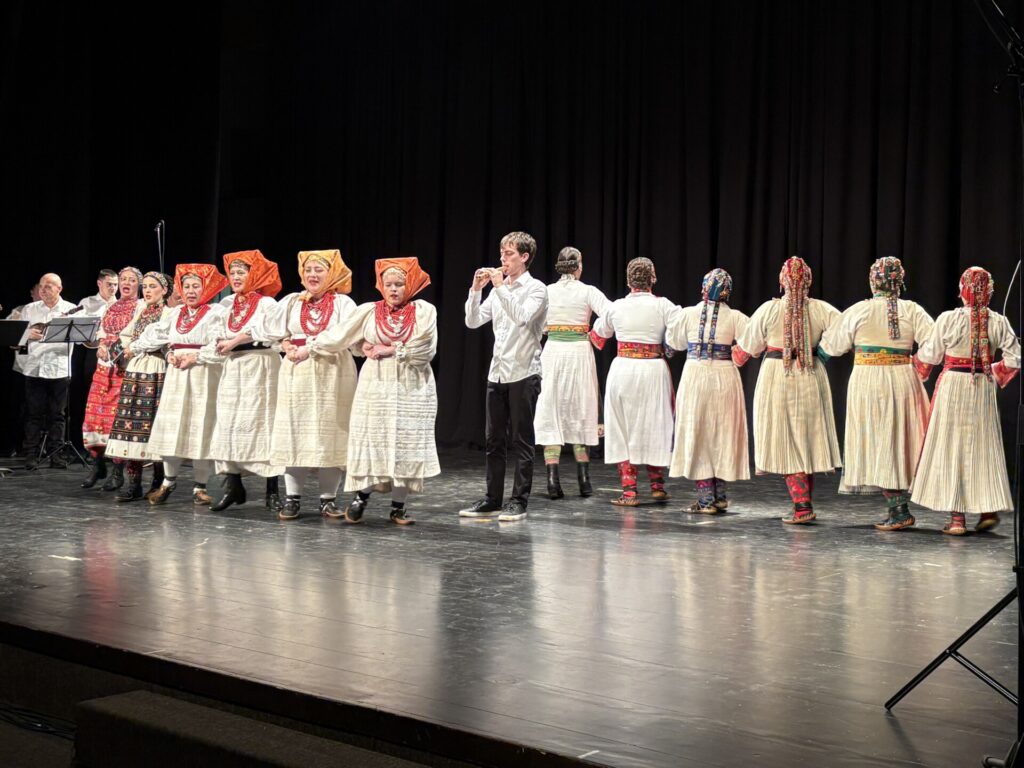
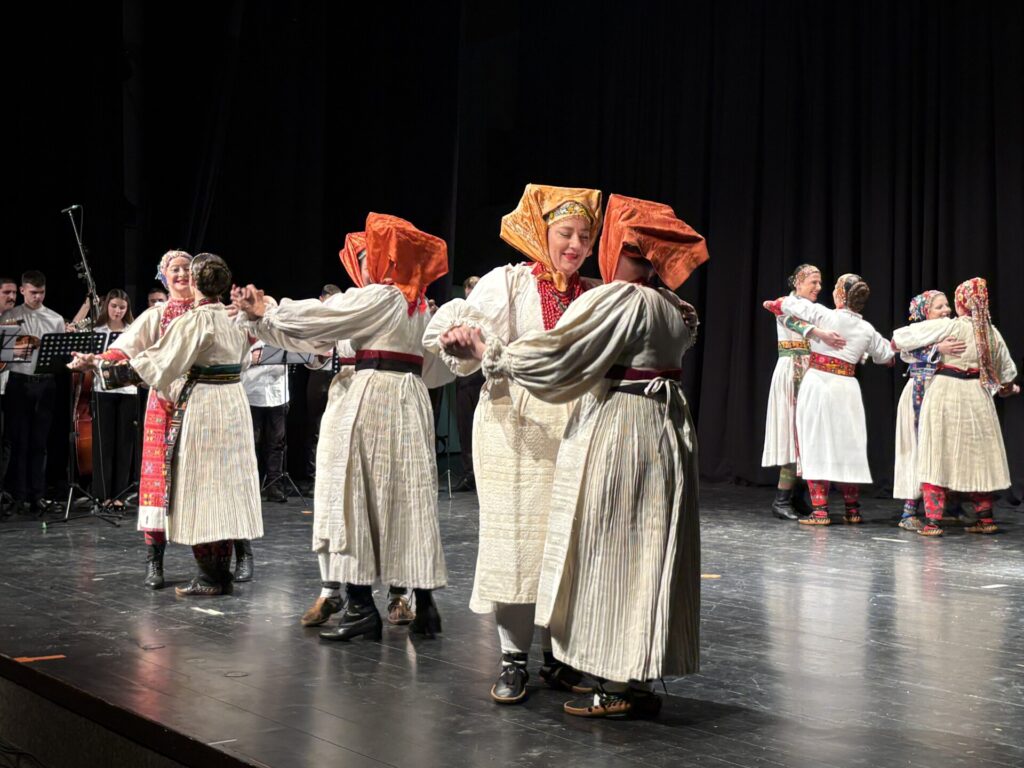
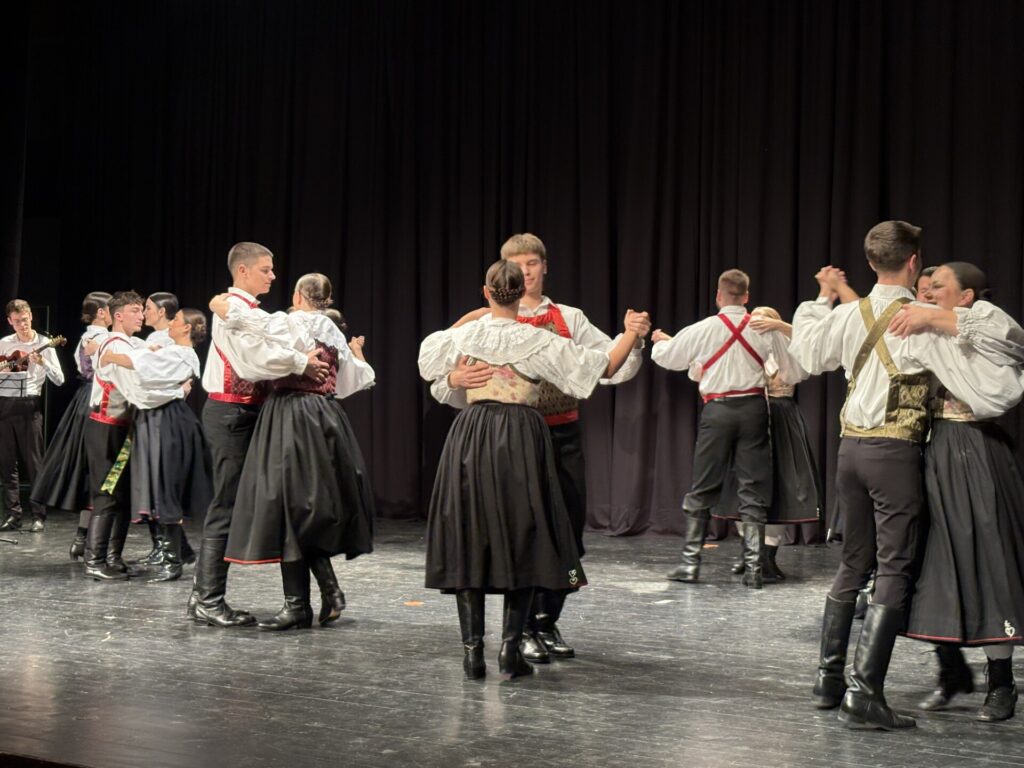
The participants of this year’s School of Croatian Folklore delighted the audience by performing three of Prof. Ivančan’s choreographies. One of them was conceived back in 1990, for which he took third place at the International Folklore Festival in Zagreb. The choreography in question is “Rendajte se milo lane”, songs and dances of Kalinovac, Podravina.
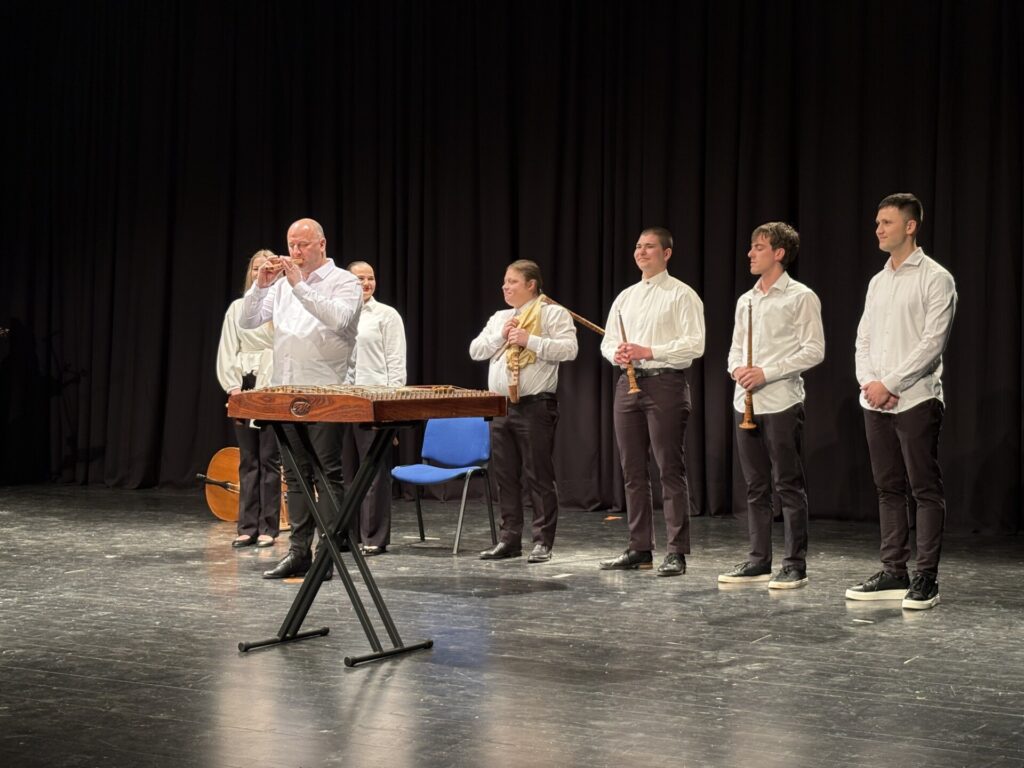
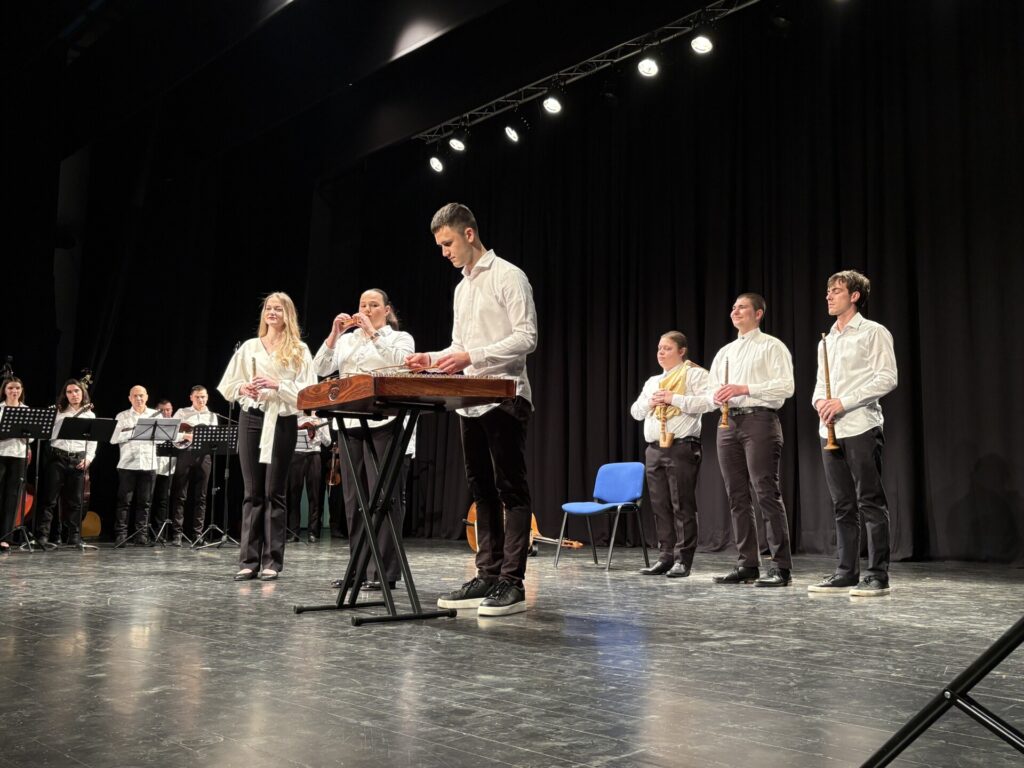
This time, once again, the participants of the tamburitza program also practiced with Tibor Bün, along with guest lecturer Siniša Leopold, while Vjekoslav Martinić was the leader of the traditional musical instrument program. Numerous renowned folklorists, ethnochoreologists and researchers of Croatian traditional culture also taught during the School: Senka Jurina, Miro Kirinčić, Goran Oreb, Nerina Štajner, Lydia Novak and Philip Tyran, Ivan A. Ivančan, Katarina Horvatović and Kristina Benko Markovica, with the valuable cooperation of assistants Filip Martinić, Martin Durbek and Martin Ivančan.
The program of the Winter School of Croatian Folklore is based on scientific and professional foundations established in 1964 by Ivan Ivančan, Ph.D., one of the most important Croatian ethnologists and ethnochoreologists. Over the decades, the program has continuously developed and adapted to modern knowledge, and today’s leader, Andrija Ivančan, has incorporated modern trends in dance education and a complete education system for heads of folklore groups. The significant goals of the Croatian Heritage Foundation are the preservation, strengthening and promotion of Croatian traditional culture, and connecting homeland and diaspora Croatia is achieved through this program.
At the Final Concert in the Refinery Hall in Sisak, the audience had the opportunity to watch and listen to the results of ten days of intensive work – a wealth of dances, songs and music from diverse Croatian regions, but also to witness what can be achieved in a relatively short period with an abundance of love, effort and hard work. The audience recognized this and rewarded the performers with a big applause and ovation.
Text and photo: CHF


