


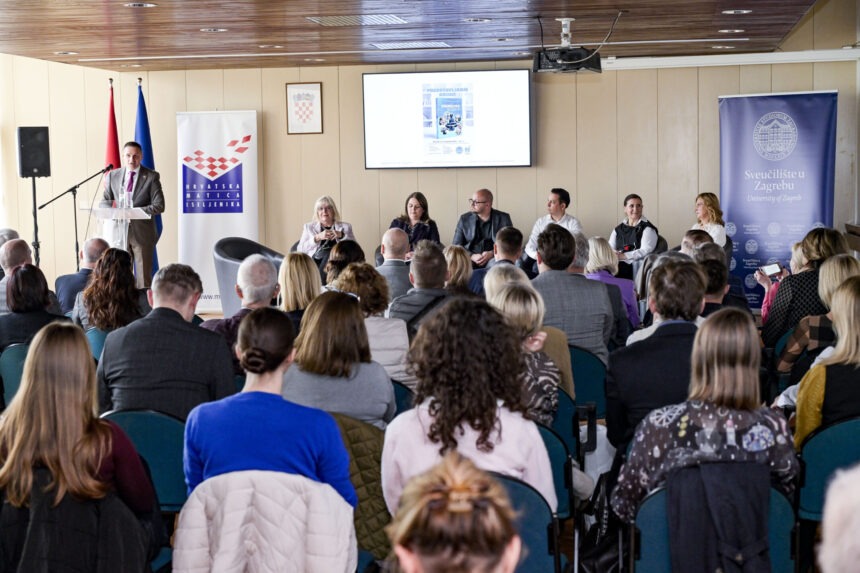
The monograph on the University School of Croatian Language and Culture, testifying to four and a half decades of learning, fellowship and connection with the homeland, was presented at the Croatian Heritage Foundation.
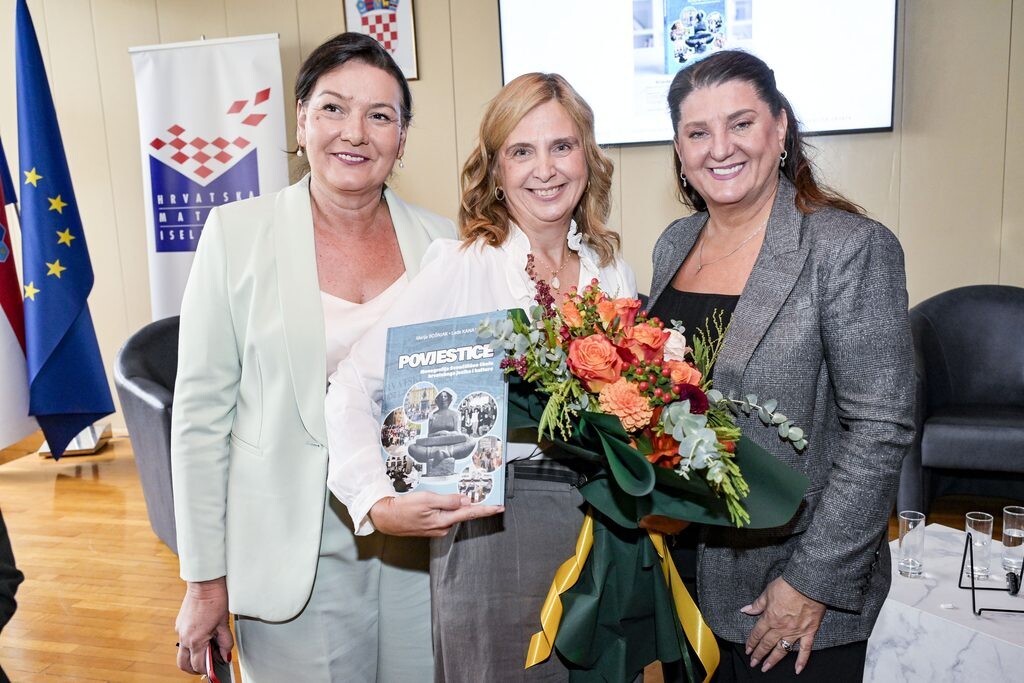
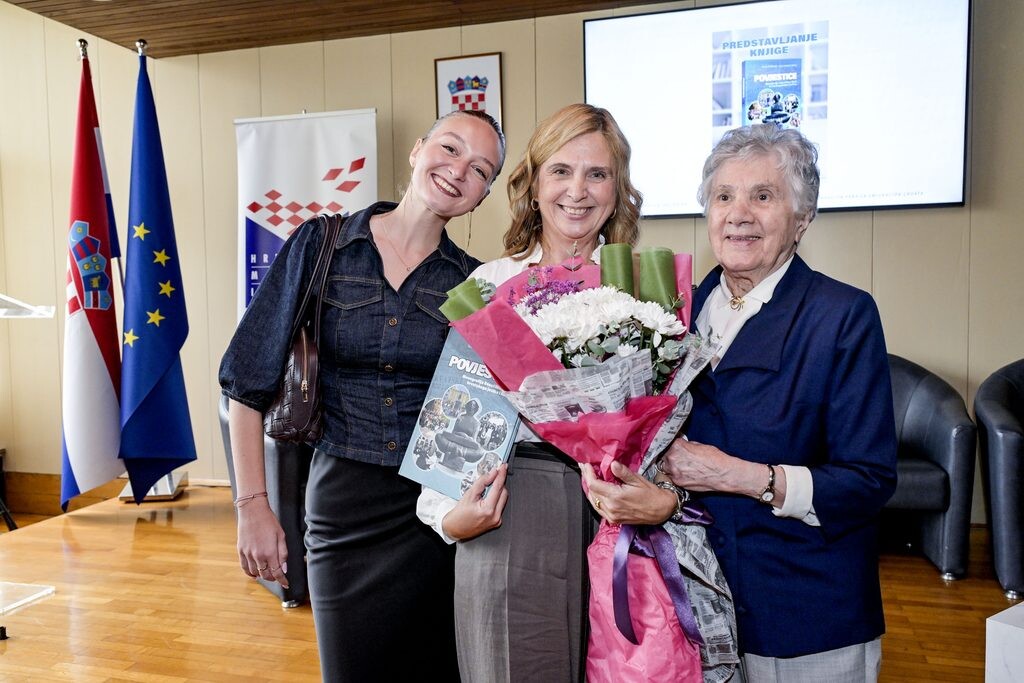
On October 21, in the Great Hall of the Croatian Heritage Foundation in Zagreb, the book Povjestice – Monografija Sveučilišne škole hrvatskoga jezika i kulture was officially presented, which provides an overview of almost half a century of dedicated work on teaching the Croatian language, promoting Croatian culture and connecting the homeland with the Croatian diaspora. The monograph, written by Marija Bošnjak, Ph.D. and Lada Kanajet Šimić, prof., is a joint publication of the University of Zagreb and the Croatian Heritage Foundation, two institutions whose long-term cooperation has produced one of the most recognizable programs of learning Croatian as a foreign and second language.
The publication of Povjestice is tied to three important milestones: the 45th anniversary of the first Summer School of the Croatian Language, which the Croatian Heritage Foundation launched in 1980 in cooperation with the University of Kansas, the 35th anniversary of the involvement of the University of Zagreb in the academic language program, and the 15th anniversary of the beginning of the HiT-1 Croatian Online Course. The 75th anniversary of the Croatian Heritage Foundation’s activities also adds special symbolism to this year’s presentation.
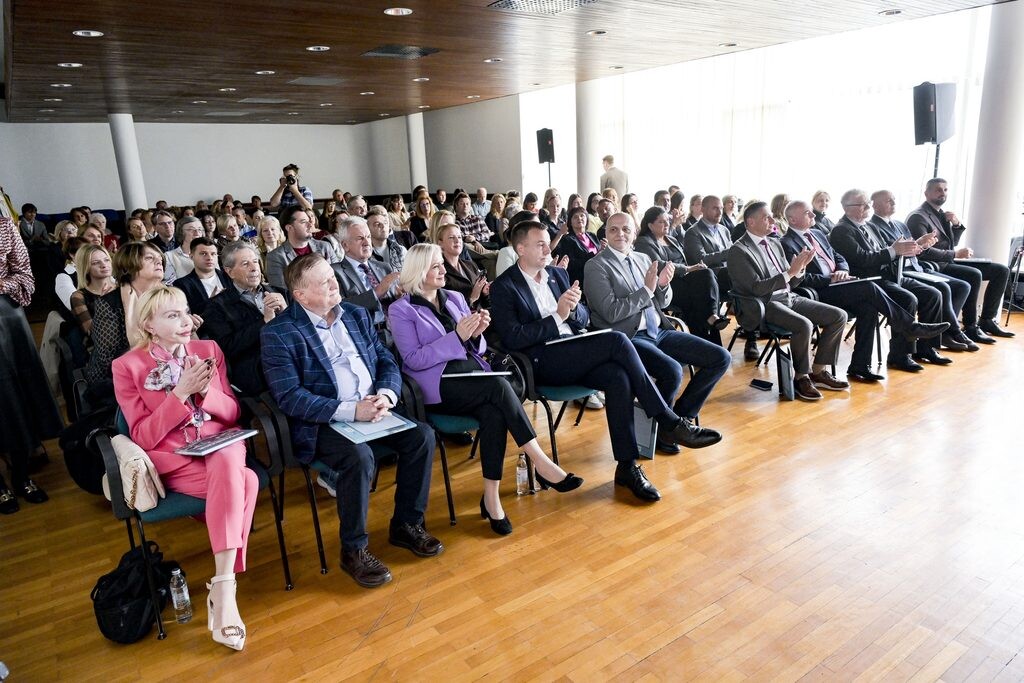
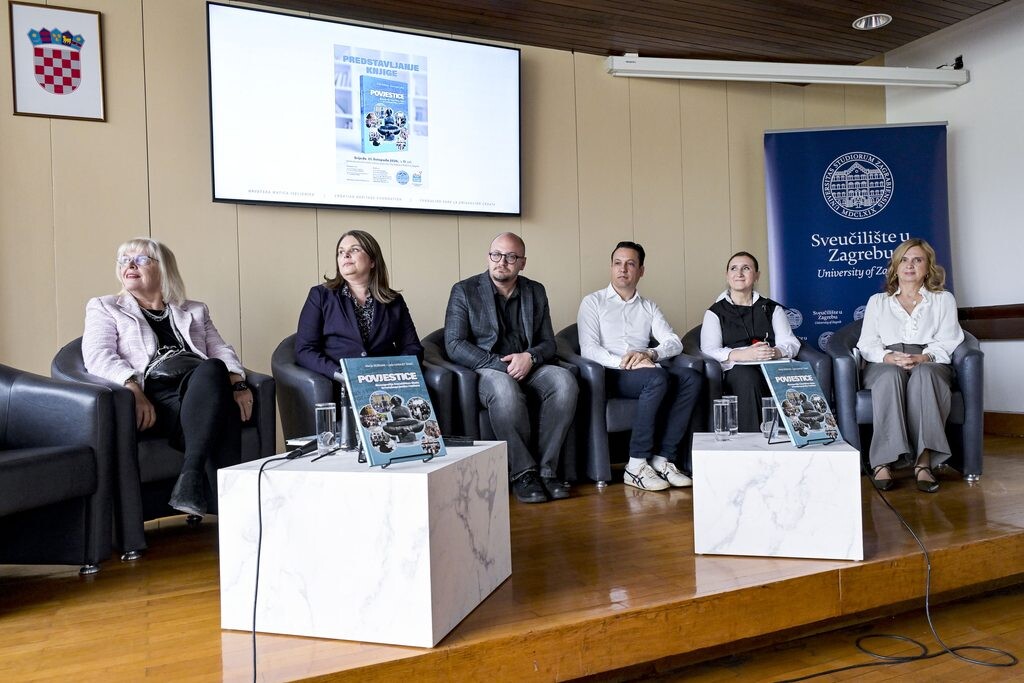
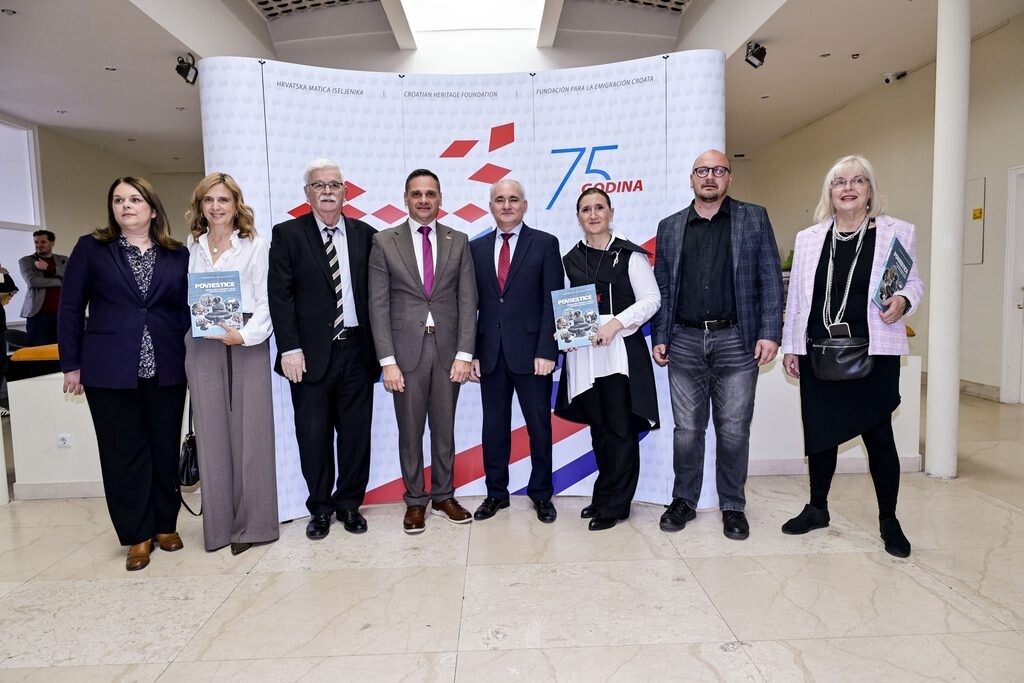
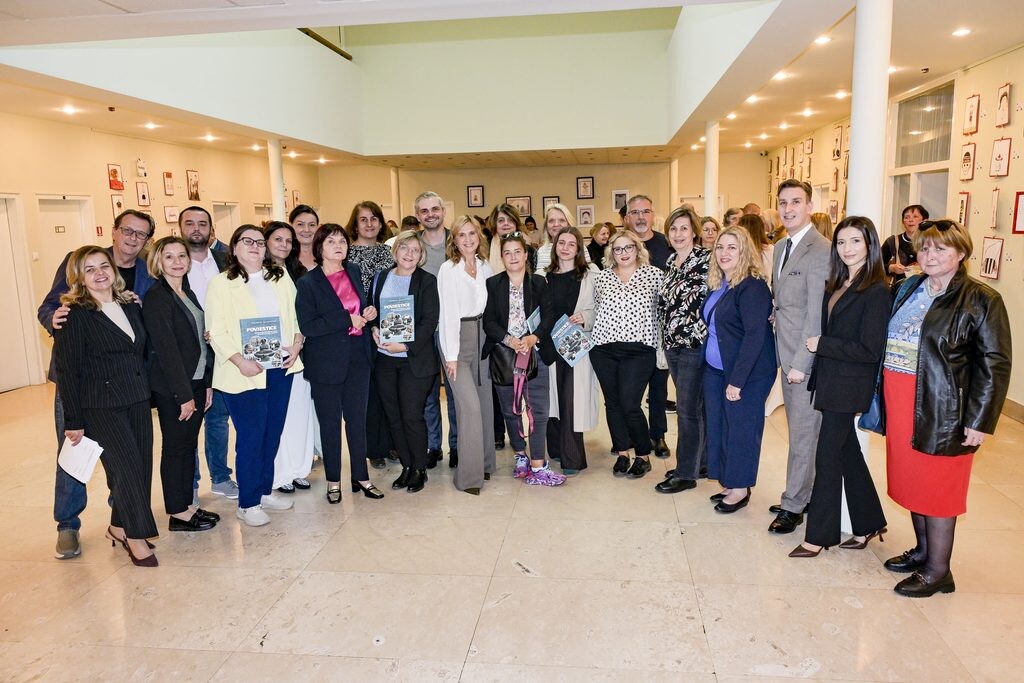
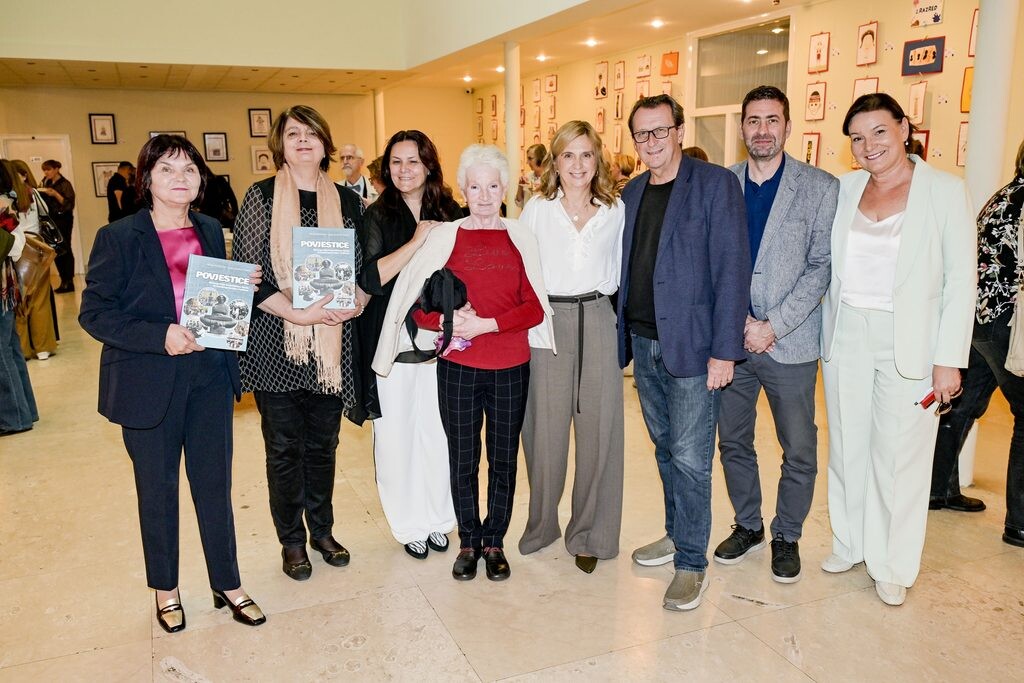
The event, moderated by Martina Pliestić, prof., brought together representatives of the academic community, state and cultural institutions, long-term associates, teachers and friends of the Croatian language and culture. The event was graced with the presence of Milan Bošnjak, Ph.D., Envoy of the Prime Minister of the Republic of Croatia Andrej Plenković and Ex Officio Advisor for Croatian Minorities in the Central State Office for Croats Abroad; Prof. Stjepan Lakušić, Ph.D., Rector of the University of Zagreb; Prof. Damir Vusić, Ph.D., Rector of the University North; Assoc. Prof. Dejan Tubić, Ph.D., President of the Croatian Conference of Universities of Applied Sciences of the Republic of Croatia; Frane Tokić and Danijela Blažanović, State Secretaries in the Ministry of Demography and Immigration; Jasmina Kovačević Čavlović, Ph.D., Envoy of the Minister of Foreign and European Affairs Gordan Grlić Radman and Advisor to the Minister; Milan Kovač, President of the Management Board of the Croatian Heritage Foundation; Professor Emeritus Damir Bras, Ph.D., former rector of the University of Zagreb; former directors of the Croatian Heritage Foundation Ante Beljo, Nikola Jelinčić and Mirjana Ana-Maria Piskulić; Assoc. Prof. Marina Perić Kaselj, Ph.D., Director of the Institute for Migration Research; Branka Roščić, Ph.D., Secretary General of the Croatian Catholic University; Heli Hajdić-Nikolić, Secretary General of the University of Zagreb; Ivica Nuić, Secretary General of Matrix Croatica, and many others.
Language as a Bridge Between the Homeland and the Diaspora
The audience was addressed by the CHF Director Zdeslav Milas, M.Sc., emphasizing that he believes that Povjestice will be a valuable source for teachers, researchers and students dealing with Croatian as a foreign and second language and identity preservation outside Croatia, former, current and future students of the School and all those who want to become acquainted with the contribution of the University of Zagreb and the Croatian Heritage Foundation to the promotion of Croatian language and culture throughout the world.
“The Croatian language is much more than a means of communication. It is the space of our identity, the bearer of memory and the bond that connects generations, even when they are separated by thousands of kilometers. It is precisely the preservation of this connection that is one of the fundamental tasks of the Croatian Heritage Foundation, which, this year, marks its 75th anniversary, so today’s promotion is also part of our celebratory year,” said Milas.
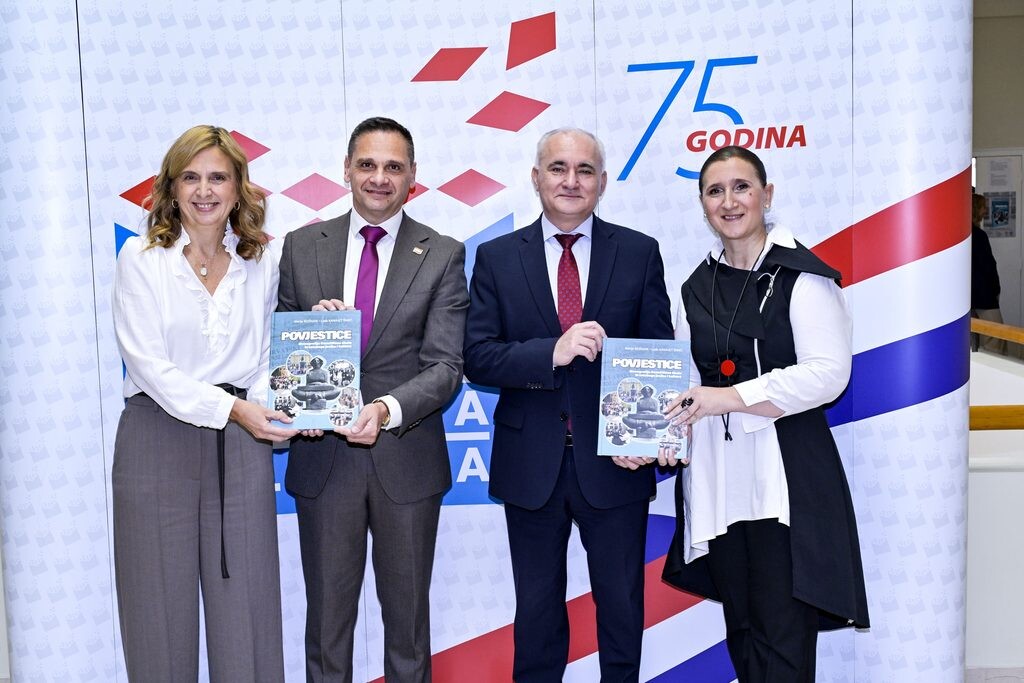
The Rector of the University of Zagreb, Stjepan Lakušić, Ph.D., emphasized the importance of the long-standing partnership between the two institutions for preserving the Croatian language and national identity.
“The message sent by this monograph is love for the homeland and the Croatian language, and it was precisely the role of the Croatian University to integrate this element through literature, history and translation, and through the forms of formal recognition of language knowledge, diplomas and certificates that are recognized today at universities worldwide,” said Rector Lakušić, who recalled in the monograph’s foreword that the University School has, over the decades, grown beyond a traditional language program. In addition to providing students from all over the world with the opportunity to learn the Croatian language and to become acquainted with the culture, it has contributed to the development of Croatian as a foreign and second language, as an academic and teaching discipline, to the education of new generations of experts, and to the international visibility of the Croatian language.
Its role in connecting descendants of Croatian emigrants with their ancestors’ homeland is particularly important, as is its role for those who want to learn Croatian for personal or family reasons.
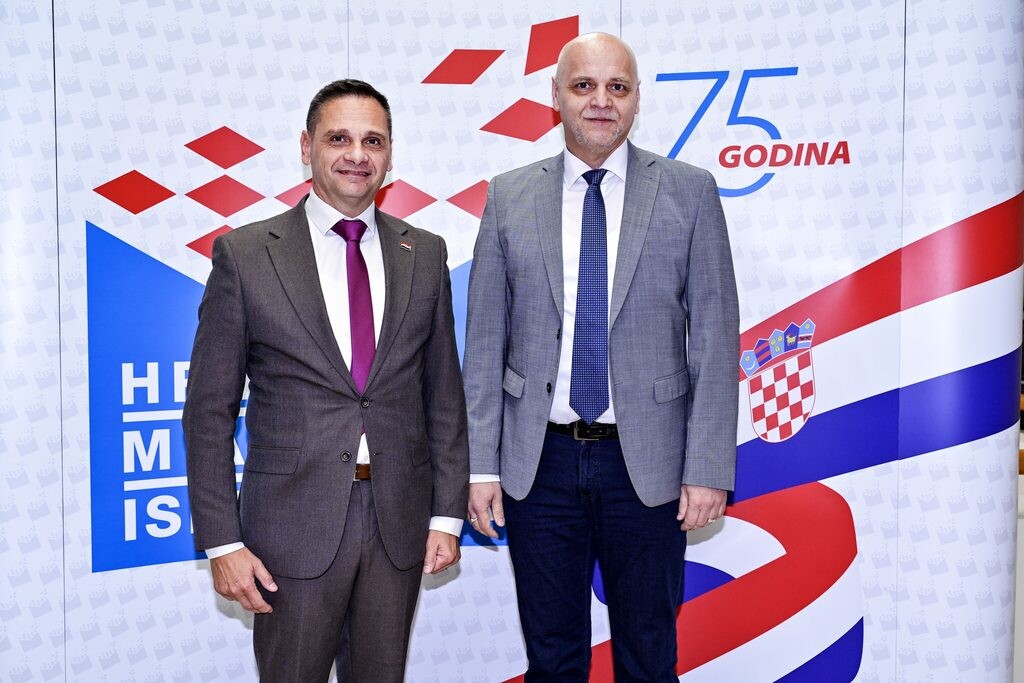
Envoy of the Prime Minister of the Republic of Croatia Andrej Plenković and Ex Officio Advisor for Croatian Minorities in the Central State Office for Croats Abroad, Prof. Milan Bošnjak, Ph.D., stated that the Government of the Republic of Croatia at the strategic level has very clearly defined the learning of the Croatian language among Croats living outside the borders of Croatia as one of the priority areas of its activities.
“Institutional support for Croatian language learning is clear, and we are also witnessing numerous activities of high institutions related to Croatian language learning. There are three that first come to mind: The Little School of Croatian Language and Culture, the Zagreb School of Slavic Studies and the University School of Croatian Language and Culture, offering students what they need most during their development period,” said Milan Bošnjak.
From the First Summer School to Contemporary Online Programs
The monograph, in six thematic units, follows the development of the University School from 1980 to the 2025/2026 academic year. Based on archival material, documentation, scientific and professional sources and the testimonies of numerous associates and participants, the authors reconstructed the development of a program that, over the decades, kept up with changes in society, education and language-teaching methods.
Zrinka Jelaska, Ph.D., the long-time head of the academic program and one of the key figures in developing Croatian as a second and foreign language, spoke about the School’s origin and development. She took over the program in 1993 and led it for over three decades, during which new teaching approaches, scientific projects, professional conferences, and teaching materials were developed.
“From the beginning, the University School was recognized at universities around the world, even at a time when Croatia was not yet using the ECTS credit system.” She emphasized that her task was to educate young people, not only through language, but also through culture. Initially, the program relied on enthusiasts, volunteers and students, some of whom later became university professors. “I’m grateful to everyone who participated in the work of the School, from the first associates to today’s teachers and students,” said Zrinka Jelaska, highlighting the growing number of people learning Croatian as a foreign or second language.
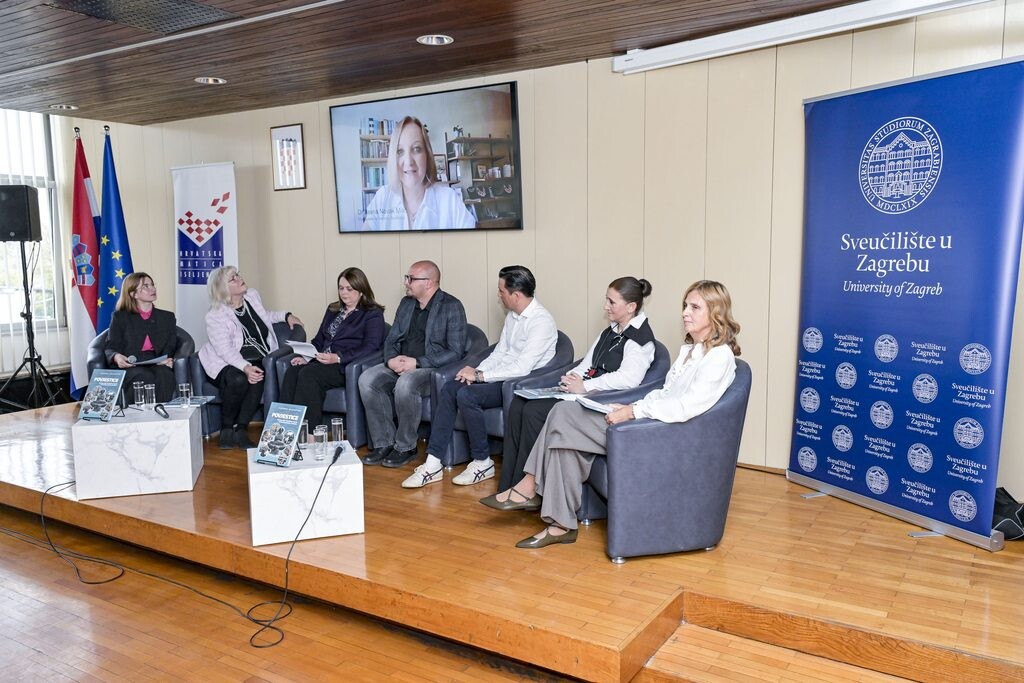
Jasna Novak Milić, Ph.D., also made a special contribution to the School’s history, addressing participants with a video recording from Australia. As one of the pioneers of research on Croatian as a foreign and second language and the first editor of Sveučilišne povjestice, after which the monograph was named, she recalled the period when the foundations of today’s programs were laid.
In her message, she pointed out that Povjestice has always been much more than a mere school newsletter. It represented a space where memories, photos and personal stories of students and teachers from all over the world came together. She emphasized that continuity, unity, and the exchange of experiences are the University School’s greatest values, and she expressed satisfaction that the monograph continues to preserve this heritage for future generations.
The name Povjestice carries special meaning. It originated from the idea of preserving photos, events, records and memories from the University School from oblivion. The first issue of Sveučilišne povjestice was published in 2001, and the last in 2017. Today’s monograph continues this tradition, expanding it into a comprehensive account of the program’s history and the people who created it.
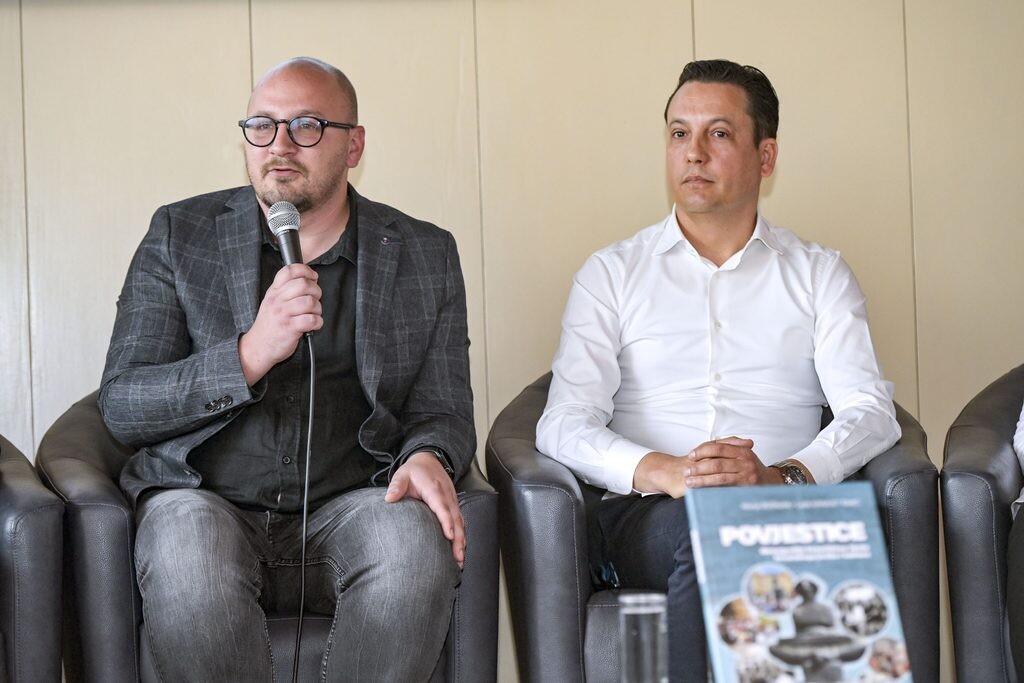
The program’s scientific and educational dimension was also discussed by Prof. Lidija Cvikić, Ph.D., who participated in the development of the University School and the development of the first university online course of Croatian as a foreign and second language HiT-1.
“Although the University School does not have its own premises, it has something much more important: engaged and committed individuals and action based on knowledge, scientific excellence, cooperation, support and academic freedom,” said Lidija Cvikić. She recalled that the HiT-1 online course was developed at a time when many doubted the possibility of such a form of learning, and that more than 400 participants successfully completed it over 15 years.
The continuity of work and its future was presented by Asst. Prof. Igor Marko Gligorić, who assumed leadership of the University School of Croatian Language and Culture in 2025. As a representative of the younger generation of teachers and researchers, he continues the tradition of a program that constantly evolves, responding to students’ new needs and modern learning methods.
“It’s a huge responsibility taking on a program with such a long tradition. Our task is to preserve the achieved level and strive to further raise it,” said Igor Marko Gligorić. He emphasized the importance of support from the University of Zagreb and that this representative program is held on the premises of the Rectorate. He also announced the launch of the HiT-2 program as a continuation of previous programs and underscored that the course Introduction to Native and Non-Native Croatian is becoming mandatory in the Croatian Language and Literature study program.
Behind Every Language Learned Is A Personal Story
One of the most interesting parts of the event was the testimonial from former HiT and Hey participant, Professor Sergi Fernandes de Lima, whose life story vividly shows how strong the connection to the language and homeland of ancestors can be.
Born in Brazil, with family roots in Slavonia, Sergio began learning Croatian about ten years ago. After many years of living and working in Hong Kong, he continued learning in Croatia and obtained Croatian citizenship in 2025. His path is an example of how learning a language can gradually reveal one’s own descent, build a sense of belonging and establish a new connection with Croatia. Sergio is also a scholarship recipient from the Ministry of Demography and Immigration for learning Croatian.
“Growing up, I knew very little about Croatia and its language. I remember my grandmother telling us about the winter in Slavonia and teaching us words like snow, grass, cows and horses. I wanted to know more about the place where my grandmother was born, but since I didn’t know the language, that wasn’t possible. When I discovered the HiT and Hej online courses, everything changed. During the lessons, I learned much more than the language itself. My professors taught me about Croatian culture, music, food, history and folklore. By learning Croatian online, I’ve developed a stronger sense of belonging to my ancestral homeland.”
These stories give Povjestice added value. They show that behind the numerous classes, programs, professional gatherings and educational achievements are real people, their family histories, friendships and life decisions.
Monograph as a Permanent Record of a Community
In the final part of the presentation, the authors of the monograph, Marija Bošnjak, Ph.D., and Lada Kanajet Šimić, prof., who have been associated with the University School for decades, addressed the participants.
Marija Bošnjak has been participating in the programs as a lecturer and co-author of teaching materials for over 25 years. Since 2011, she has been the main e-instructor of the HiT-1 course, and her professional and scientific work focuses on e-learning and e-teaching of Croatian as a foreign and second language.
Lada Kanajet Šimić, Head of the Science and Education Department of the Croatian Heritage Foundation, has long organized and coordinated Croatian language and culture programs and has been a key person connecting them with the needs of Croatian emigrants.
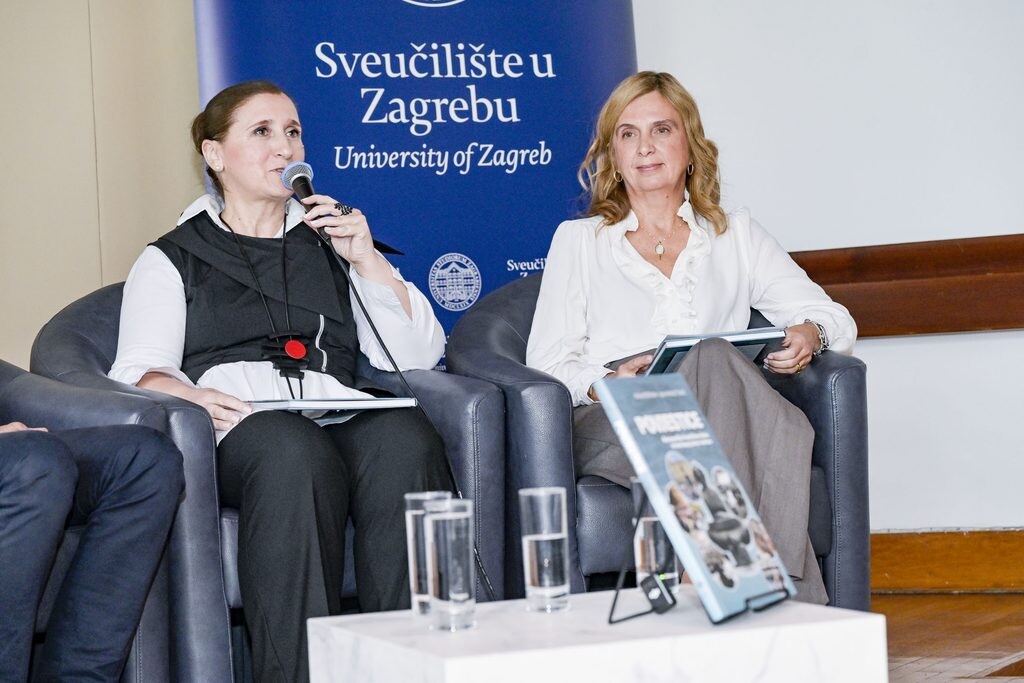
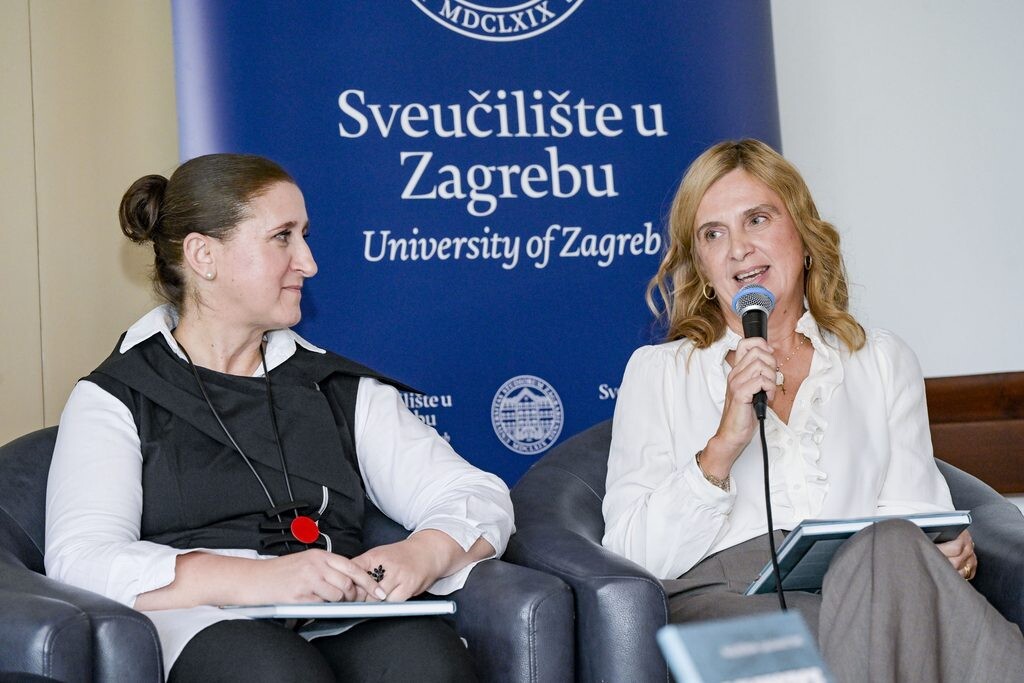
Authors: Marija Bošnjak, Ph.D., and Lada Kanajet Šimić, prof.
In the monograph’s preface, the authors explain that they wanted to preserve not only historical facts and the program’s development, but also the experiences of people who created and attended the School. In addition to archival documents and photographs, the memories of teachers, associates and students occupy a special place.
“I feel at home in Matica, and I’m glad that we’re presenting Povjestice here. My love for Croatia, the Croatian language and culture allows me to do a job that I consider the most beautiful in the world,” said Marija Bošnjak. She recalled how, while still a student, in Professor Zrinka Jelaska’s elective course and during the summer classroom observation practicum, she discovered a vocation to which she has remained faithful. “It’s not just about learning a language; it’s also about learning about everyday life and culture. Our goal is happy and satisfied participants and I am proud to be a part of this story.”
“It was a demanding, but also an extremely beautiful task to peer into the 45-year history of the University School, which began modestly and developed into a program from which numerous experts and new Croatian language learning programs have grown,” said Lada Kanajet Šimić. As the most beautiful part of working on the monograph, she singled out reading teachers’ and students’ testimonials and discovering their life paths. She particularly highlighted the University School’s academic and linguistic excellence, as well as the diversity of its programs.
The monograph was published in print and digital editions, making its content available to the general public, especially former students and associates of the University School worldwide.
Povjestice for Future Generations
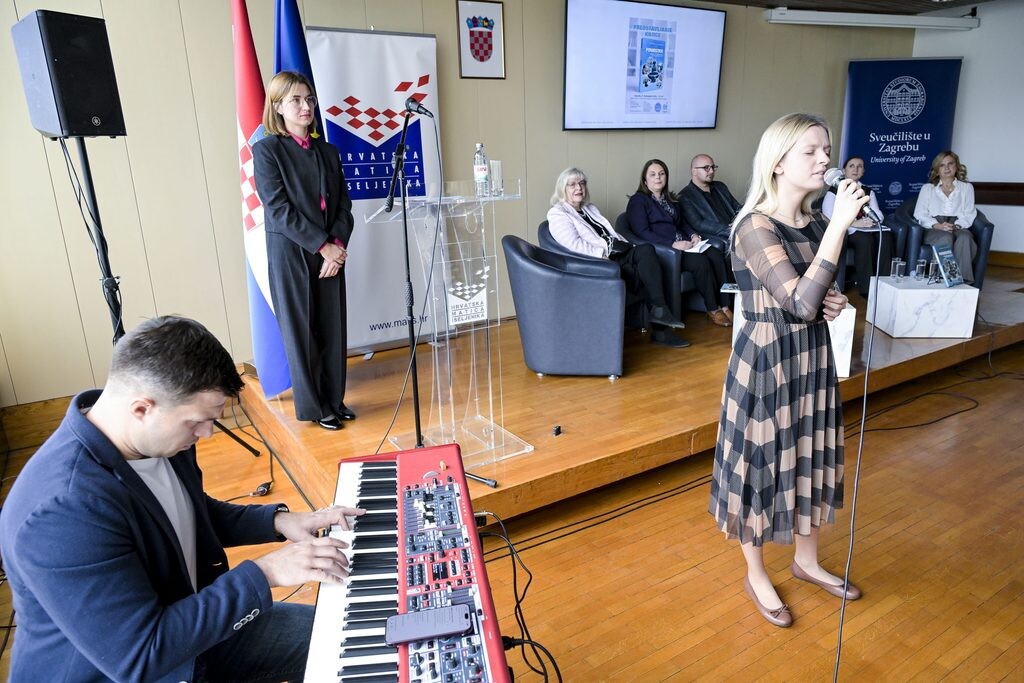
The ceremonial launch was enhanced with a musical performance by Nika Pastuović Klasić with piano accompaniment by Tomislav Brebrić. At the beginning of the program, they performed the song “Dajem ti srce, zemljo moja” (I Give You My Heart, My Country), and the end was marked by the song “Zemlja dide mog” (My Grandfather’s Land), which further emphasized the emotional connection with the homeland, one of the fundamental messages of the University School.
Povjestice is much more than a chronological overview of an educational program. It is a testimony to a unity that has been built for decades, to the Croatian language as a link between people from different continents and to the cooperation that has shown that the preservation of identity is best achieved through knowledge, encounters and personal experience.
From the first participants of the Summer School in 1980 to today’s generations also learning Croatian online, the University School remains a meeting place for languages, cultures and life stories. These stories, preserved among the covers of Povjestice, are its most valuable written legacy.
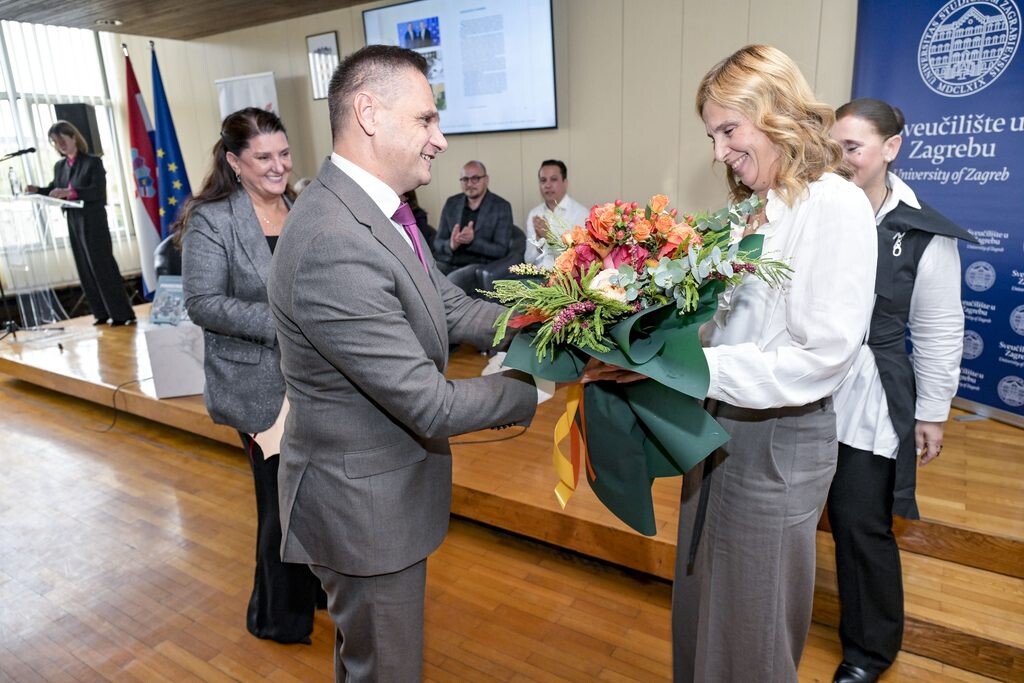
Text: Sara Marđetko / Photo: Krasnodar Peršun


