The book “Emigrantska pisma” (Emigrant Letters) brings together selected correspondence from twelve members of our cultural emigration from various continents, who have contributed immeasurably to preserving the Croatian language and culture in an Anglophone environment…
The book “Emigrantska pisma” by prominent writer and philologist with a decades-old Canadian address, Prof. Vinko Grubišić, Ph.D., was officially presented in Zagreb, organized by the Croatian Heritage Foundation and the Skradin Branch of Matrix Croatica.
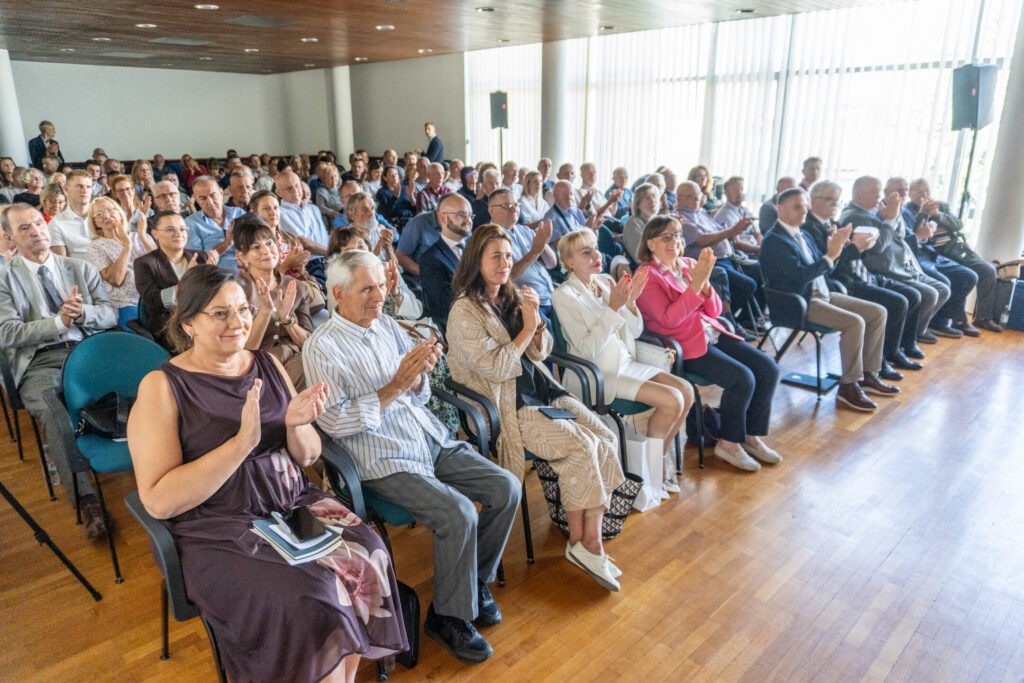
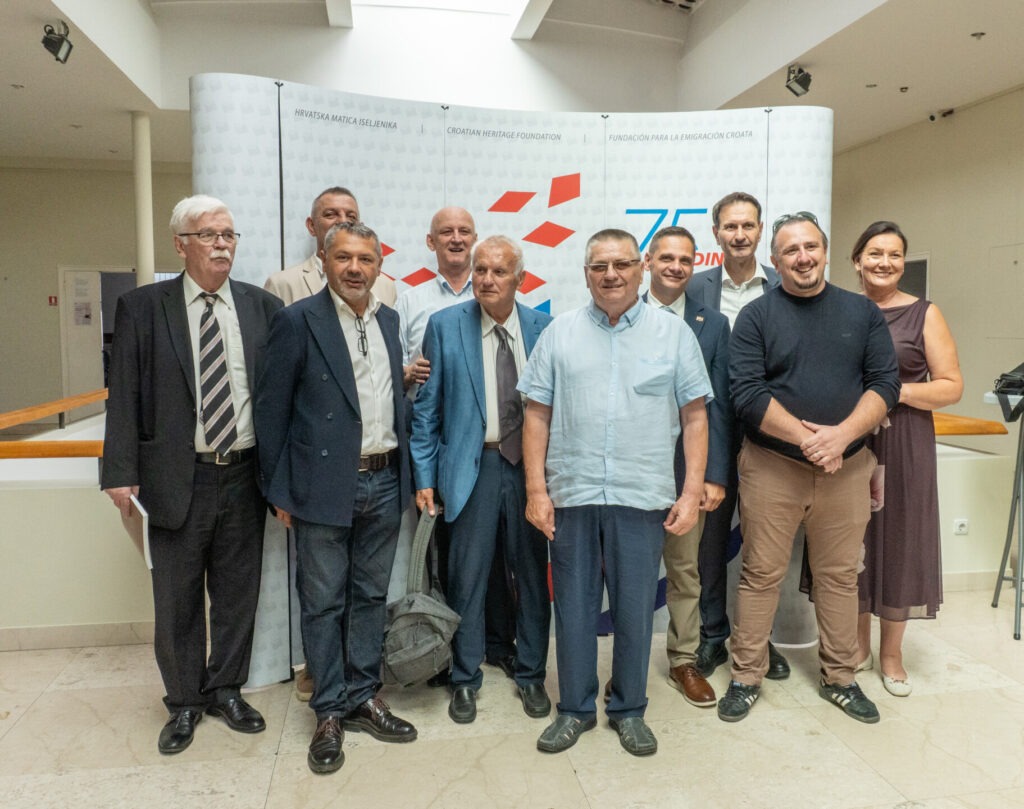
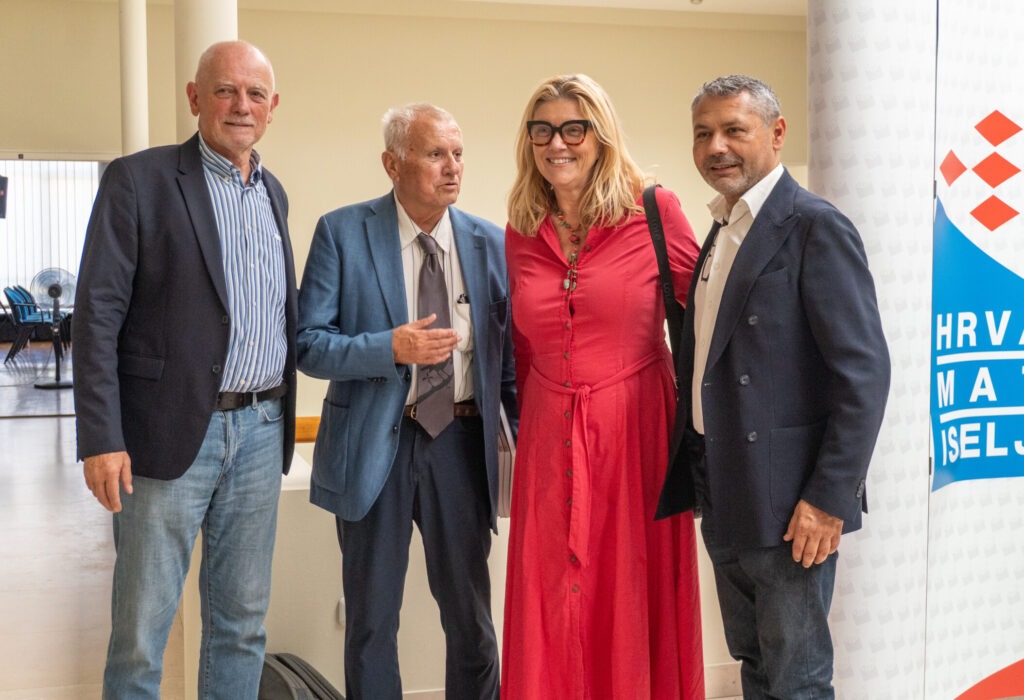
The launch was attended by numerous dignitaries from the public and academic life of the Republic of Croatia and admirers of Grubišić’s oeuvre, including: Zdravka Bušić, M.Sc., Member of Parliament and Envoy of the Speaker of the Croatian Parliament and President of the Parliamentary Committee for Croats Abroad; Jasmina Kovačević Čavlović, Ph.D., Envoy and Advisor to the Minister of Foreign and European Affairs, Gordan Grlić Radman, Ph.D.; Envoy of State Secretary Zvonko Milas, Ms. Croatiana Gregurić, Ex Officio Advisor for Croatian Emigrants/Diaspora in the Central State Office for Croats Abroad; President of Matrix Croatica Damir Zorić, Ph.D., President of the CHF Management Board Milan Kovač and all CHF Management Board members, representatives of the National and University Library, Institute of Croatian Language, Croatian State Archives, Institute for Migration Research, Miroslav Krleža Institute of Lexicography, Croaticum, Faculty of Humanities and Social Sciences and Faculty of Croatian Studies, University of Zagreb.
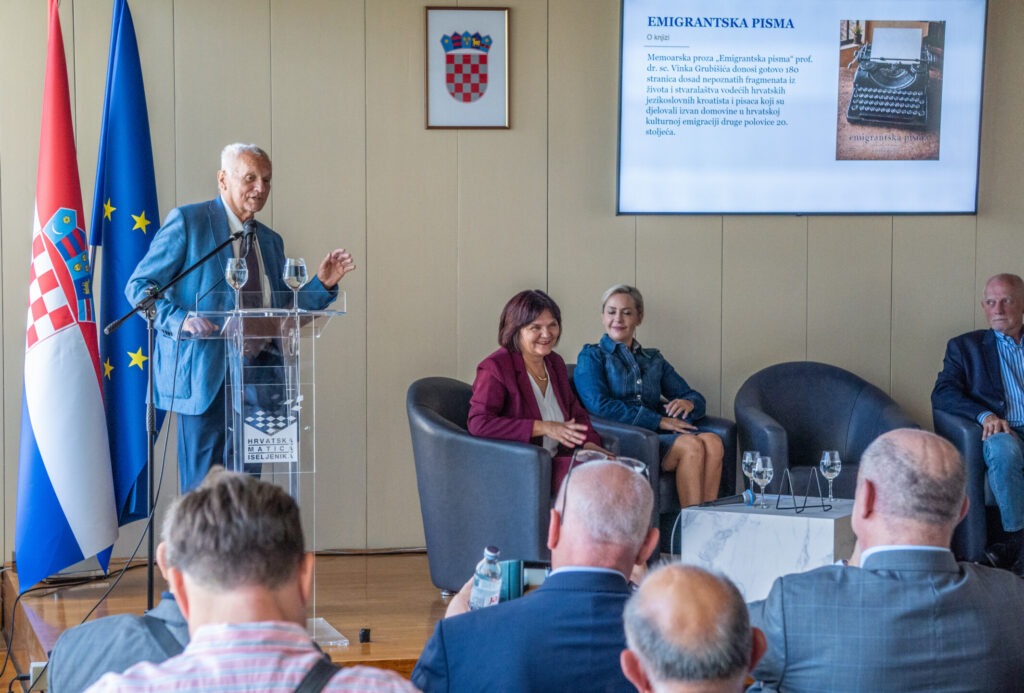
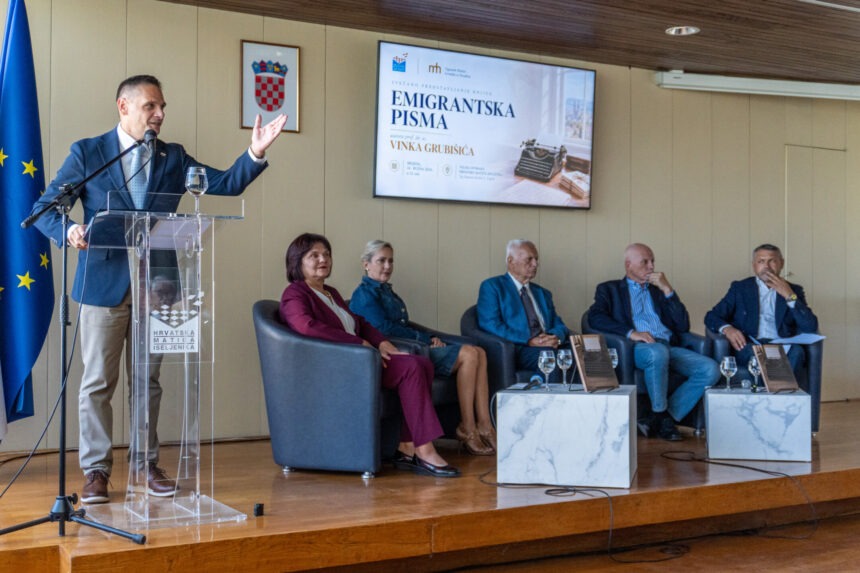
After opening words by CHF Director Zdeslav Milas, M.Sc., the following speakers spoke about the book: organizer and editor Assoc. Prof. Renata Burai, Ph.D., Academician Ratko Cvetnić and the director Vinko Grubišić.
The promoters of the book highlighted that the memoir prose “Emigrantska pisma” by Prof. Vinko Grubišić, Ph.D., a deserving promoter of the Croatian language and culture throughout the Anglophone world, reveals, on almost 180 pages, hitherto unknown fragments from the life and endeavors of leading Croatian linguists and writers who, together with Grubišić, worked abroad in the Croatian cultural emigration of the second half of the 20th century.
CHF Director Zdeslav Milas highlighted in his address that Vinko Grubišić’s life and work testify to a period when preserving the Croatian language, culture, and identity was not only a matter of literature but also of personal courage. He recalled Grubišić’s many years of academic and literary work in the diaspora, and his connection with Vinko Nikolić and the Croatian Review publication, an important home for the free Croatian word outside the homeland for decades.
He emphasized that “Emigrantska pisma” goes beyond looking back at the past because it preserves the memory of individuals who cherished the Croatian word, culture, and the idea of freedom far from Croatia. “The homeland is not just a space. The homeland is also a language. The homeland is memory. The homeland is what we decide to preserve when circumstances tell us that we should forget,” said Milas, expressing his gratitude to Professor Grubišić for taking the Croatian word “with him and, more importantly, for bringing it home.”
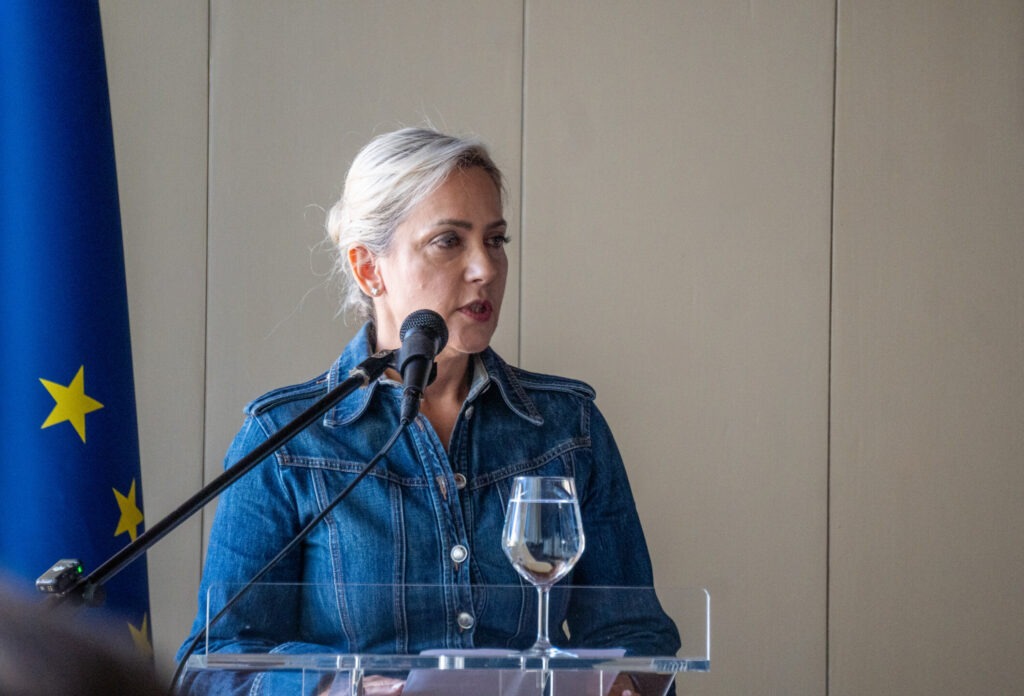
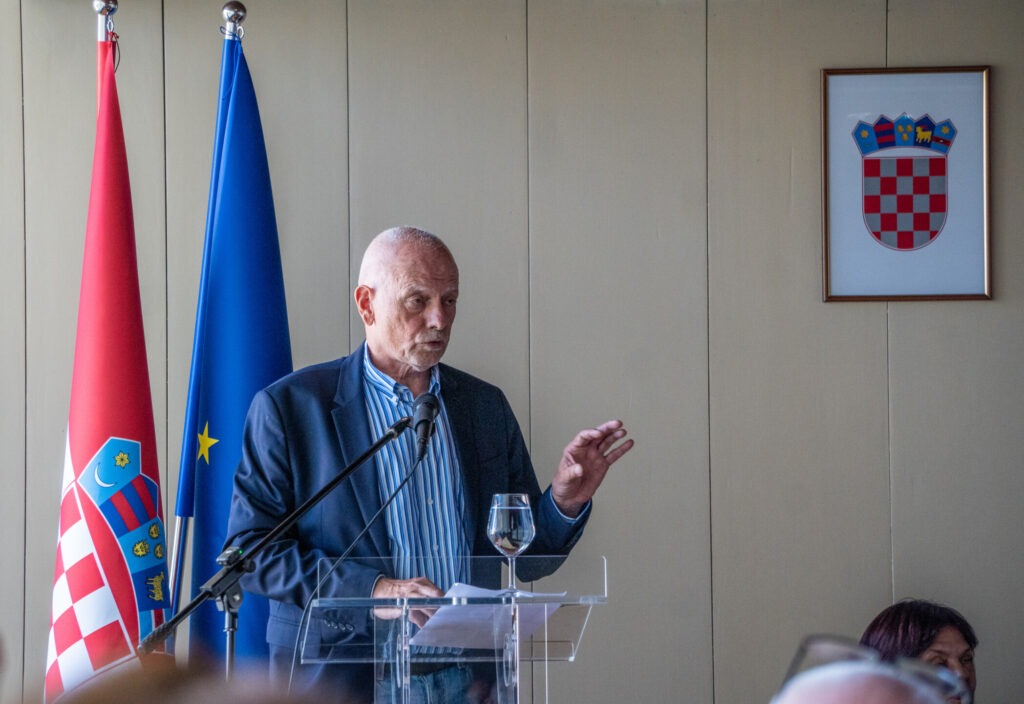
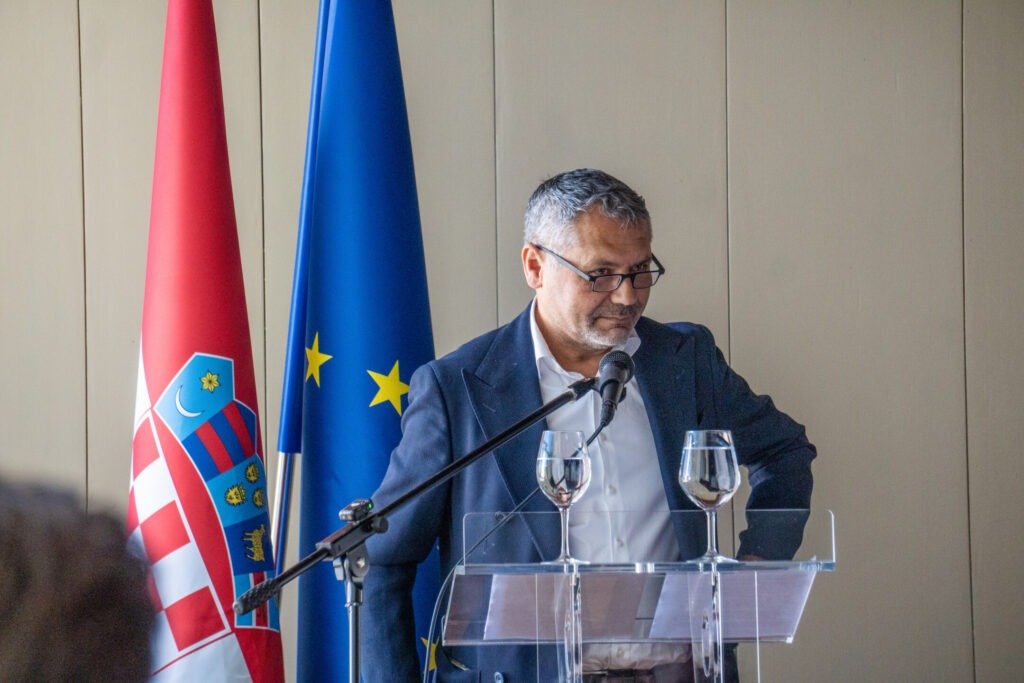
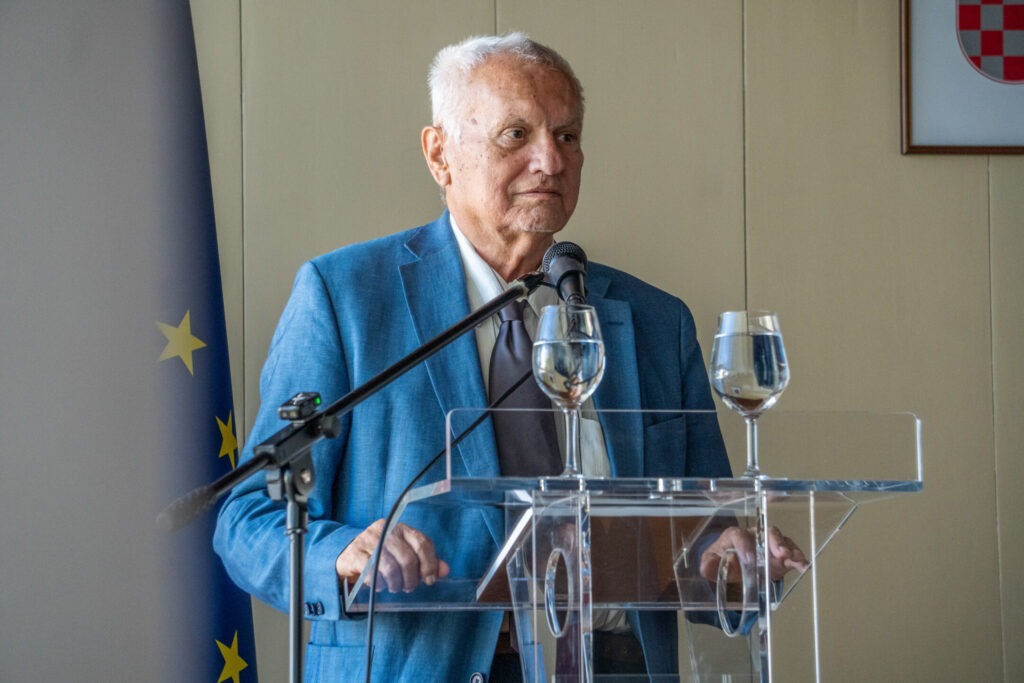
According to the book’s editor, Renata Burai, the author of “Emigrantska pisma” records, through correspondence from the 1980s, the most important cultural and political ventures of the Croatian exile, which helped create an atmosphere for the restoration of a sovereign Croatian state. She emphasized that Grubišić writes a kind of cultural biography of his associates through the letters, which is why the book can also be read as a cultural autobiography of a generation of Croatian emigrant intellectuals. It does not present the letters separately, but places them in a wider historical, political, and cultural context, so each also testifies to people who, under demanding circumstances, contributed to the preservation and development of Croatian culture.
They are individuals who have indebted our foreign philological heritage, such as: writer and historian Bogdan Radica; slavist and essayist Ante Kadić; bard of Croatian literature in exile Vinko Nikolić; editor Jure Petričević; writer Antun Nizeteo; historian and writer Fr. Dionizije Lasić; poet Fr. Lucijan Kordić; translator Stjepan Krešić; slavist and journalist Marko Čović; linguist Branko Franolić; German and Croatian language expert Josip Matešić; and researcher and publicist Zdravko Sančević.
Academician Ratko Cvetnić said the book is about a group of Croatian emigrant intellectuals who shaped the identity climate.
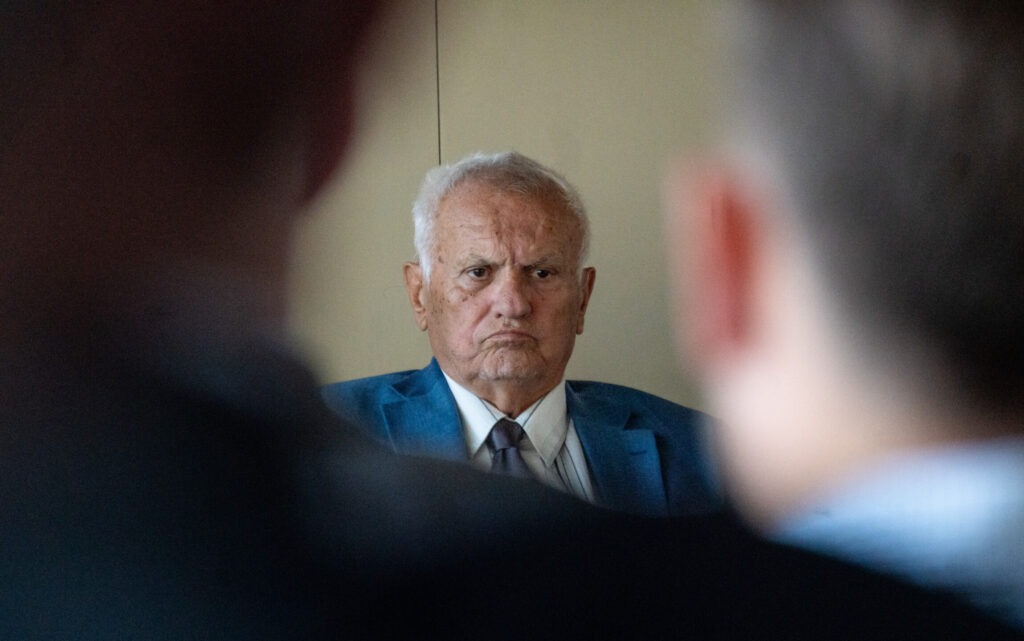
Director Vinko Grubišić spoke about the life path and the human and family warmth of Professor Vinko, characteristic of emigrant Croatian families who regularly supported and still support Our Beautiful Homeland.
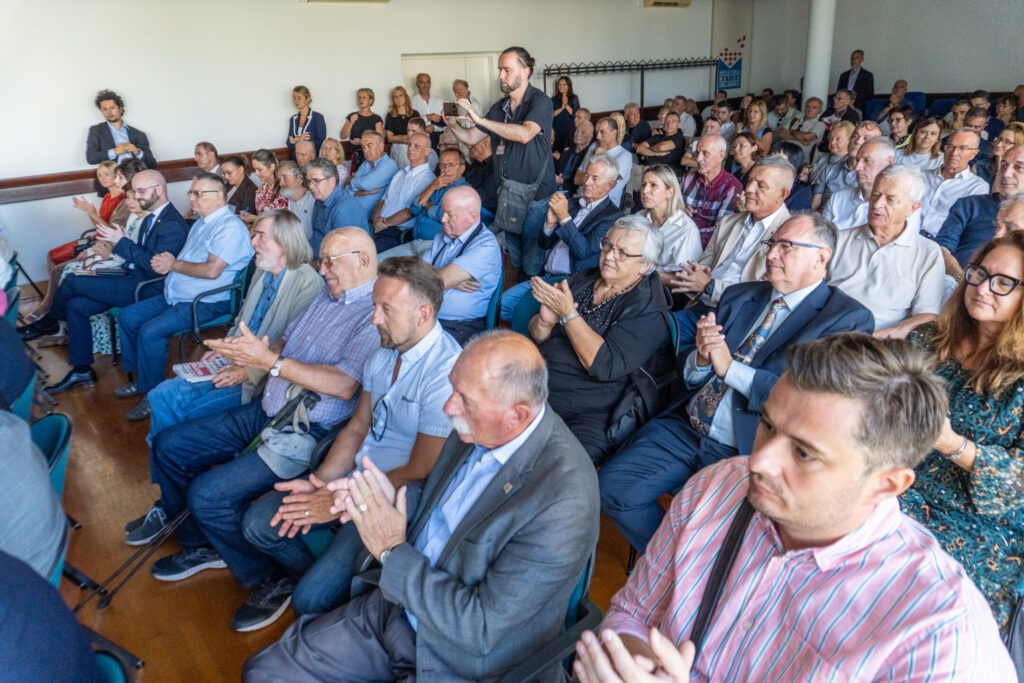
The author, Vinko Grubišić, Ph.D., sent an acknowledgment to the publisher Marinko Šišak, Ph.D., and to the promoters, organizers, and attendees of the Zagreb presentation. On this occasion, he emphasized the need for a more systematic inheritance of the foreign “Croatica” collection and proposed launching a dedicated event to present the rich memoir materials of the Croatian diaspora.
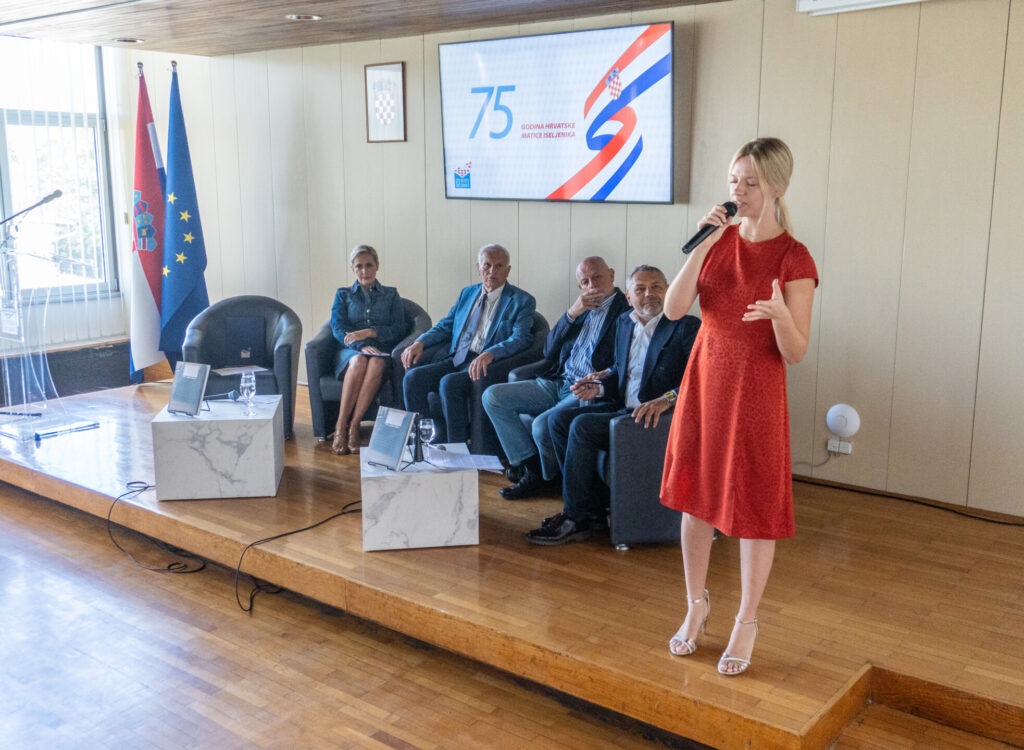
Soloist Nika Pastuović performed a fitting music program at the ceremony in the CHF’s Great Hall, moderated by Vesna Kukavica, M.Sc., Head of the CHF Publishing Department. The promotion was held as part of the prestigious European Heritage Days event, marking new interpretations of the philological heritage of the Croatian cultural emigration of the second half of the 20th century.
From the Author’s Biography
Philologist, writer, anthologist and translator Vinko Grubišić established himself as a professor at the Department of Croatian Language and Culture of the University of Waterloo (Canada), where he taught for decades until his retirement (2008). He has published university manuals Elementary Croatian I (1994, 2003), Elementary Croatian II (1996, 2008), Croatian Grammar (1996, 2007), Croatian Reader (with Anita Mikulić Kovačević, 2007), and Croatian Literature in English (with his daughter Katia Grubišić, 2007). In 2007, he was the first in the world to launch Croatian Online (an online Croatian language course) at the Canadian university where he spent much of his working life. He spent the 1985 academic year in Australia as a guest Croatian language instructor at Macquarie University in Sydney. With Fr. Ljubo Krasić – within the Croatian Schools of America, Canada and Australia system – he published two of the most popular textbooks for learning the Croatian language, Croatian Language 1 and Croatian Language 2. He is also known for his linguistic works O hrvatskom jeziku (1975) and Grafija hrvatske lapidarne ćirilice (1978).
He published the books of poems Robotov poljubac (1974), Bitarion (1987), Gregorijanske šutnje (1989), Druženja s tijelom (1995), and Stazama samih središta (2005). His dramatic texts include: Tri drame (1981) and Ne začuđuju čudesa (1982). In addition to the unique Hrvatska književnost u egzilu (1991), he published the essay collections Izazovne teme starije hrvatske književnosti (2006) and Volitve (2007), as well as the monograph Artaud (2000). Of the translations from Latin, German, French and English, a notable selection includes the following: The American Guerilla Theater (1997), Theater and Its Doppelganger Antonin Artaud (2002), The Navigation of St. Brendan Abbot (2004), Erazmo and the Christian Humanism by Léon Ernest Halkin (2005), Under the Auspices of St. Jerome by Valéry Larbaud (2006), Latinska poezija srednjeg vijeka (2010), Jerome’s Hagiography (with Vesna Badurina Stipčević, 2008) and Krilati pjev (2012). Together with Vladimir Bubrin, Ph.D., he edited the annual publication Journal of Croatian Studies of the Croatian Academy in America. In collaboration with V. Bubrin, he published the bilingual Renaissance reader The Glory and Fame / Dike ter hvaljen’ja (2015). The Faculty of Croatian Studies published his textbook Elementary Croatian (2024).
For his scientific and literary work, Grubišić received the Croatian Poetry Review Award (1971), and in 2003, the prestigious Queen Elizabeth II Golden Jubilee Medal for his contribution to multiculturalism in Canada. Together with Vladimir Bubrin, Ph.D., he won the Davidiad award for the best translation in 2011. He also received an award for the anthology Krilati pjev at the Sarajevo Book Fair (2012). Although retired, he still translates and writes in multiple languages.
Text: Snježana Radoš / Photo: Marijana Žeželj