


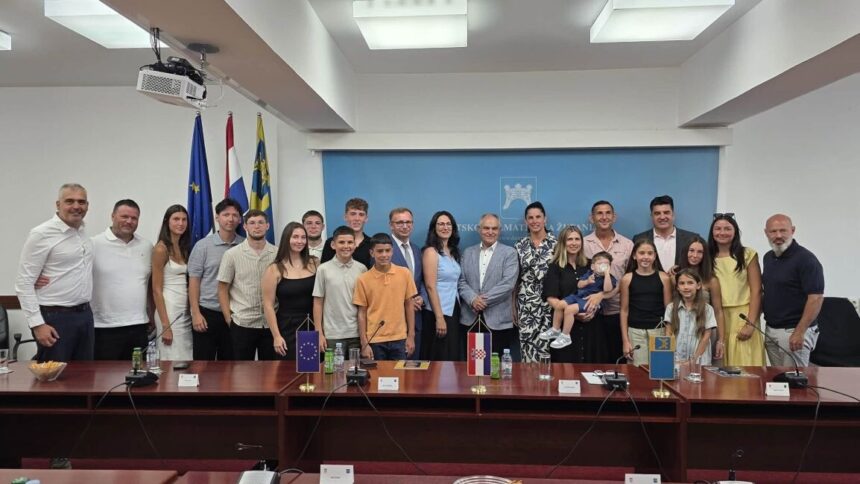
The program visit, realized within the framework of cooperation between the Croatian Heritage Foundation and the Split-Dalmatia County, enabled young members of the Croatian community from Canada to become familiar first-hand with Croatian history and cultural heritage.
Croatian school students in Ontario (Canada), together with their parents, and members of the Folklore Ensemble “Dubrovnik” from London and St. Thomas (Ontario, Canada), a total of some 50 participants, were staying in Split-Dalmatia County from July 20 to 24. In addition to Split-Dalmatia County, they were also hosted by the Split branch of the Croatian Heritage Foundation. The educational trip project involving Croats from Canada was also supported by the Central State Office for Croats Abroad. As part of the program, participants visited Zagreb, Marija Bistrica, Osijek, Vukovar and Šibenik, while in the Split-Dalmatia County, they visited Trogir, Split (Archaeological Museum in Split) and Klis Fortress.
The Cooperation Agreement between the Croatian Heritage Foundation and the Split-Dalmatia County, concluded at the end of last year, has once again, through this program, confirmed its synergistic and cohesive value. Through the projects “Back to the Roots” and “History Was Not Silent Here”, the Croatian diaspora learn more about the national, cultural and identity sources of their homeland.
The initiative of the Croatian School and Folklore Ensemble “Dubrovnik”, as well as the “FA Dubrovnik” project itself, is a valuable example of how educational, cultural and social programs further strengthen ties between homeland and diaspora Croatia, and provide young generations with the opportunity to become more familiar with their roots and build even stronger ties with Croatia.
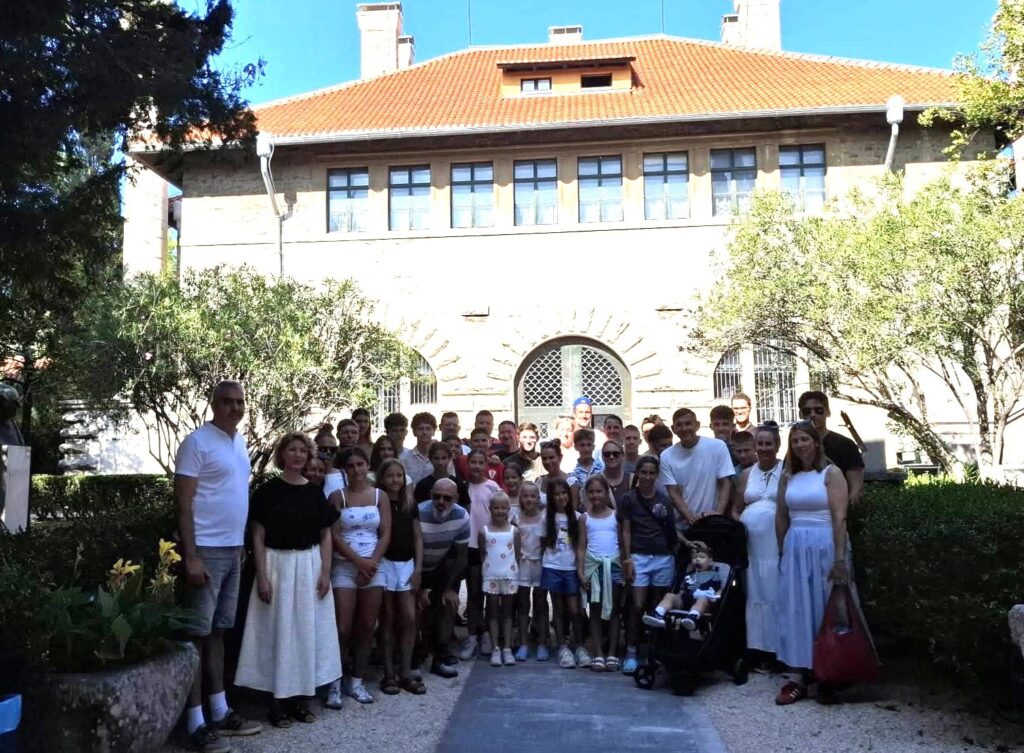
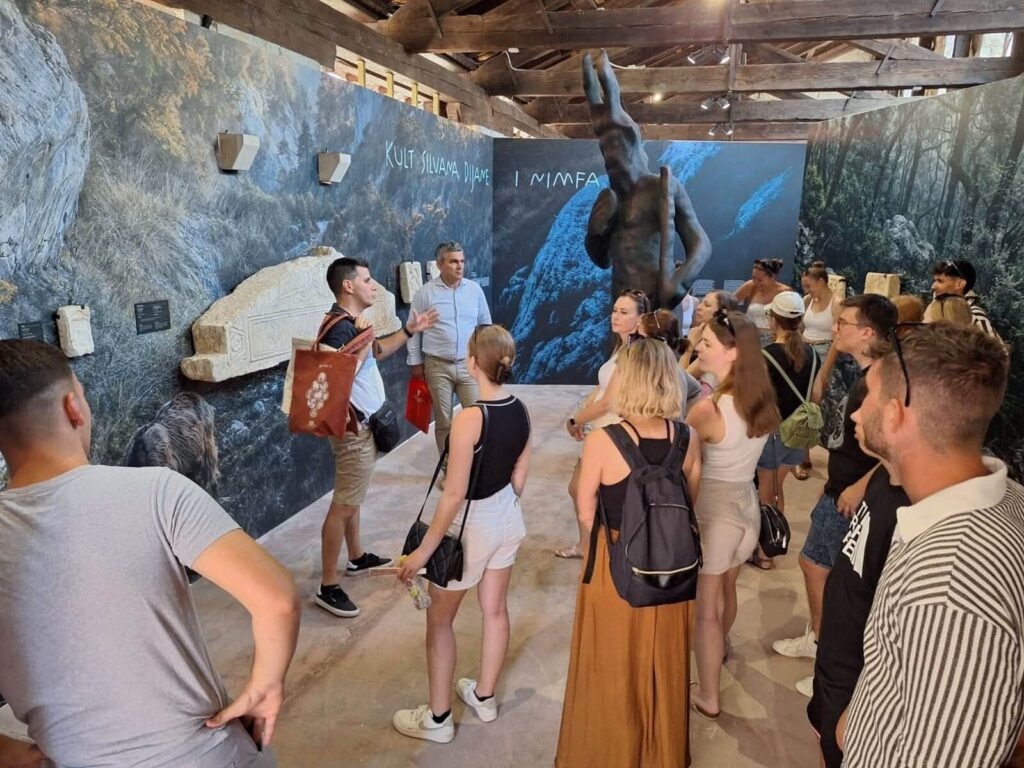
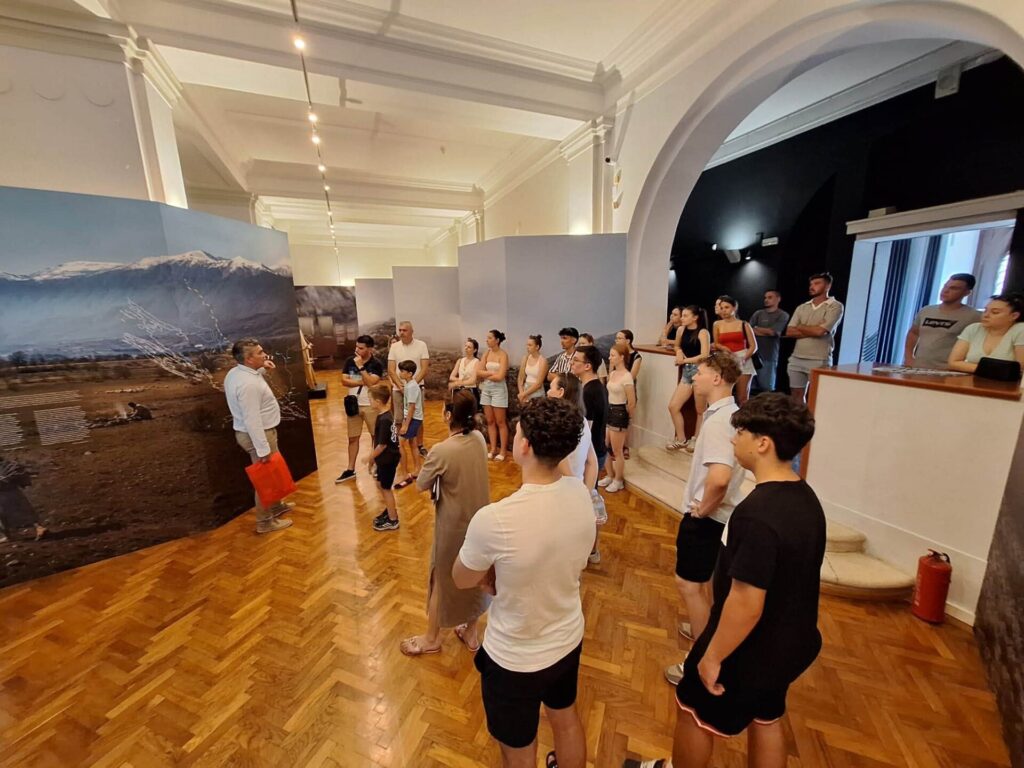
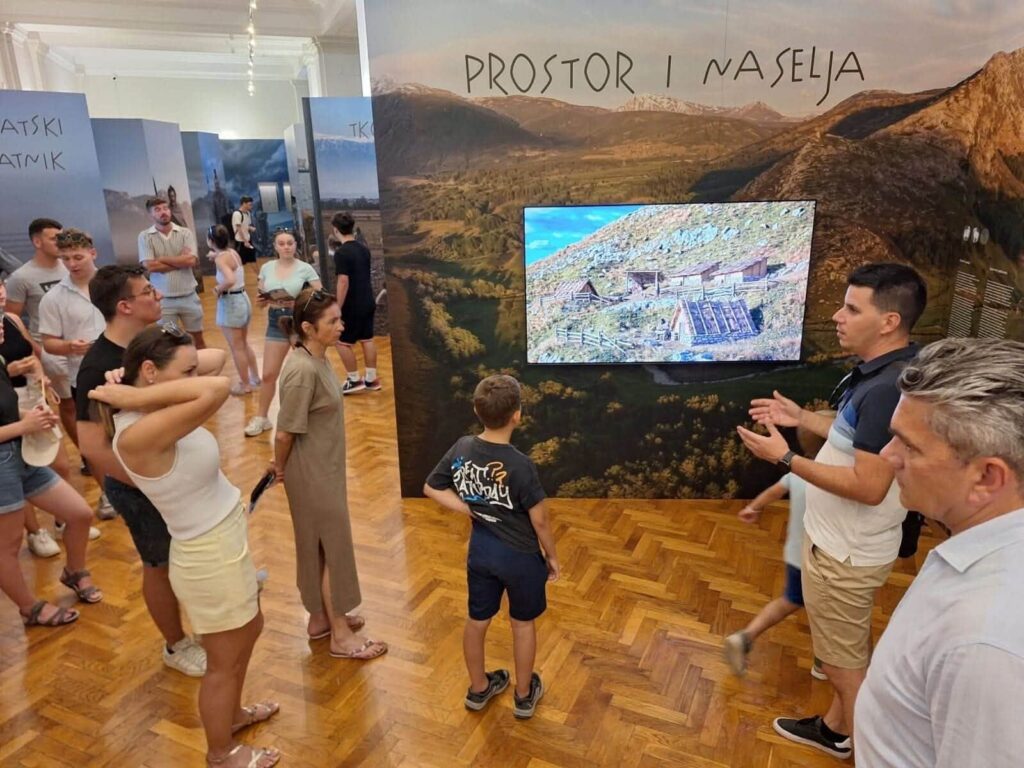
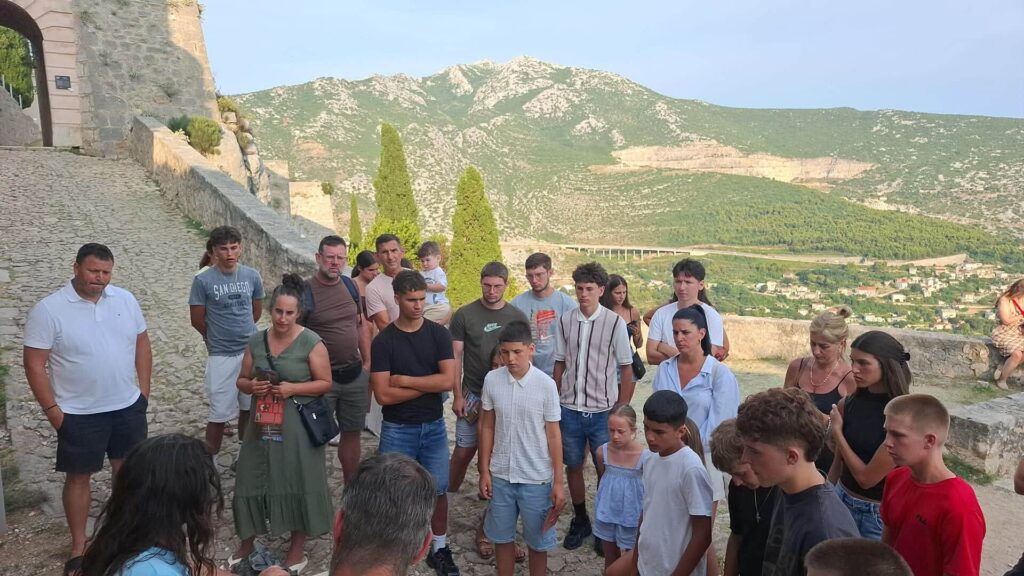
Particularly valuable is the number of children who participated in the program together with their families, thus giving this program trip a strong demographic dimension.
In Split-Dalmatia County’s Grand Hall, the County Prefect Blaženko Boban received a large delegation of compatriots from Canada on July 21. The reception was attended, in addition to the county prefect, by the department heads, Željko Primorac and Tomislav Đonlić, and the head of the Split Branch of the Croatian Heritage Foundation, Ante Ćaleta. Three married couples of the second and third generation of Croatian emigrants with their thirteen children attracted particular attention.
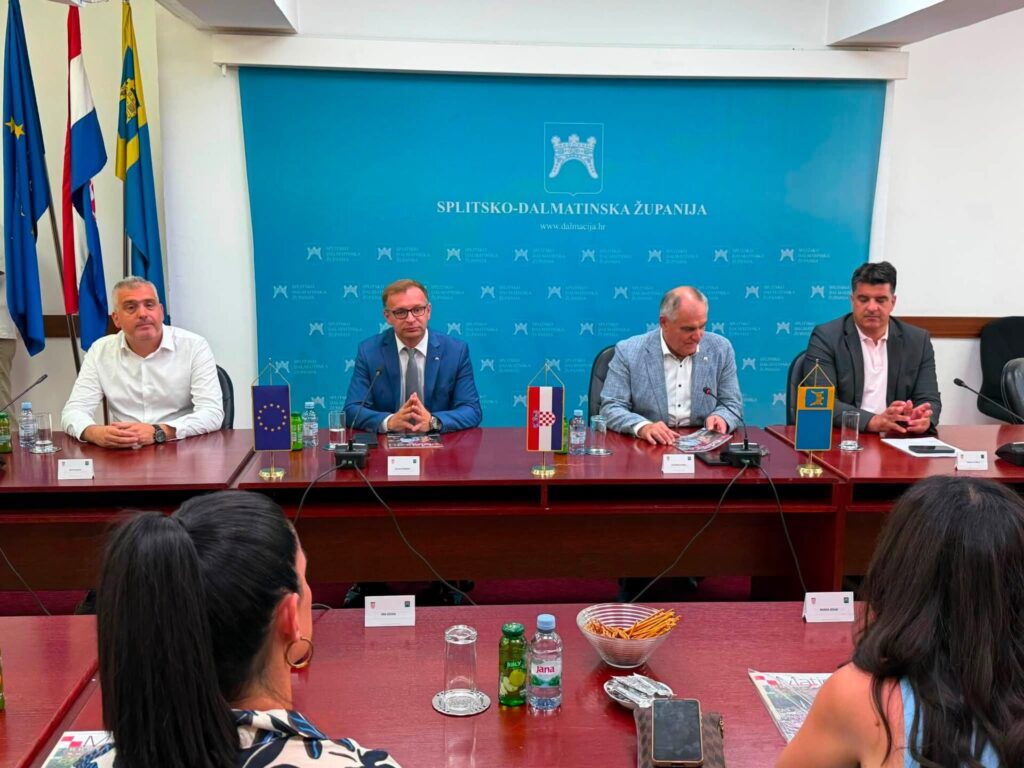
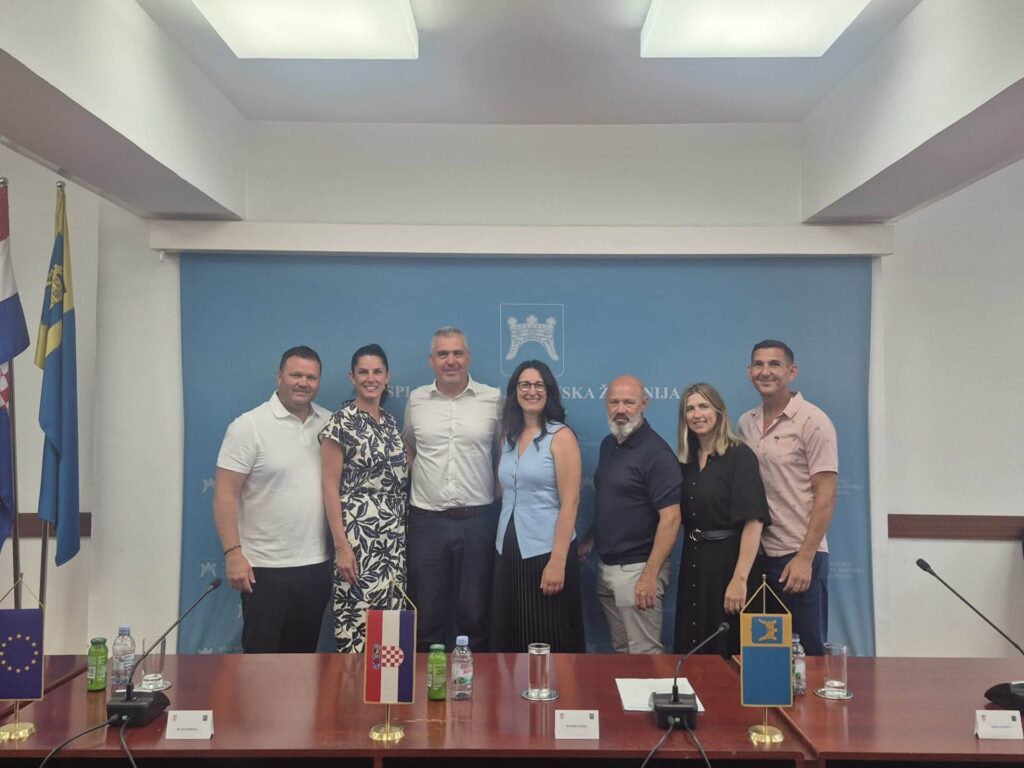
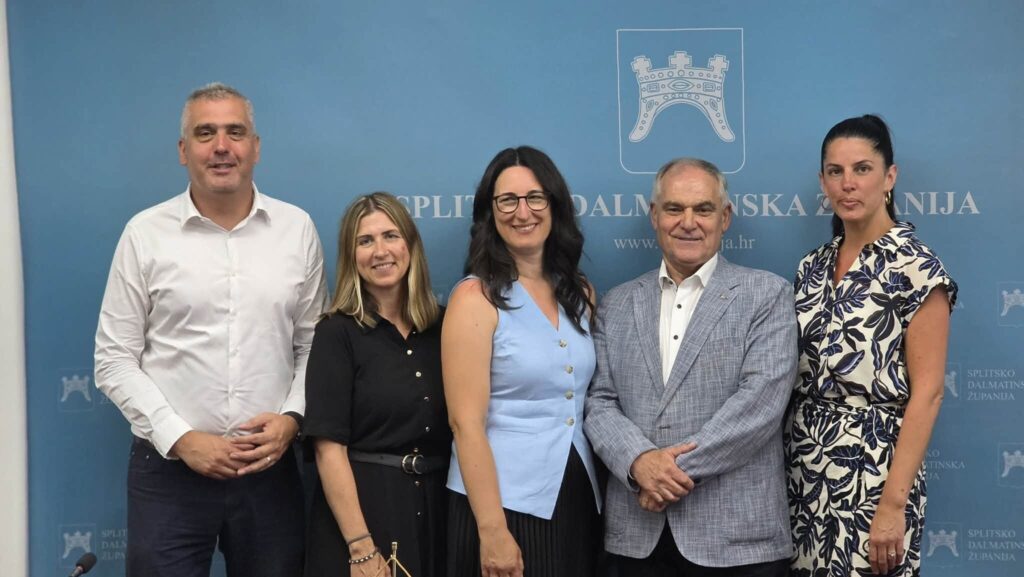
The reception was also attended by Split-Dalmatia County officials and numerous representatives of the media.
The Croatian community from Canada was represented by the president of the Folklore Ensemble “Dubrovnik” and the professor of the Croatian School in London (Ontario), Marina Sesar, with her husband Jozo Sesar and children Mato, Ante, Marija and Ana; the vice president of the Folklore Ensemble “Dubrovnik” and the organizer of the Croatian School in London, Ana Zovko, with her husband Ivica Zovko and children Ivana, Mato and Mila; and the artistic director of the Folklore Ensemble “Dubrovnik”, Marijana Raić, with her husbandMike Raić and children Ante, Zrinko, Jura, Drina, Petra and Vida.
Prefect Blaženko Boban expressed his satisfaction with the arrival of the guests, emphasizing that these meetings confirm the importance of investing in the Croatian diaspora and preservation of the Croatian language:
“Today we had an extremely pleasant gathering with young families who are trying to preserve their Croatian roots, Croatian language and Croatian identity. The process of assimilation is natural in the countries where our people live, which is why it is important to create opportunities for children and young people to get to know their homeland, its history, culture and traditions. Split-Dalmatia County is proud to be a part of this process and to contribute to connecting Croatian emigrants with their homeland,” said County Prefect Boban.
Folklore Ensemble “Dubrovnik” President and professor of the Croatian School in London (Ontario) Marina Sesar presented the work of the Croatian community, which today brings together 14 families and 38 children.
“Our main goal is to preserve the Croatian language and Croatian identity, and to pass it on to younger generations. We are active through a Croatian school, folklore group and numerous cultural activities. We are especially pleased that the community is growing and we believe that even more young Croatian families will become involved in the future,” said Sesar.
The head of the Split Branch of the Croatian Heritage Foundation, Ante Ćaleta, emphasized that such meetings are the actual purpose of cooperation between institutions.
“History and tradition remain incomplete if they are not enriched by people. Today, we have heard life stories that confirm just how strong the ties of our emigrants with Croatia are. Especially noteworthy are the children who, although growing up on another continent, proudly speak the Croatian language and cherish their Croatian identity. It is precisely such programs that demonstrate that the cooperation between the Croatian Heritage Foundation and the Split-Dalmatia County is not only formal, but lives through concrete projects and people,” said Ćaleta.
Particularly noteworthy is the contribution of the coordinator of Croatian teaching abroad in Canada, Ana Bačić, whose engagement contributed to the successful implementation of this valuable project.
Text: Ante Ćaleta / Photo: Split-Dalmatia County 


