


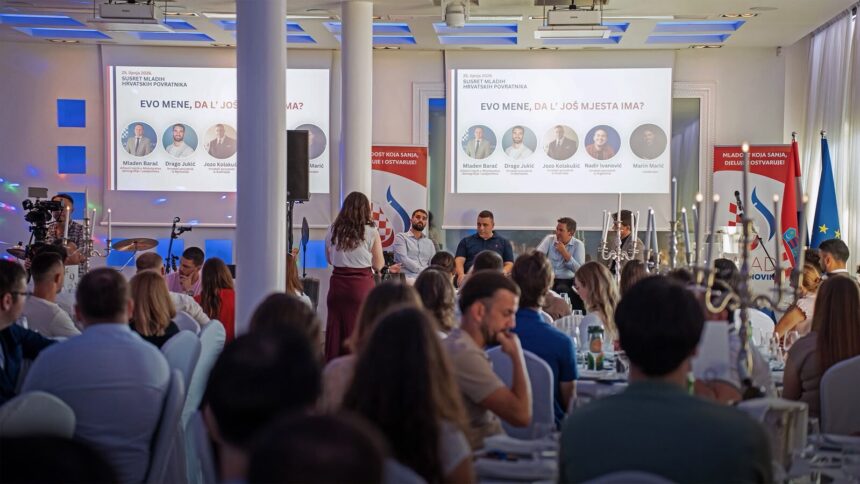
The first Meeting of Young Croatian Returnees brought together about a hundred participants from around the world who, through personal experiences, dialogue with institutions, and presentations of their own projects, highlighted that a successful return is built on a joint effort among the state, the community, and the returnees themselves.
Organized by the Association Mladi za Domovinu (Youth for the Homeland), in partnership with the Croatian Heritage Foundation and with the financial support of the Ministry of Demography and Immigration, in Zagreb on 25 June, the first Meeting of Young Croatian Returnees, a unique event dedicated to connecting young Croats who, after living, studying or working abroad, have decided to continue building their future in Croatia.
The meeting brought together about 100 participants, including young returnees from Australia, Argentina, Chile, Germany, Austria, and other countries, as well as numerous representatives of state institutions and civil society organizations that work with returnees and the Croatian diaspora.
The main part of the program consisted of the panel discussion “Here I am, is there still room? From personal stories to mutual solutions for the future of Croatian returns”, attended by State Secretary in the Ministry of Demography and Immigration Mladen Barać, sociologist; head of the website “Projekt Njemačka” and “Projekt Hrvatska”, and returnee from Germany, Drago Jukić; system engineer, head of the website “Forever Croatia” and returnee from Australia Jozo Kolakušić; and tour guide, former president of the Argentine-Croatian Cultural Center and returnee from Argentina Nadir Ivanović. The panel was moderated by Marin Marić, psychologist and leader of the “Udruga Mladi za Domovinu” podcast project. The discussion raised a number of important topics, from administrative challenges and integration upon return to the possibility of more extensive cooperation among institutions, civil society, and the returnees themselves in establishing more effective return policies.
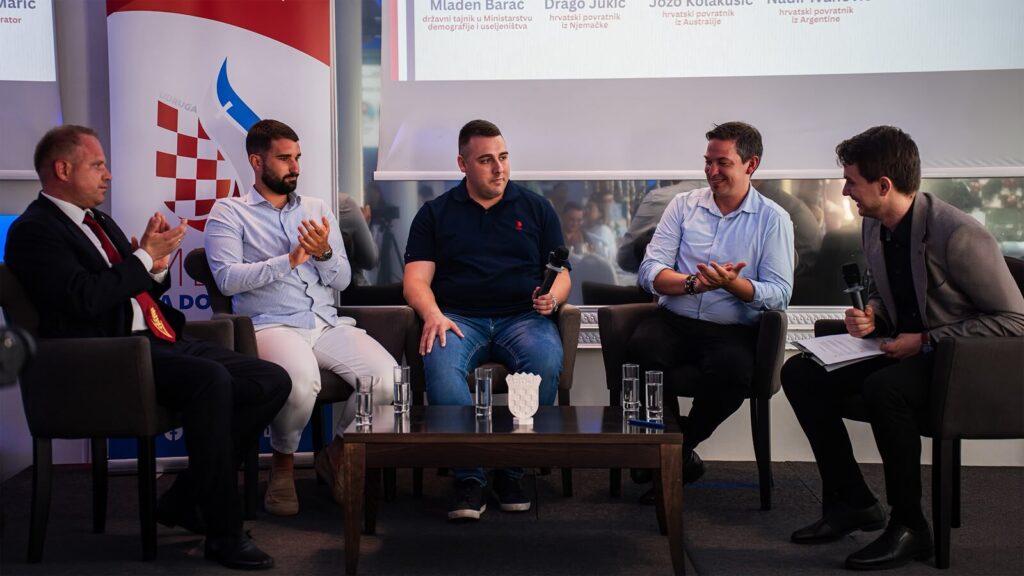
The participants agreed that among the largest hurdles to returns are institutional disconnect, complex administrative language, and information distributed across numerous official websites. Drago Jukić underscored that returnees often struggle to navigate the system and that local institutions do not always understand their specific circumstances.
Nadir Ivanović particularly emphasized the importance of learning the Croatian language and becoming familiar with the culture before arriving. In his opinion, language knowledge allows the returnee not to feel like a foreigner but to experience Croatia as their own home.
Jozo Kolakušić referred to the social reactions that returnees encounter. Although invitations to return have been repeated for years, after their return, returnees are often greeted with the question: “What are you doing here?” He also highlighted that Croatian communities worldwide, after the Homeland War, did not develop a sufficiently clear plan to connect the new generations with Croatia, although their main goal was to facilitate the return of emigrants and their easier adaptation in the Croatian state, rather than their staying abroad.
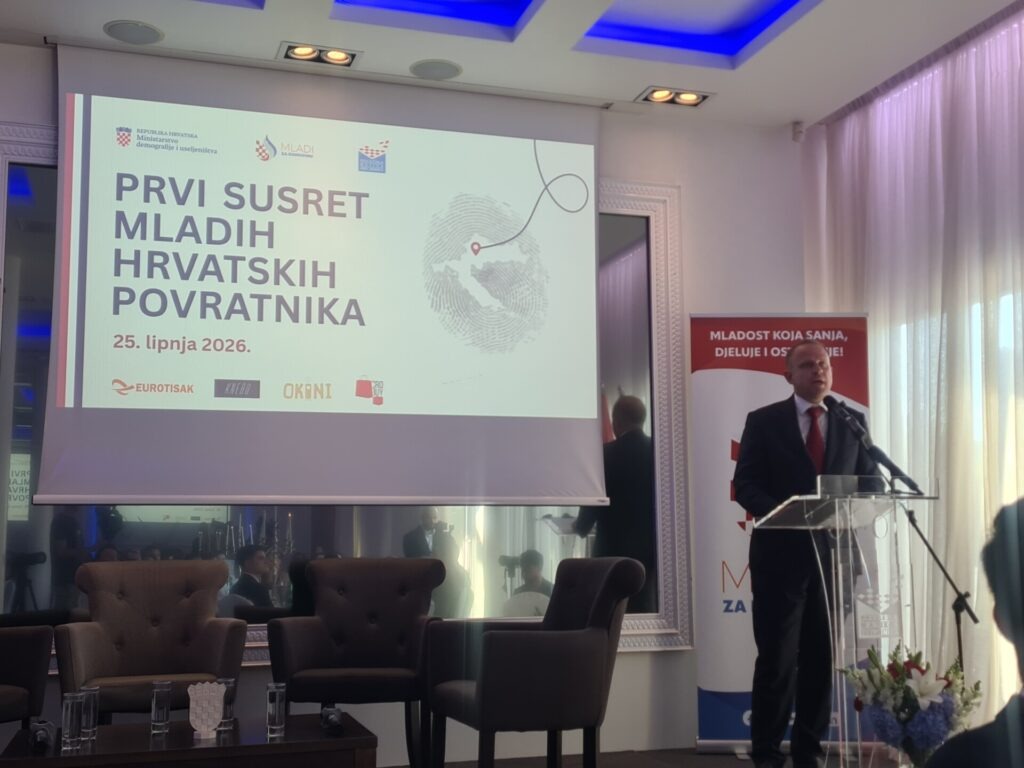
Speaking about responsibility, State Secretary Mladen Barać stated that the greatest responsibility lies with the state, but that a social consensus is needed on the importance of return migration. He singled out the system’s sluggishness and institutions’ lack of willingness to recognize change as the main problem.
At the same time, the participants also emphasized the personal responsibility of the returnees. Jukić said that the system could not be expected to solve every problem in advance and that return, as well as departure, requires initiative, adaptation and realistic expectations. Although they did not downplay the existing challenges, the participants disagreed with the claim that the situation in Croatia was dire. They highlighted safety, cultural preservation, family ties, and growing opportunities as important advantages of living in Croatia.
To the final question of whether there is still room for returnees, the answer was clear – yes, there is! “There is never a perfect time to return, but there has never been a better time,” said Kolakušić.
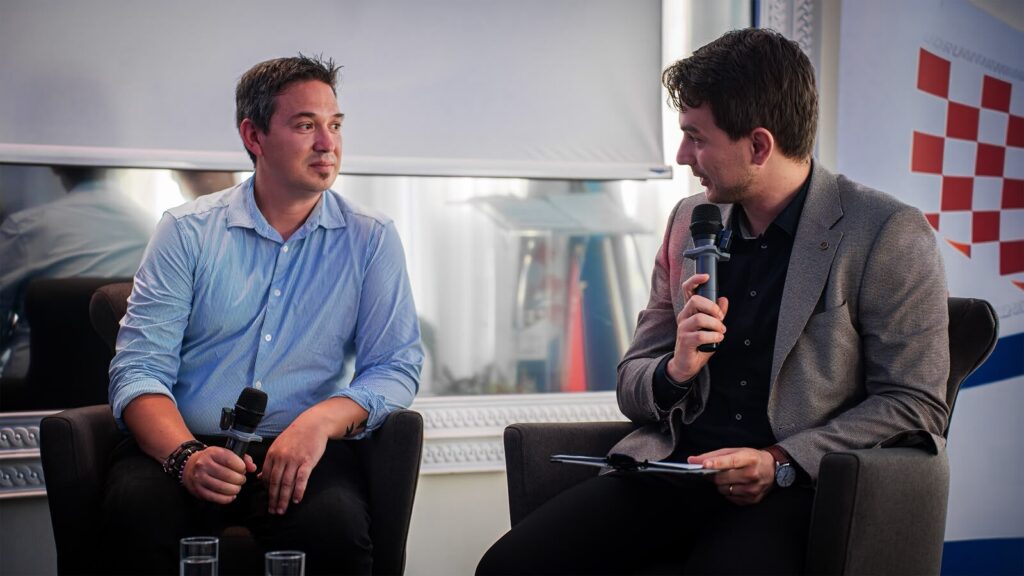
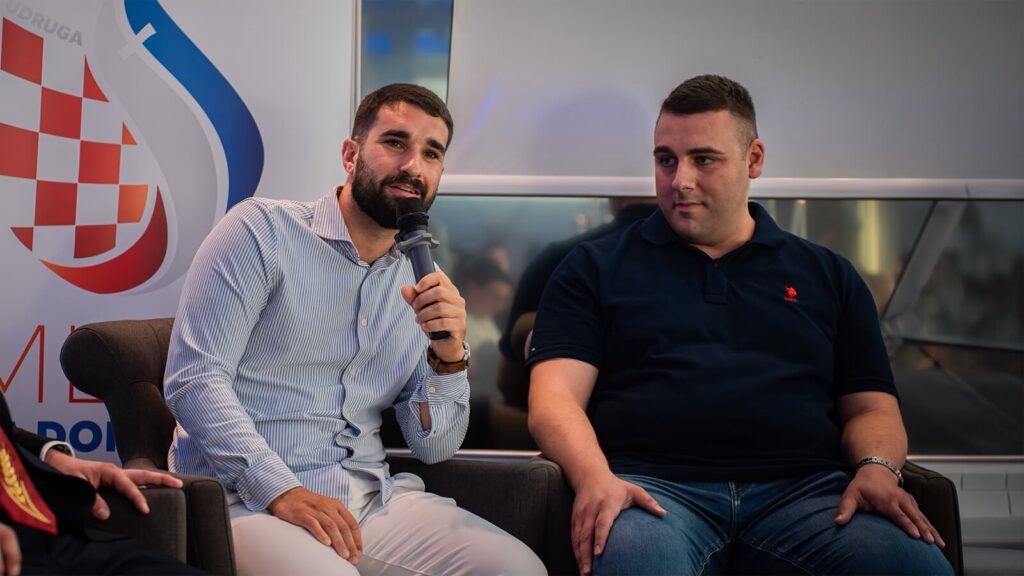
Nadir Ivanović concluded that the meaning of returning is best demonstrated in the word homeland itself, because it contains the word home. Many Croats abroad built successful lives and large houses, but the sense of belonging often remained tied to Croatia. That is why returning is not just a change of address, but a decision to reconnect one’s life, family and future with the place to which one feels one belongs.
The panel ended with a message that Croatia must offer returnees a more open and streamlined system, but also that the homeland is not built solely by laws and institutions. It is built by people who are ready to return, take responsibility, and participate in its future with their knowledge, experience, and life.
Particular value was added to the meeting by presentations on the projects and initiatives of the returnees themselves. After the panel, the young returnees presented their own business projects, social initiatives and inspiring personal stories, showing how knowledge, experiences and contacts gained abroad can become an important contribution to the development of Croatian society, economy and local communities. This provided participants with the opportunity to learn about concrete examples of successful returns and to establish new contacts and collaborations.
In addition to the official program, significant emphasis was placed on mutual acquaintance, networking and exchange of experiences. It was the informal talks that opened up space for new acquaintances, future collaborations, and ideas that we believe will be the beginning of new joint projects.
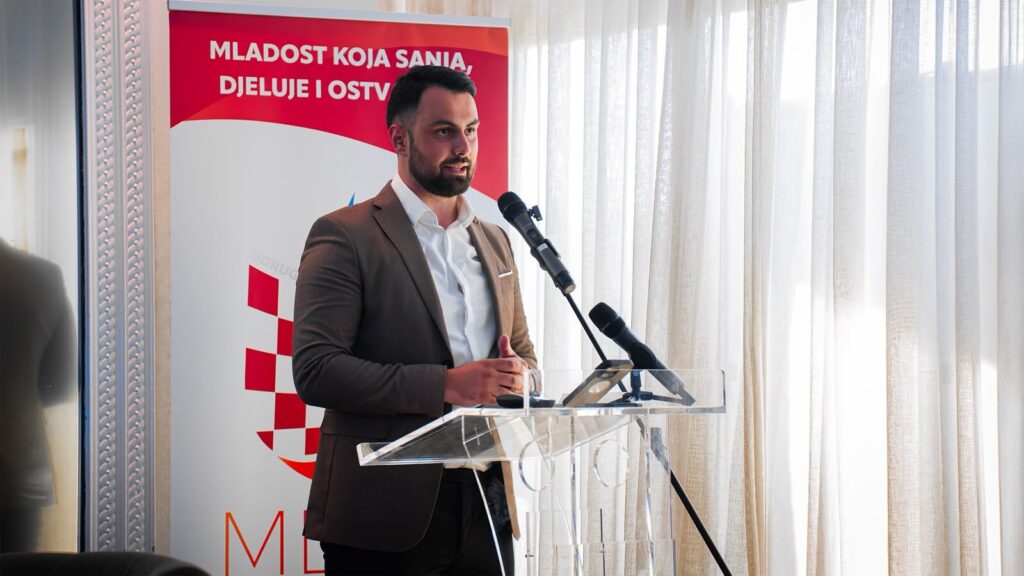
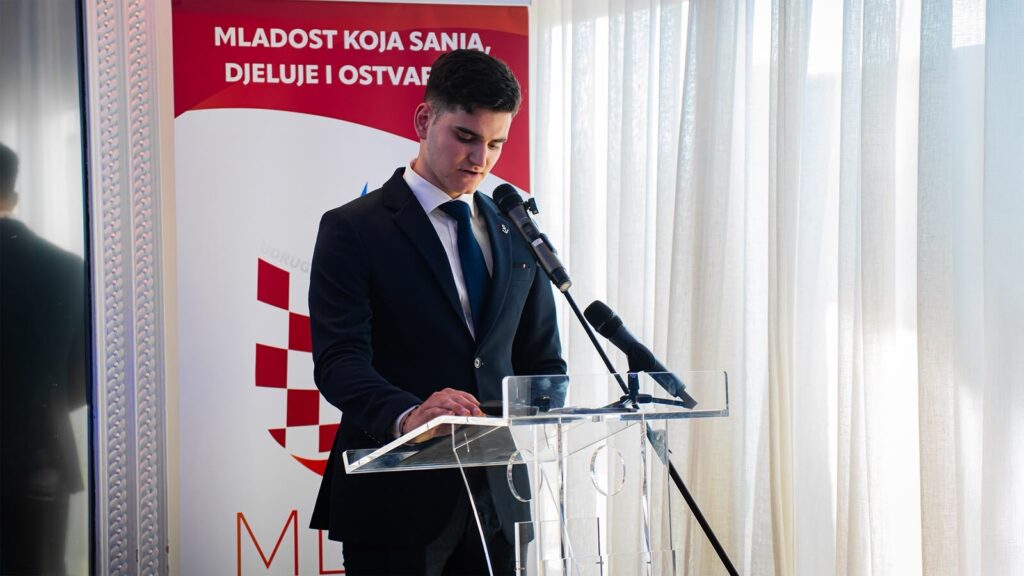
The organizers from Mladi za Domovinu thanked all participants, partners, and institutions that supported the project and noted that the strong interest in participating showed a real need for this form of gathering for young Croatian returnees.
“It is our desire that the Meeting of Young Croatian Returnees becomes a traditional gathering place for all those who have returned to Croatia or are just thinking about returning. We believe that it is by connecting people, exchanging experiences and open dialogue that concrete solutions can be created that will facilitate the path to the Homeland for future returnees,” said the organizers from Mladi za Domovinu.
The Meeting concluded with the message that the return of young people from abroad represents a significant potential for the development of Croatian society, but that its sustainability depends on better institutional connections, clearer procedures, and an active role of returnees themselves. The organizers said they will continue working on a permanent platform to connect returnees and those still planning their return.
Text and photo: MZD


