


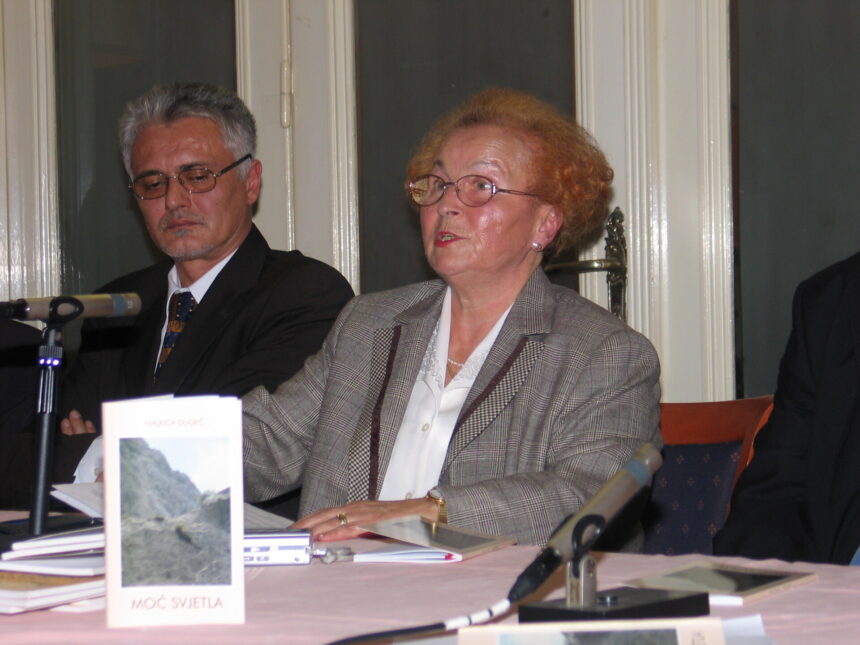
The Croatian writer with a German address for half a century, Malkica Dugeč, is one of the most famous and prolific Croatian poets abroad…
Croatian poet, prose writer, and essayist Malkica Dugeč was born on June 3, 1936, in Zavidovići, Bosnia and Herzegovina. She has been present in the Croatian literary scene since the 1950s. She was educated in Sarajevo and Zagreb, where she graduated in 1953. In 1959, she graduated from the Faculty of Philosophy, University of Zagreb, with a degree in Croatian and Russian Language and Literature. After her studies, she worked as a professor in Požega, Lobor, Gradac near Drniš and Donji Miholjac.
She began her literary work at an early age, publishing poems in the early 1950s. She published her first collection of poems, Crveni biseri (Red Pearls), in Požega in 1960.
In 1972, after political occurrences related to the Croatian Spring, she left Croatia and settled in Stuttgart, where she continued to live and work in exile with her husband and famous Croatian dissident Božo within the Croatian cultural community in the diaspora.
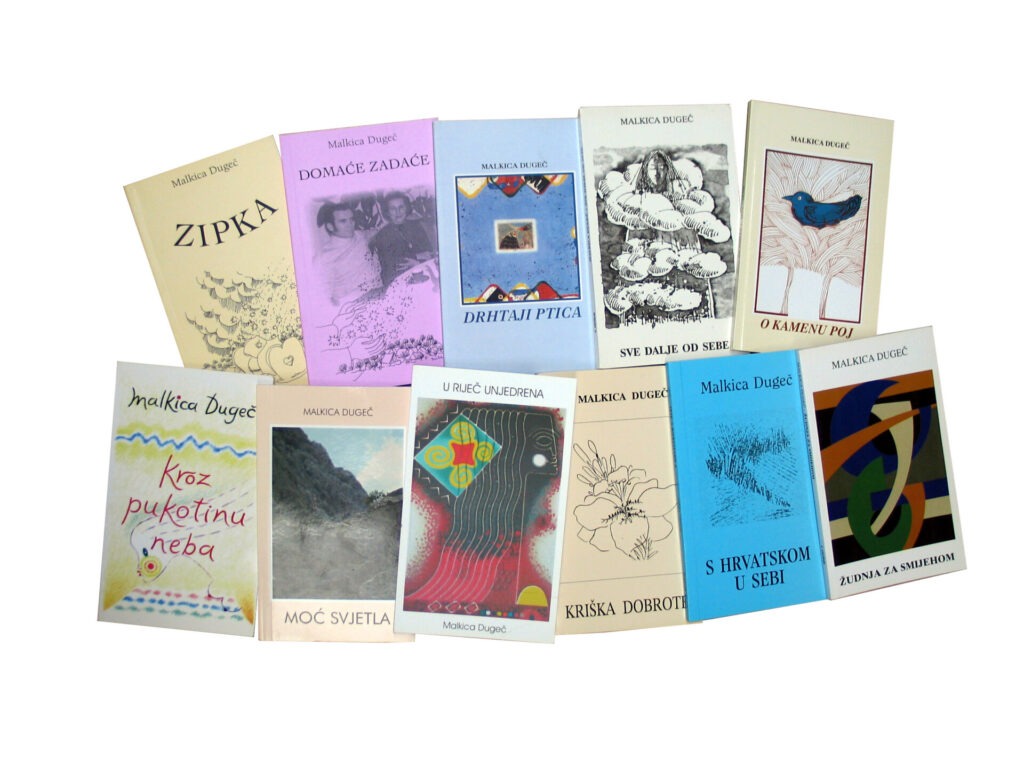
During her many years of literary work, she has published some thirty books of poetry and prose and is included in numerous Croatian anthologies and lexicons. Her work is thematically related to religion, homeland, language, identity and the diaspora experience.
She is a member of several cultural and literary associations, including the Croatian Writers’ Association (DHK), Matrix Croatica, the Croatian Writers’ Association Herzeg-Bosnia, the Croatian Academy of Sciences and Arts in the Diaspora and Deutsche Gesellschaft für Kroatistik.
She has received several literary awards, including the “Antun Branko Šimić” and “Fra Lucijan Kordić” awards.
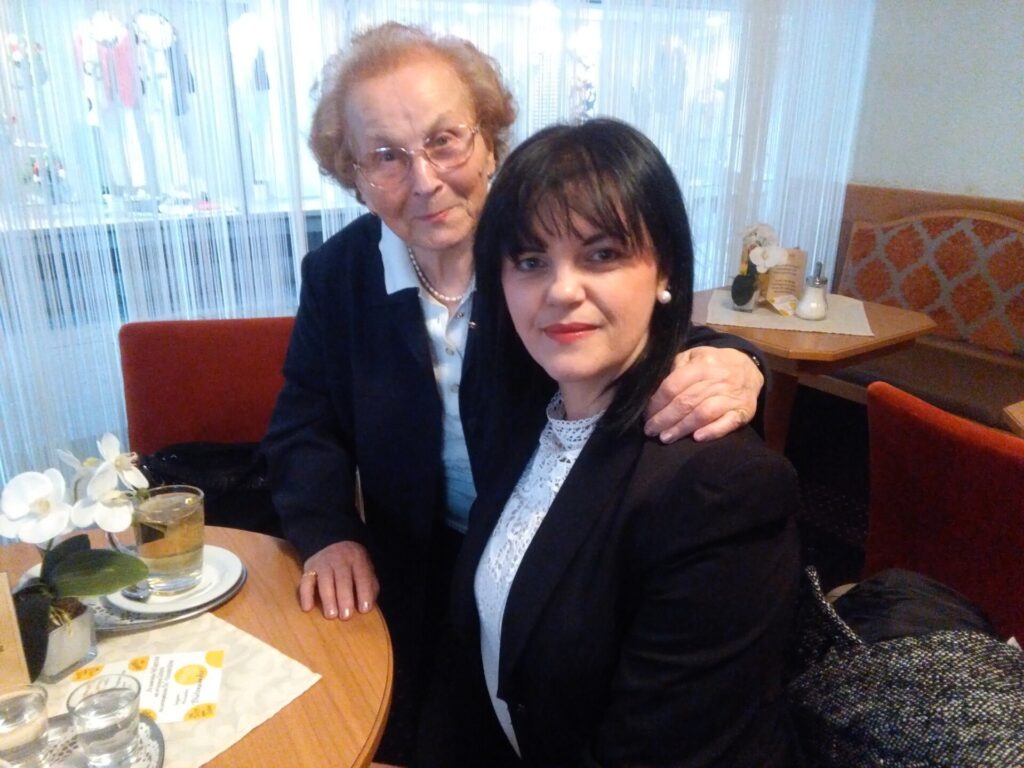
Malkica Dugeč is one of the most famous and prolific Croatian poets abroad, in addition to writers such as Nedjeljka Luetić Tijan, Nada Kesterčanek Vujica, Marija Fabek or Katarina Pejaković… Her oeuvre, built over decades of creative work, strongly testifies to a lasting connection with the Croatian language and identity. As an author and intellectual, she remains a symbol of perseverance, patriotism and loyalty to the Croatian word, and her creativity confirms the strength of a culture that transcends borders and connects generations of Croats around the world.
Text and photos: Lucija Šarčević, prof.


