


Since its establishment on February 12, 1951, with the mission of connecting the homeland with the Croatian diaspora throughout the world, the Croatian Heritage Foundation has marked seven and a half decades of continuous activities
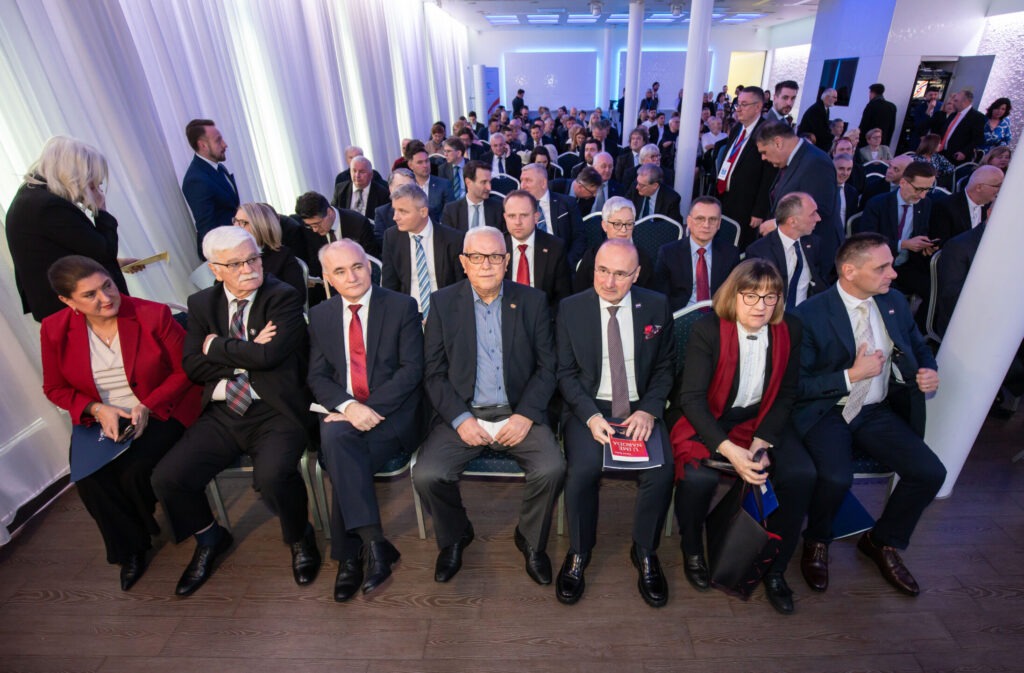
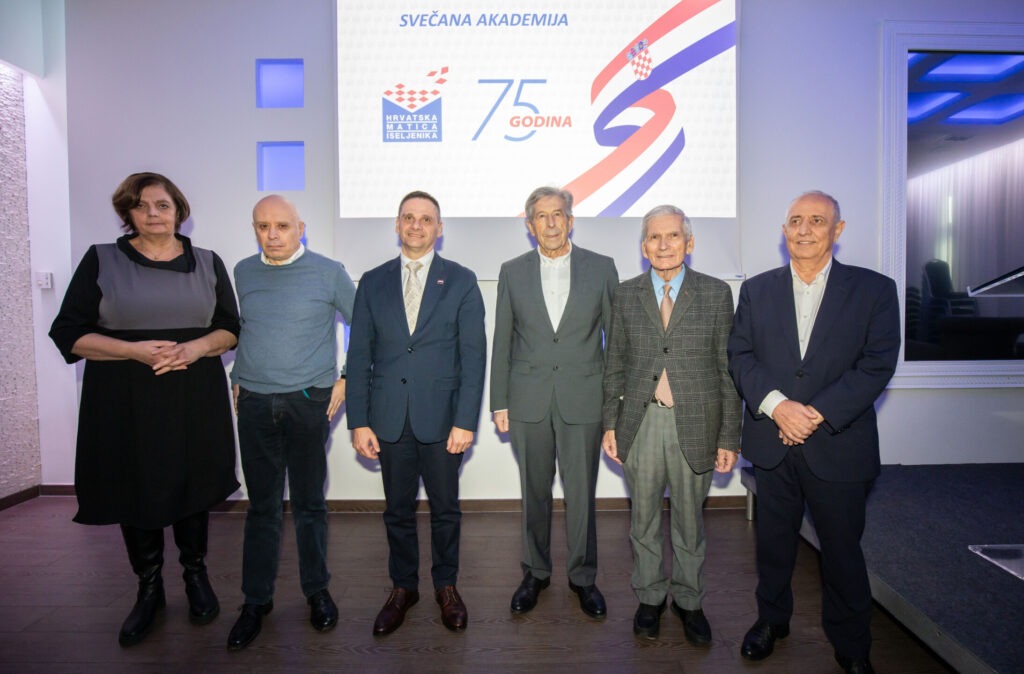
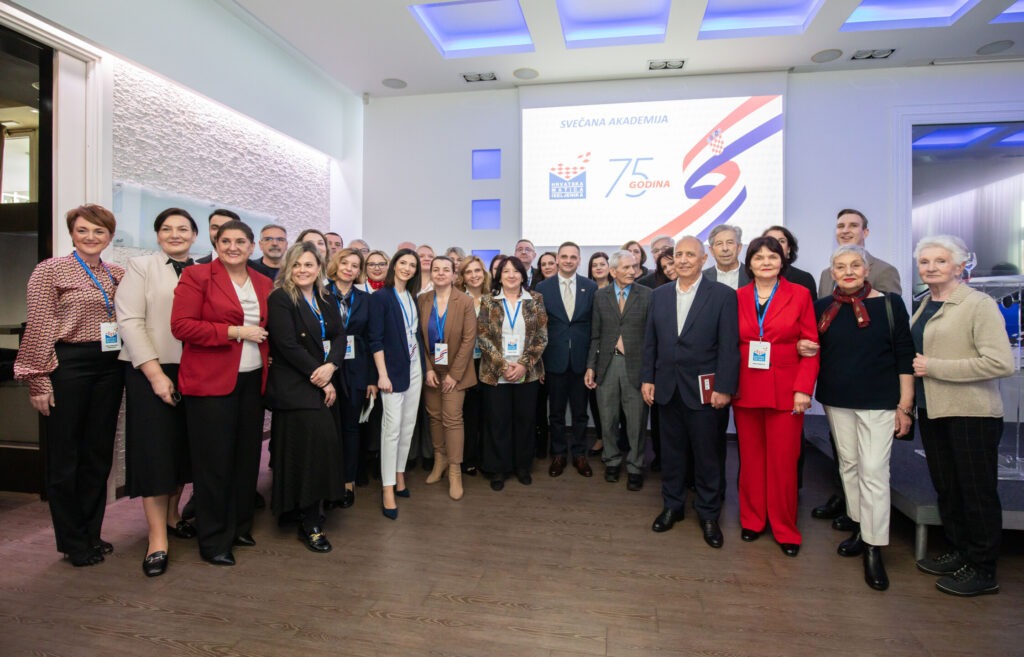
To mark the occasion, a special ceremony was held at the Matis venue in Zagreb, in front of more than 250 guests from public, cultural, and social life, to celebrate the jubilee of an institution that has been connecting Croatia’s homeland and diaspora for three-quarters of a century. The event brought together representatives of state, cultural and social institutions, the diplomatic corps, the Croatian national minority and the Croatian diaspora, as well as numerous friends and associates of Matica. The anniversary was marked on the exact date of the Croatian Heritage Foundation’s establishment – February 12, 1951 – further emphasizing the historical durability and importance of its activities.
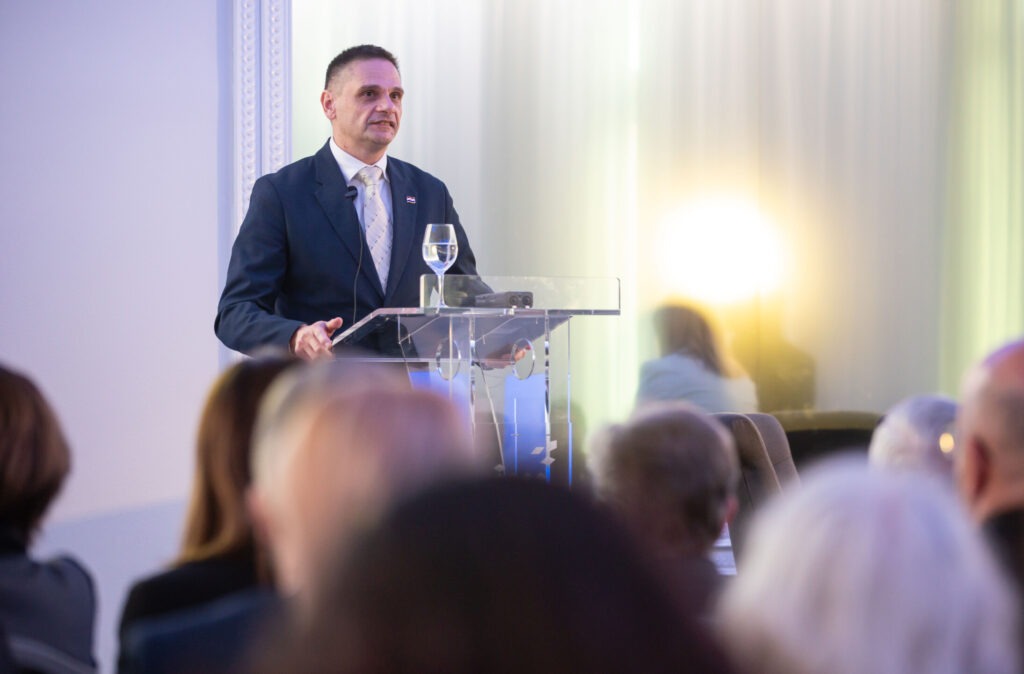
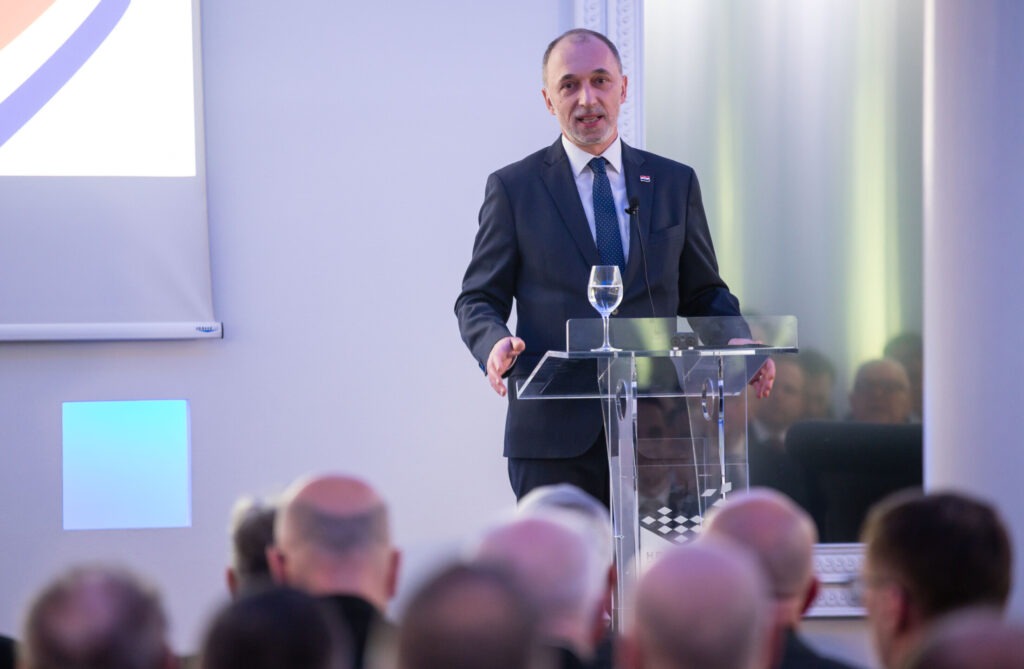
In his introductory speech, Deputy State Secretary of the Central State Office for Croats Abroad, Dario Magdić, highlighted that the Croatian Heritage Foundation, despite numerous challenges, changes, trials and tribulations, remained a fundamental and indispensable institution for strengthening ties and developing relations between Croatia and its emigrants. “The CHF was successful in fulfilling the objectives of its mission, maintaining ties with its people and knowing how to adapt without losing sight of the guiding thread. The CHF has remained the CHF – the source and focal point of Croatian national, cultural and linguistic identity – to numerous communities of Croats outside the homeland,” Magdić emphasized.
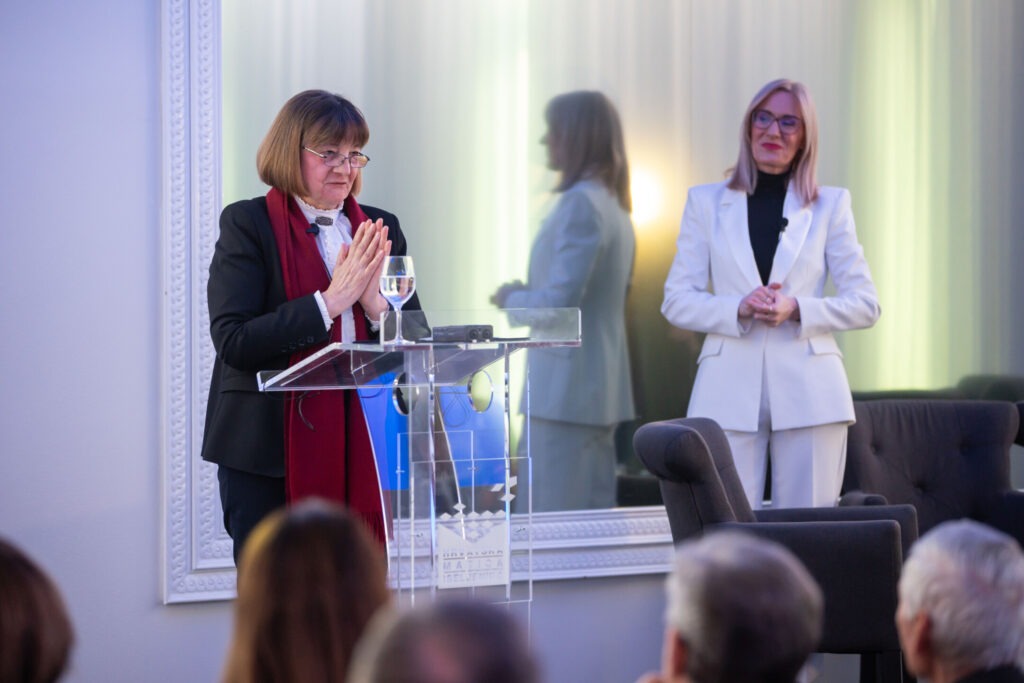
The envoy of the Speaker of the Croatian Parliament Gordan Jandroković, and Chairperson of the Committee for Croats Outside the Republic of Croatia, Zdravka Bušić, congratulated the Croatian Heritage Foundation on the successful task of linking the homeland with Croats abroad, as well as its perseverance in implementing unique programs bringing them together and connecting them in a special way with the homeland.
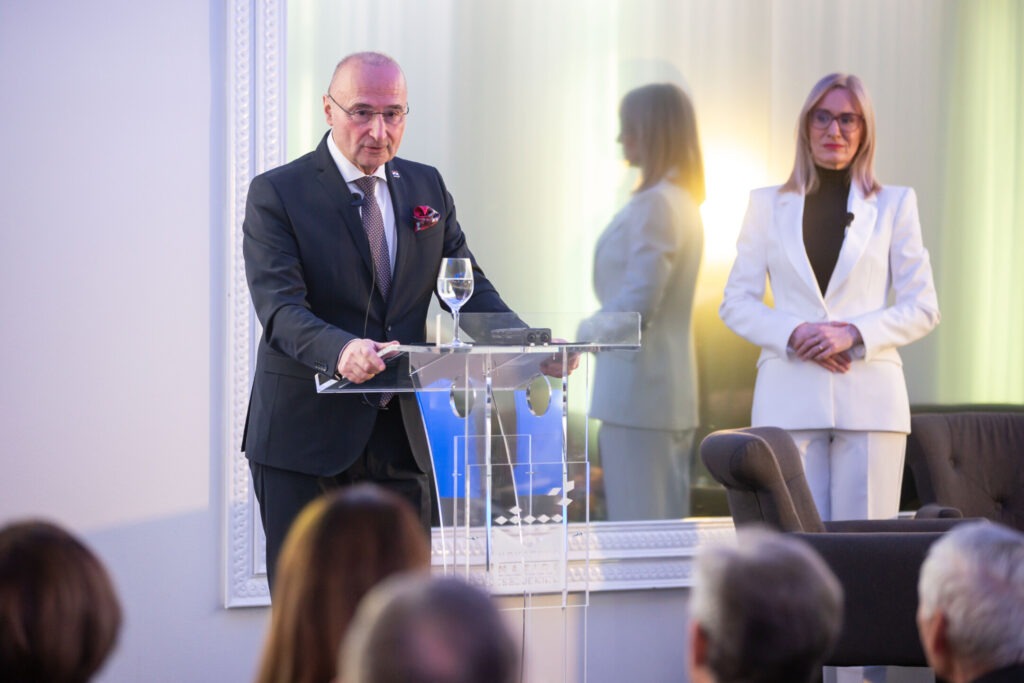
Gordan Grlić Radman, the envoy of the Prime Minister of the Republic of Croatia Andrej Plenković, and the Minister of Foreign and European Affairs, emphasized the importance of the work of the CHF since the first day of its establishment and the importance of people who acted as silent Croatian patriots within it, which made its role during complex political circumstances of significant importance in preserving the Croatian identity.
In his address, the Director of the Croatian Heritage Foundation, Zdeslav Milas, M.Sc., emphasized, among other things, the indispensable role of the CHF during the establishment of modern Croatian sovereignty.
“Acting as a bridge between homeland and diaspora Croatia, connecting people and hearts, transferring knowledge and experience, preserving our beautiful Croatian language, culture, religion and feeling of belonging to a unique Croatian nation, transcends the boundaries of formal citizenship. A Croat is anyone with Croatian roots, whether they are a descendant of the second, third, fourth or even fifth generation of emigrants, whether they are just discovering their connection through language, culture or the feeling of togetherness. We are a symbol of the always extended hand of the Croatian homeland to all striving to deepen this togetherness. Especially young people – because they are a guarantee of the preservation of Croatianness throughout the world,” emphasized Milas.
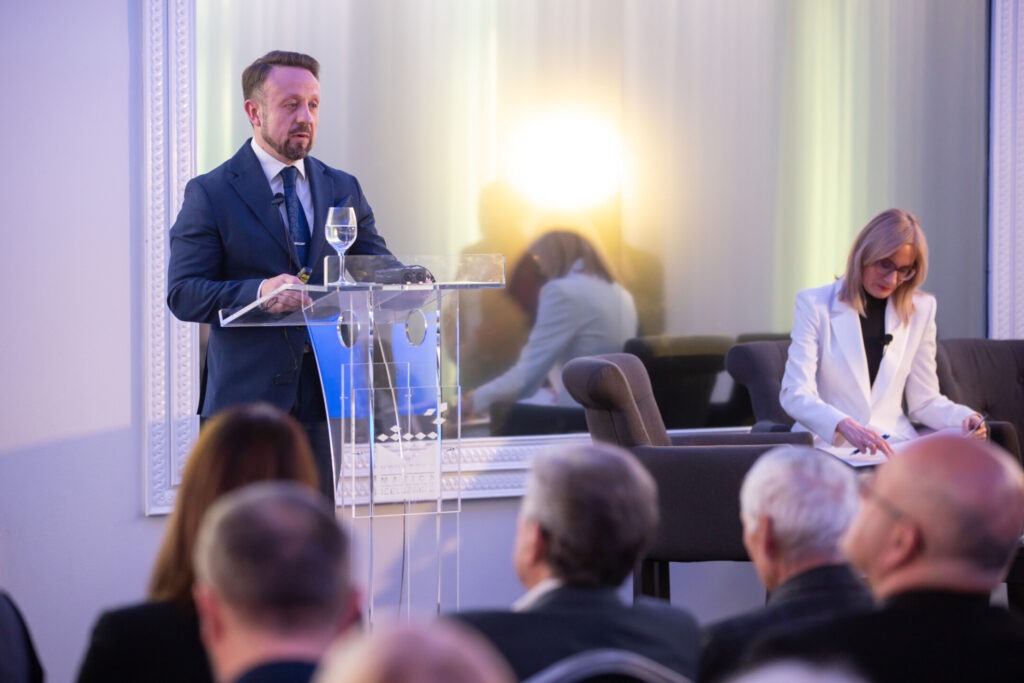
The main presentation was delivered by Ivan Tepeš, Ph.D., of the Institute for Migration Research, who highlighted the rich and layered history of the CHF from its founding to the present. He underlined that the institution has remained a key cultural and identity link between the Croatian people outside the borders of the Republic of Croatia for decades.
SOCIAL AND CULTURAL ACTIVITIES
The CHF’s history from 1951 to the present can be divided into two periods, with the dividing point being the creation of the modern Republic of Croatia in 1990. The first period was marked by a socialist social and political organization and activities within Yugoslavia, while the second period was marked by activities in democracy and the independent Croatian state.
After World War II, the situation in the diaspora for the newly established communist government in Yugoslavia became increasingly complicated. Members of the older, economic generation of emigrants and their descendants were then joined by the post-war wave of Croatian political emigrants. After arriving in their new homelands, they began to establish their Croatian communities and to build clubs. They advocated the overthrow of communism and the establishment of an independent Croatia outside Yugoslavia, while developing a strong promotional campaign, and although they were fewer in number than the older generation of emigrants, they were very influential. They were joined in large numbers by emigrants from later years, mostly of the younger generation.
The Croatian Heritage Foundation was established at the founding assembly on February 12, 1951, and Dr. Zlatan Sremec was elected its first president. At the founding assembly, the working presidency also included the Croatian poet Miroslav Krleža and the sculptor Antun Augustinčić.
The CHF was established as a cultural and educational organization tasked with maintaining cultural and friendly ties between the diaspora and the homeland. Immediately after establishment, regional committees were also established. The first were founded in Split and Rijeka, and later in other places in Croatia.
During the 1950s, the CHF slowly developed its activities, and for emigrants and their organizations it provided folklore costumes, tamburitza instruments, musical notes, vinyl records, school books and tape recordings, which also played a significant role in the preservation of the Croatian language among emigrants. In return, the emigrants and their clubs collected documentation of historical significance for emigrants and sent it to the CHF’s History Department, established in 1958.
From 1954, at the initiative of the Croatian Heritage Foundation, the organization of the Diaspora Week began, and from the beginning of the 1960s, Samobor, where the traditional Emigrant Picnic was held, became its main destination.
The beginning of the 1960s was marked by the construction of the Home of Emigrants on Trnjanska cesta, which still remains the CHF’s headquarters. The cornerstone for its construction was laid in 1961, while the opening ceremony was held on March 26, 1964. From then until the present day, the Home of Emigrants has remained the headquarters of the CHF. The opening of the Home also marked the start of the term in office of the CHF’s President, Većeslav Holjevac, who remained in that position until 1968. His term witnessed a significant expansion of the CHF’s activities, coinciding with the new wave of emigration that engulfed Croatia at the time.
COOPERATION WITH THE CFU THAT CONTINUES TODAY
During the 1960s, cooperation with the Croatian Fraternal Union from the United States, the oldest and most influential Croatian emigrant organization, with over 100,000 members at the time, particularly intensified. The highlight of the mutual cooperation up to that point was the organization of the 75th anniversary celebration of the CFU, during which a session of its Executive Board was held in Zagreb’s City Hall. Since the 1970s, this cooperation has also manifested itself in helping to organize CFU tamburitza festivals in Zagreb, a tradition that continues to this day.
During the 70s and 80s, the CFU continued its cultural and educational activities by organizing Croatian language and folklore courses, scholarships for students belonging to the Croatian national minority and the Croatian diaspora. Since 1980, the CHF has been organizing the Summer School of Croatian Language and Folklore program.
The first period of activity of the Croatian Heritage Foundation was marked by its presidents in this order: in the 50s and early 60s, Zlatan Sremec and Vicko Krstulović; in the second half of the 60s, Većeslav Holjevac and Jure Franičević Pločar; in the 70s, Oleg Mandić; in the late 70s and 80s, Vanja Vranjican and Stjepan Blažeković.
CHANGES AFTER 1990
Changes in the activities of the CHF and the start of the second period occurred in April 1990, after the first multi-party elections, won by the Croatian Democratic Union under the leadership of Dr. Franjo Tuđman. Changes occurred in the CHF leadership, and for the first time in its history, the pages of its magazine opened up to previously forbidden topics that had been written about in the diaspora for decades, such as the suffering of Croats in Bleiburg and the Way of the Cross. The headquarters then opened up to all groups of emigrants without reservation, and consequently, numerous interviews were published with Croatian political emigrants who, after many years, even decades, returned to Croatia and held high positions in the new Croatian government.
Croatian political emigrants also assumed the top position in Matica; first the emigrant poet Boris Maruna, followed by the editor of the journal Hrvatska revija (Croatian Review) Vinko Nikolić, while the most significant mark during the 1990s was left by Ante Beljo, a Croatian returnee and politician and emigrant activist, who held this position from 1993 to 2000.
During those war years, the CHF was a strong bridge and support to the diaspora in their humanitarian and war efforts to help the homeland during the Homeland War, and the large humanitarian activity of the diaspora for orphans from the Homeland War developed through the “Dora” Foundation, which was co-founded in 1991 by the CHF, in whose premises Dora also operated.
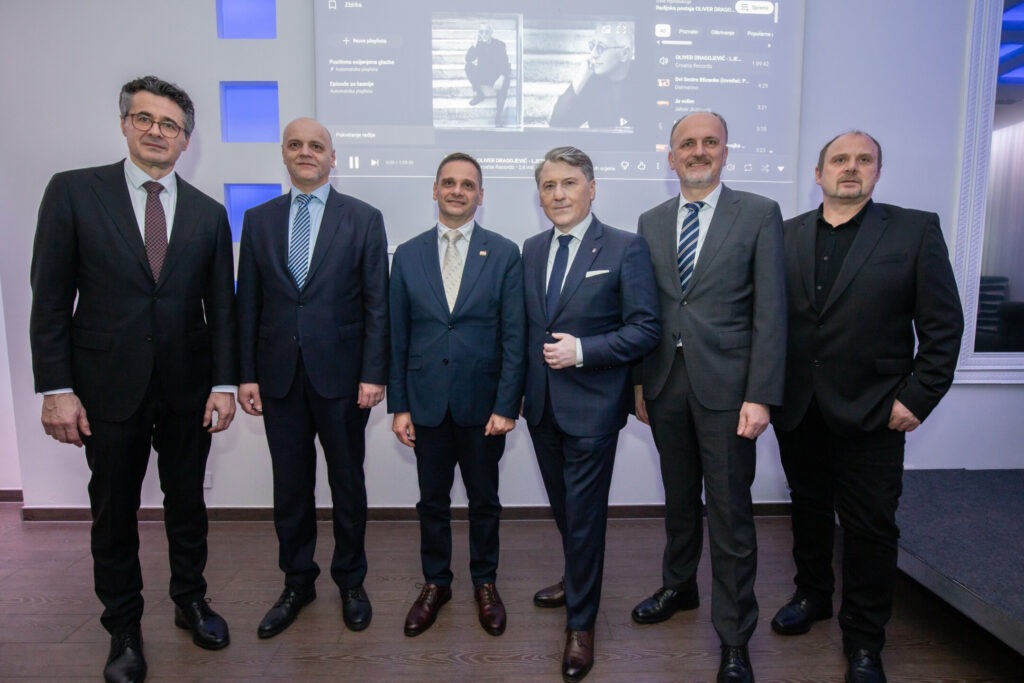
Milas, Kristijan Tušek, Joži Buranić and
Martin Kerstinger

TRADITIONAL CHF PROGRAMS
In the period of the first half of the 90s, many of CHF’s programs were launched, which have become traditional, and are still held today, including the following: The University School of Croatian Language and Culture; the Little School of Croatian Language and Culture; the Eco Heritage Task Force eco-project; the Summer and Winter School of Croatian Folklore; followed by the Forum of the Croatian National Minority; the Days of Croatian Folk Theater and the Days of Croatian Film in the Diaspora and in BiH; and finally the Emigrant Days in Southern Croatia organized by the CHF’s regional offices in Rijeka, Zadar, Split and Dubrovnik.
The CHF was among the first to embrace the digital age in the 1990s. Given its connection with the Croatian Information Center at the time, a satellite program for Croatian emigrants was launched in October 1995, and in 1998 the CHF’s website went live, evolving into a trilingual interactive web portal in 2005. Also linked to the portal is the CHF’s Digital Repository, containing digitized content, including the CHF’s publications and books.
In recent years, Matica has established a presence on social media such as Facebook, Instagram and TikTok, thus keeping up with the times and becoming more accessible to younger audiences.
EXTENSIVE PUBLISHING ACTIVITIES
The CHF has also developed strong publishing activities, of which the Croatian Emigrant and Minority Communities Lexicon stands out, with over 1,000 pages and about 3,500 entries. The Lexicon was published in collaboration with the Ivo Pilar Institute of Social Sciences. The electronic edition was published in 2015, while the printed edition was launched during the pandemic in 2020.
After 1990, the Croatian Heritage Foundation has been closely cooperating with Croatian state institutions responsible for relations with the diaspora. During the 90s, these were the Ministry of Emigration and the Ministry of Return and Immigration, while during the 2000s, permanent cooperation was established with the Directorate for Croatian Minorities, Emigration and Immigration of the Republic of Croatia’s Ministry of Foreign Affairs.
With the establishment of the Central State Office for Croats Abroad (SDUHIRH) in mid-2012, this body became responsible for the CHF’s activities on behalf of the Government of the Republic of Croatia. Since then, the CHF has been working closely with all of the Office’s employees, including its leadership. Since 2016, State Secretary Zvonko Milas has been at the helm of the Office, and precisely over the last ten years, the funds of the Government of the Republic of Croatia allocated to emigrants through the Central State Office have increased manifold. This was the case with the allocation of funds to the CHF, which enabled its stronger growth and enhanced the quality of its programs.
The 75th anniversary celebration has once again confirmed that the Croatian Heritage Foundation remains a permanent bridge of cooperation, unity and preservation of Croatian identity among Croats around the world.
Text: CHF and Ivan Tepeš, Ph.D. / Photo: Jurica Galoić


