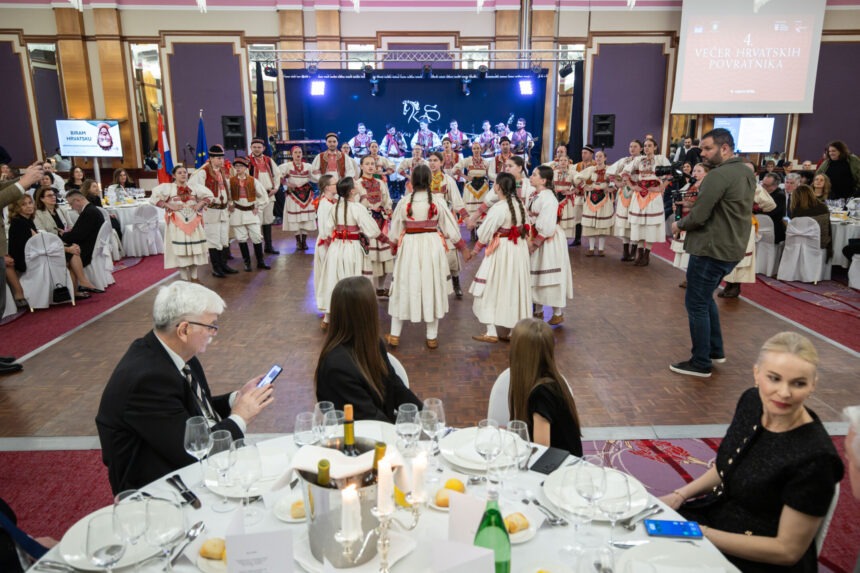
The 4th Evening of Croatian Returnees took place in the crowded Crystal Hall of the Westin Hotel.
The event was organized by the Croatian Heritage Foundation and the Hrvatska Uzdanica Association, with the support of the Central State Office for Croats Abroad and under the auspices of the Government of the Republic of Croatia. The evening was dedicated to strengthening ties between the homeland and the diaspora, encouraging return and creating a positive social and economic environment for those who have decided to build their future in Croatia. This event has a special significance for both organizers and guests because it brings together returnees, their families, representatives of institutions and friends of Croatia, creating a space for togetherness, exchange of experiences and strengthening of national identity.

Powerful Messages from the Stage
The formal part of the program opened with welcome speeches that emphasized the importance of connecting homeland Croatia with diaspora Croatia and building confidence in institutions and their continued support for returnees.
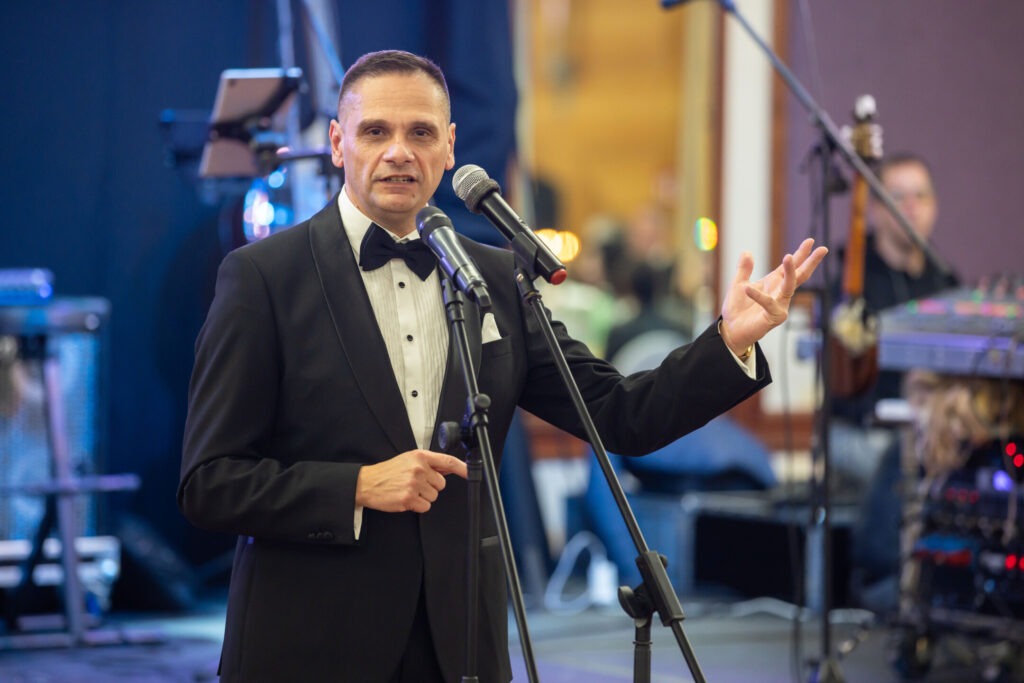
Dennis Gudasić, President of the Hrvatska Uzdanica Association, said that he knows from experience that moving from one city to another is a big step, moving from one country to another is even bigger, and moving from one continent to another is the biggest.
“Returning is not just about getting there, it is about making a decision to contribute to the community and the future of the country we call homeland. No government has taken concrete steps to promote returns as has this government led by Prime Minister Andrej Plenkovic,” emphasized Gudasić, who moved from Australia to Croatia 30 years ago to participate in the defense of the homeland.
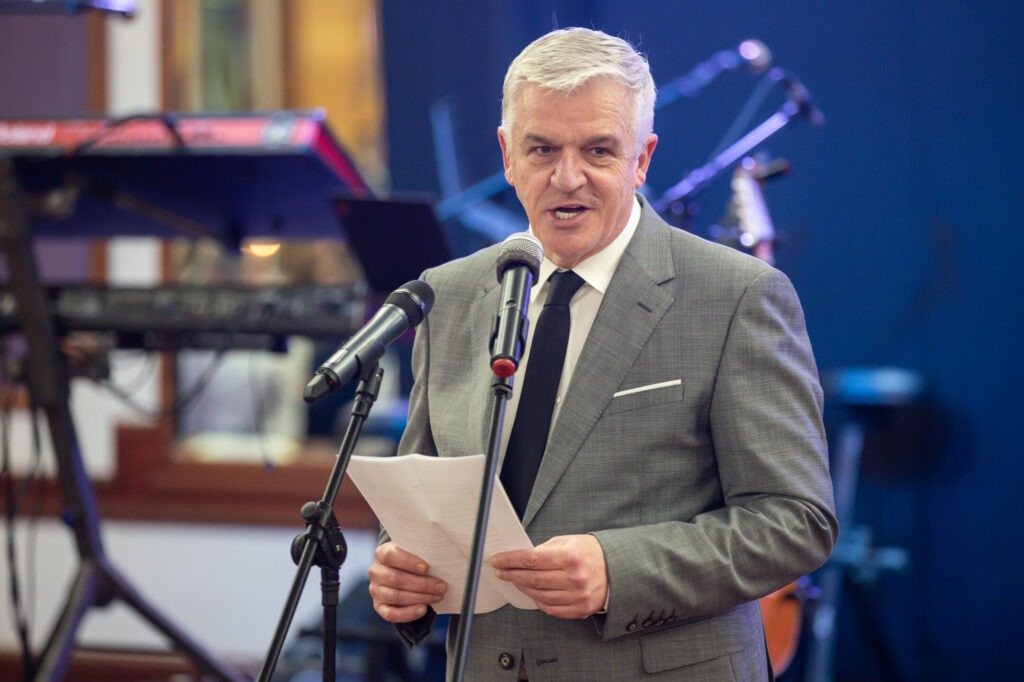
The Director of the Croatian Heritage Foundation, Zdeslav Milas, pointed out that this Evening of Returnees was amplified with the presence not only of returnees from the 1990s, but also of those who returned to Croatia ten, five or even a year ago.
“The data finally indicate that the trend has been reversed, more and more Croats and their descendants are returning to their roots, and we, at the Croatian Heritage Foundation, whose mission is to connect homeland and diaspora Croatia, are extremely excited about this,” said the CHF Director.
Zvonko Milas, State Secretary of the Central State Office for Croats Abroad, expressed great satisfaction that the returnees once again gathered in large numbers and paid tribute to all those who left everything they had in the countries where they had lived and came to defend their homeland in the 1990s. As a native of Vukovar, Milas pointed out that he understood what a new beginning meant, adding that the State Office takes care of Croats abroad through its work and will continue to do so.
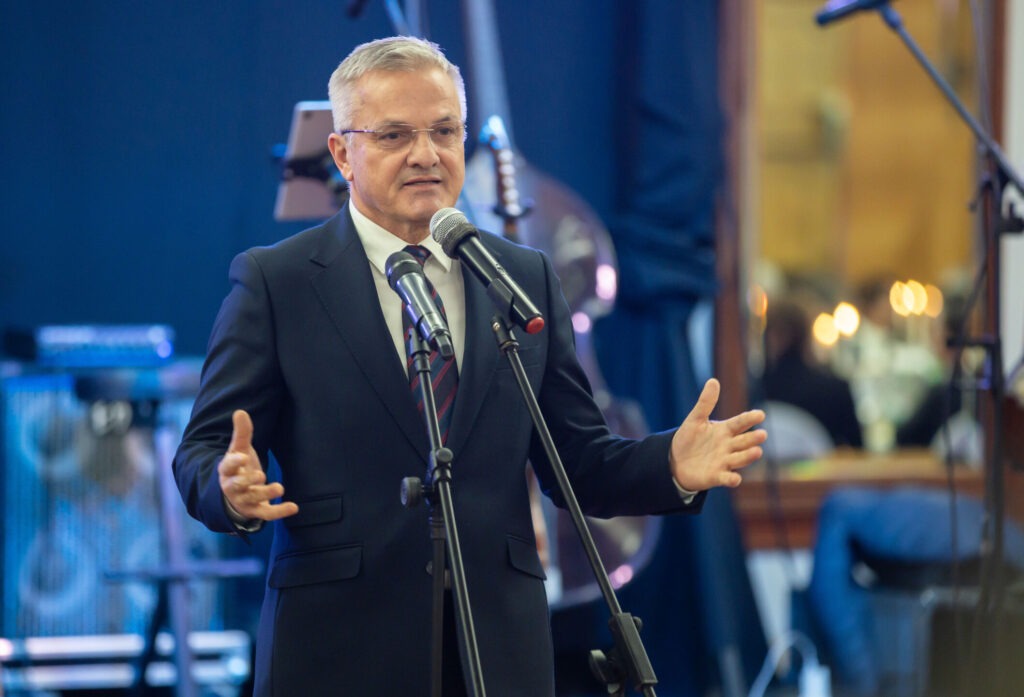
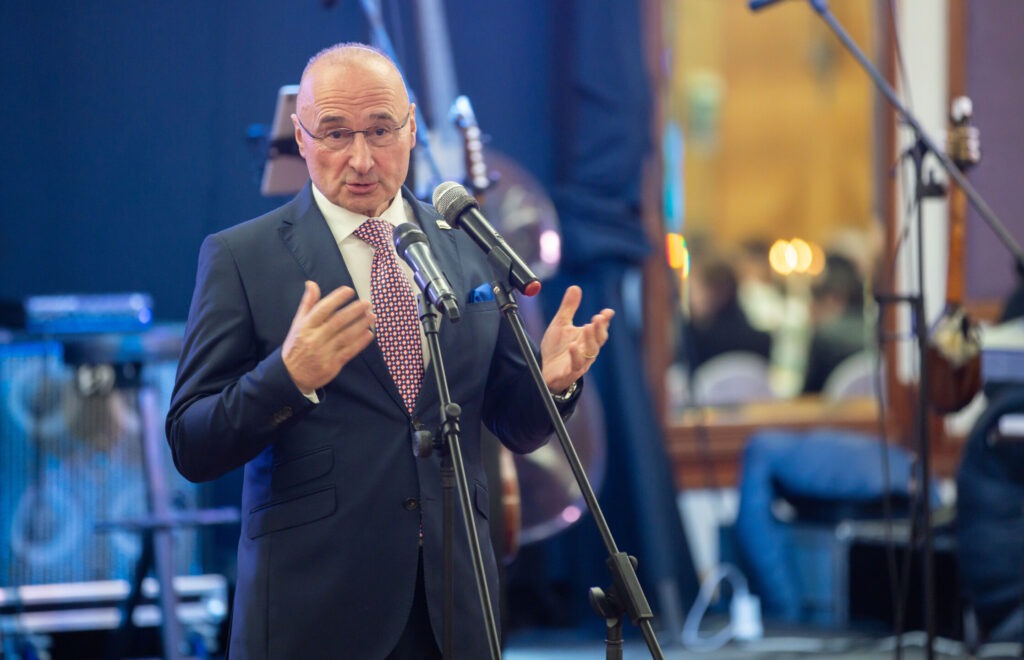
The Minister of Foreign and European Affairs and Envoy of the Prime Minister of the Republic of Croatia Dr. Andrej Plenković, Gordan Grlić Radman also referred to 1991 and the moment when he returned to Croatia with his pregnant wife with the desire to have his first child born in his free and independent homeland. The Minister recalled the first Croatian President, Dr. Franjo Tuđman, and his call to Croats outside their homeland to return. The speakers particularly emphasized the importance of creating conditions for sustainable return, employment, entrepreneurship and active inclusion of returnees in social life.

Emotions, Encounters and Sense of Belonging
The evening was spent sharing the personal stories of the guests about their return, the challenges of adapting and finding a home in Croatia again. Emotions, memories and gratitude intertwined with optimism and faith in the future, creating a strong message of hope and togetherness. Numerous encounters were marked by long conversations, embraces and ideas for new collaborations, confirming that returning does not only mean a change of address, but also a return to a sense of belonging to the homeland, as well as the great business opportunities that Croatia as a country provides.
Fabiana Guzman Mileta, one of the returnees from recent years, is also aware of how much Croatia means to her. Born in Bolivia, Fabiana has been living in Croatia for four years and cannot express how thrilled she is. Her great-grandfather is from the island of Hvar, and Fabiana was very eager to get to know her ancestors’ homeland. She received a scholarship to study Croatian and has been building her life in Croatia ever since. Two years ago, she was joined by her sister, Ayla.
“I decided to stay in Zagreb and I love it here. Zagreb is neither too big nor too small, it’s just right,” Fabiana explained to us. This was her first Evening of Croatian Returnees, which truly delighted her as an event. “It’s a beautiful evening, it’s nice to see so many people at one place who love Croatia,” said the Bolivian native, who also participated in the CHF’s Traditional National Folk Costume Show and Contest for the Most Beautiful Croatian Woman in a National Folk Costume Outside of the Republic of Croatia in 2024, in which she took first place.
“It was a wonderful and unforgettable life experience for me. I’m really proud that I won. I carry a lot of wonderful memories from the contest,” said Fabiana.
Nadir Ivanović, a returnee from Argentina, was also at the Westin Hotel: “I have been in Croatia for nine years, and living in Zagreb for eight. I hang out with returnees a lot because I am a member of the Reaspora association. We often spend time together and try to preserve customs because, you know what they say, it is better for the village to disappear than the customs,” says Nadir, who, when asked how accustomed he is to life in Croatia, answers with a favorite anecdote: “Croatia was playing against Argentina in the Davis Cup. I decided to cheer for Argentina that day because Croatia had already won the competition. I was in the stands singing Argentine songs, but when I heard “U boj, u boj za narod svoj” (To battle, to battle for my people) on the other side, it struck a chord. I think I’ve gotten really used to Croatia,” said Nadir.
Vito Kačurov has always carried Croatia in his heart. The 19-year-old was born in Zagreb, but moved to New Zealand with his parents at the age of one. He arrived in Croatia last summer, when HKD Auckland from New Zealand, in cooperation with the Kralj Tomislav Folklore Ensemble, of which Vito was a member, organized a tour of Croatia on the occasion of the great jubilee – the 1100th anniversary of the Croatian Kingdom. Vito did not return to his everyday life in New Zealand, but rather stayed to learn Croatian through the Croaticum program.
“I want to finish Croaticum, stay here to study and build my life in Croatia,” said Vito, who also did not hold back his enthusiasm for the 4th Evening of Croatian Returnees because, as he says, he met a lot of interesting and new people and had the opportunity to exchange experiences. At the 4th Evening of Croatian Returnees, there were also returnees from Australia, including Marko Filipović, who returned from Sydney. He was a professional football player, playing for various clubs, from Sydney United to Croatia Sesvete, and he has been enjoying life in Croatia for five years already.
“I was born here, and we moved to Australia when I was a child. I’ve been in Croatia for five years now and I’m really enjoying myself. I’m in constant contact with returnees because I’m a member of the Reaspora association. It’s a group with the right values. Its members are returnees from Chile, Argentina, the US, Australia, and Germany, and I met some new people tonight. I was especially thrilled because I bumped into a friend from Australia I hadn’t seen in ten years,” Marko explained to us.
At the Westin, there were also Croaticum students who said that they enjoy learning the Croatian language, but also the opportunities that Croatia provides. Darcy and Daniel from Australia arrived in Zagreb to learn the language of their ancestors. Daniel is a law graduate, and he wants to read a sufficient level of language knowledge and stay in Croatia. And while Daniel is still at the beginner level, Darcy already has a very good command of the language. He took a year of unpaid leave to live in Zagreb, and his plan, as he says, is to stay here because he is delighted with the lifestyle.
With a rich cultural and entertainment program and the performance by the Kas tamburitza band from Osijek, the 4th Evening of Returnees took place in an atmosphere of togetherness, open dialogue and mutual acceptance. On a symbolic level, it demonstrated that the Croatian success story is a story about a country providing its people with the opportunity to start over, develop and achieve personal and professional objectives, regardless of where they are returning from.
Text: CHF; Photo: Jurica GaloićPHOTO GALLERY: