


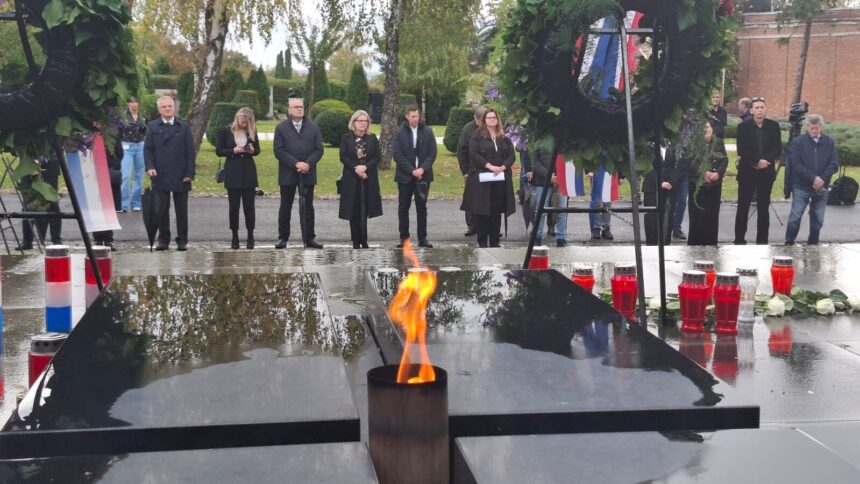
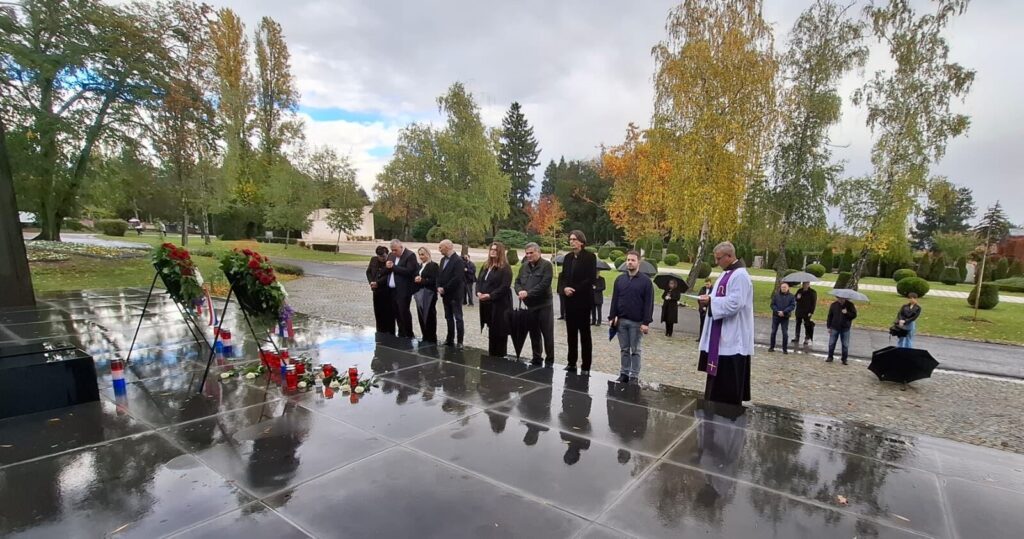
A commemorative gathering on October 24, 2025, at Mirogoj Cemetery in Zagreb was dedicated to Vojvodina Croat victims. Addressing those gathered at the commemoration on behalf of Zdeslav Milas, M.Sc., Director of the Croatian Heritage Foundation, was Prof. Vesna Kukavica.
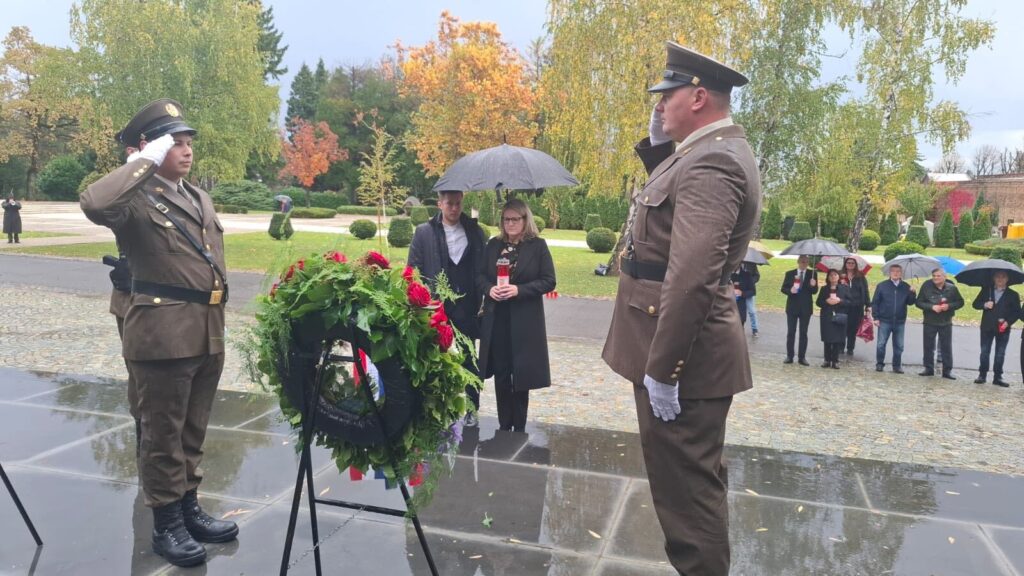
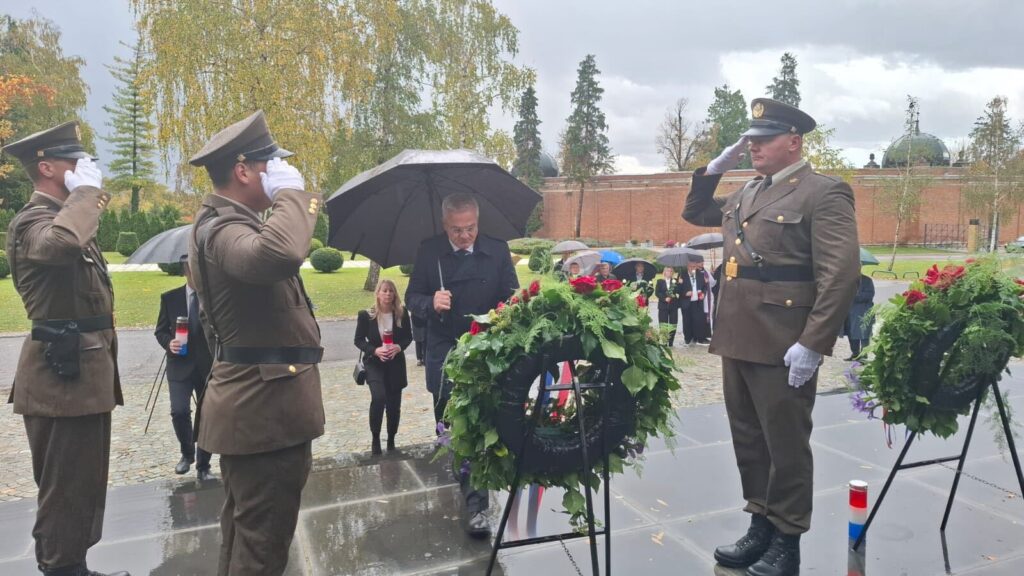
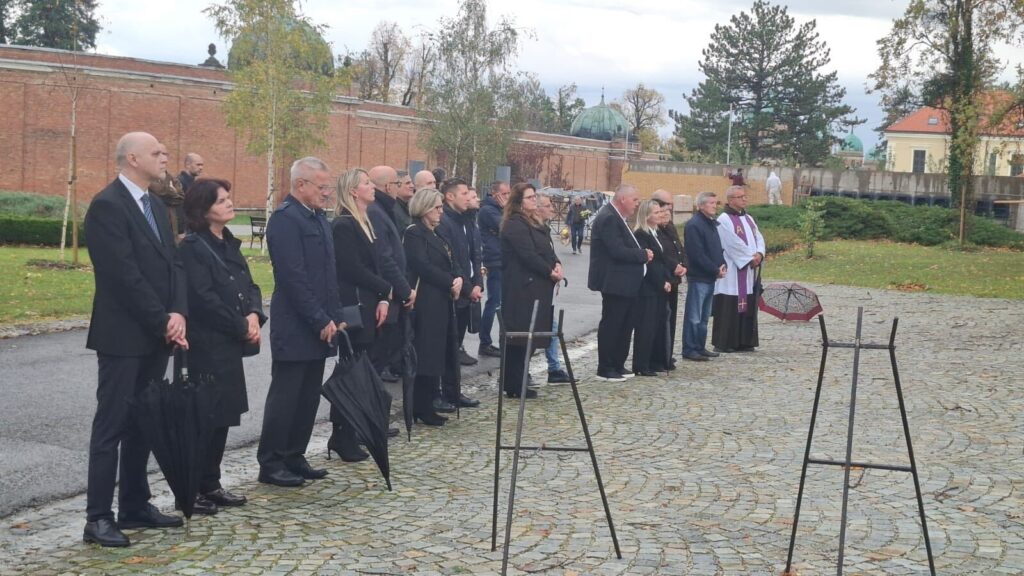
The Association of Expelled Croats from Srijem, Bačka and Banat marked the “Remembrance Day for the forcibly disappeared and missing Abjanović brothers from the village of Morović in Vojvodina”. With this commemoration, the Association aims to keep alive the memory of the tragic fate of Vojvodina Croats, who, as a result of ethnically motivated hatred, were victims of physical liquidation and persecution in the territory of Vojvodina, which was not affected by war in the 1990s. About 40,000 of them were forced to leave their homes forever; many spent time in camps and various penitentiaries in Serbia, and several dozen lost their lives or went missing. “The Remembrance Day for the forcibly disappeared and missing Abjanović brothers from the village of Morović in Vojvodina” on the occasion of the forcible taking and “disappearance” of the brothers Mato and Ivica Abjanović, was held on October 24, 2025, at the “Wall of Pain” site at the Zagreb cemetery Mirogoj; the commemoration was attended by Vesna Abjanović, daughter of Mato Abjanović, who testified about the event.
The commemoration was attended by Member of the Croatian Parliament, Ms. Jasna Vojnić, Envoy of the Speaker of the Croatian Parliament, Mr. Gordan Jandroković; State Secretary of the Central State Office for Croats Abroad, Mr. Zvonko Milas, Envoy of the Prime Minister of the Republic of Croatia, Mr. Andrej Plenković; Ms. Ana Filko, Director of the Directorate for Detainees and Missing Persons, Envoy of the Deputy Prime Minister of the Republic of Croatia and Minister of Croatian Veterans, Mr. Tomo Medved; Milan Bošnjak, Ph.D., Ex Officio Advisor for Croatian Minorities Abroad in the Central State Office for Croats Abroad; Envoy of the Minister of Foreign and European Affairs, Gordan Grlić Radman – Domagoj Knežević, Ph.D. and Prof. Vesna Kukavica, Head of the Publishing Department of the Croatian Heritage Foundation, Envoy of the Director of the Croatian Heritage Foundation, Mr. Zdeslav Milas; Mr. Saša Rajić, Deputy Ombudsman, Ms. Tena Šimunović Einwalter and numerous other dignitaries from the public life of the Republic of Croatia.
Furthermore, on this occasion, the Association highlighted the need to build an appropriate memorial in the Republic of Serbia at a genuine location for killed and expelled Croats, victims of ethnically motivated violence, since, unfortunately, there is currently no memorial in the Republic of Serbia where bereaved families can organize appropriate commemorations, which would permanently mark these sufferings and victims. Furthermore, a proper monument would prevent numerous denials of the existence of these victims, which is often heard from the highest government circles in the Republic of Serbia.
As a reminder, “Remembrance Day for the forcibly disappeared and missing Abjanović brothers from the village of Morović in Vojvodina” is a commemoration of October 23, 1991, when the brothers Mato and Ivica Abjanović were forcibly taken from their home in the village of Morović, Municipality of Šid, in Srijem in the Republic of Serbia, and “disappeared”. Namely, after he was dismissed from the agricultural estate (“Ekonomija”) in Morović, where he worked as the Director, the Croat Mato Abjanović had to travel every day to a new workplace fifty kilometers away in Lipovac, and pass through the checkpoints guarded by Serbian forces. In the meantime, death threats were repeatedly made against him. On October 22, 1991, he was warned at one of these checkpoints that “for Abjanović, there is no more passage to Lipovac”, which, for Mato, meant losing his job. The very next day (October 23, 1991), at around 6 p.m., his house was surrounded by police in vehicles with JNA markings, after which four police officers entered the yard and requested that he accompany them “for questioning at the police station in Šid”. Mato asked them to produce the arrest warrant, but they did not have one; they claimed that the document was outside, in the vehicle. After that, under the pretext of “resisting arrest”, they bound him up with wire and shoved him into the vehicle.
His brother Ivica was afraid to let him go alone, so he accompanied him. They probably both thought that they would return to their families very soon after the “informative questioning”, since they knew that they were innocent. However, the Abjanović brothers have been missing ever since; every trace of them is still lost.
The family inquired about them as much as they could (and was possible!), however, without result. Immediately, the following day, his wife, Gordana, called the police station in Šid. The head of the Šid Department of Internal Affairs, Nedeljko Makijević, denied knowing anything about Mato and Ivica, even claiming that the other side was probably “to blame” for their disappearance (alluding to the authorities in the neighboring Republic of Croatia?!). In that conversation, he claimed that “no warrant was issued for their detention” and that “they were not detained at the police station in Šid”.
The family soon received confirmation from a local named J. S. that, on the evening of October 23, 2025, he saw Mato at the police station in Šid. Nevertheless, later, fearing for his own life and the safety of his family, he denied knowing anything. The crime was committed in the area of operation of the Šid Department of Internal Affairs.
The Abjanović brothers were probably handed over to Chetniks or other paramilitary formations, which was common practice of the SDB, the JNA and the Serbian police at the time, because this was the easiest way to cover up any trace of the crime, and to deny any connection of the state and the authorities with the murders. In this case, it is more than obvious that this connection existed and that, regardless of who the executors were, the JNA and the police played a major role in the whole affair. The fate of the Abjanović brothers is still unknown, and lawsuits initiated by the family in numerous court cases have been dismissed due to “relative statute of limitations” and other similar excuses.
Text: Vesna Kukavica / Photo: Zlatko Žužić


