


On May 8 and 9, the International Conference Global Diasporas of the European Union – Croatian Diaspora in the Global Perspective was held at the Croatian Heritage Foundation in Zagreb.
Leading experts and guests of this international conference, which was organized by the Center for Croatian Diaspora Studies, discussed over two days the current and complex migrant topic given the current complex geopolitical circumstances and challenges in which the entire world finds itself, including the Republic of Croatia. The conference, co-organized by the Institute for Migration Research, the Croatian Heritage Foundation and the Faculty of Economics and Business in Osijek, aimed to analyze the current situation and, through discussions, offer solutions that would contribute to stopping emigration and encouraging the return of Croatian citizens who have left their homeland over the last twenty years. The conference was attended by prominent experts in this field, and discussions were held on immigration policies in the EU, global and European trends in relation to the migrant workforce, demographic challenges and potentials of diasporas in the 21st century, integration and assimilation processes in European countries, multiculturalism in Europe, as well as the future development of diasporas and their political rights.

The conference began on May 8, and among the dignitaries who opened this important conference was Mladen Vedriš, Ph.D. from Effectus University of Applied Sciences. In his introductory speech, he highlighted that the topic of migration is one of the burning topics of our times.
“Just as football is an interesting game, but it is played, for the most part, by individuals who are professionally prepared to play, it brings me great pleasure that Croatia has recognized institutions, such as the Central State Office for Croats Abroad, the Croatian Heritage Foundation, and especially that it has established a ministry to deal seriously with this phenomenon, together with research and professional institutions such as the Institute for Migration Research,” said Vedriš, Ph.D. The Director of the Institute for Migration Research, Marina Perić Kaselj, Ph.D., emphasized that migration not only represents a challenge, but also great potential.
“This conference aims to bring together experts and researchers from Croatia and abroad to discuss this complex issue together – the Croatian diaspora in a global perspective. And what exactly is the diaspora? The diaspora is one of the strongest driving forces in the globe and, in a certain manner, it is an important element in various strategies and policies. The diaspora is the connective tissue that serves to connect countries, regions and continents. In turn, this raises the question of how policymakers respond to the diaspora. Whether they perceive it as a partner, as an investment or perhaps as a loss. These are different approaches,” said Perić Kaselj, adding that Croatia was facing a new situation. From an emigrant country, it is now also an immigrant country. On behalf of the organizer, the Center for Croatian Diaspora Studies, the gathered attendees, high-ranking guests and experts were greeted by Marin Sopta, Ph.D. In his address, Deputy State Secretary in the Central State Office for Croats Abroad, Dario Magdić, underlined that he believes that the topic of the conference is complex since it involves the comparison of local and global examples.
“The global relationship with diasporas is increasingly coming into the public focus, and the relations of countries with their diasporas are more important than ever. However, policies towards diasporas differ among countries of the European Union and globally, depending on many factors, including historical, demographic and economic factors. Croatia holds a high place in the global perspective due to its systematic and continuous approach in relations with Croats living outside its borders,” highlighted Dario Magdić. In attendance at the opening of the conference was Ivan Šipić, Minister of Demography and Immigration, who also welcomed those gathered.
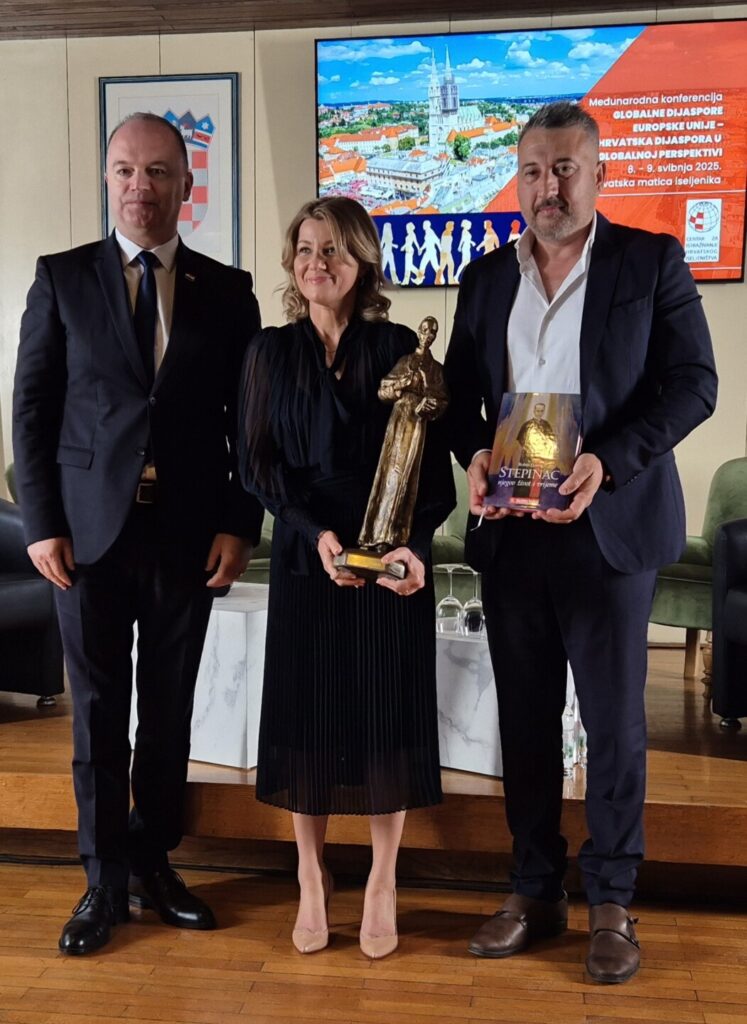
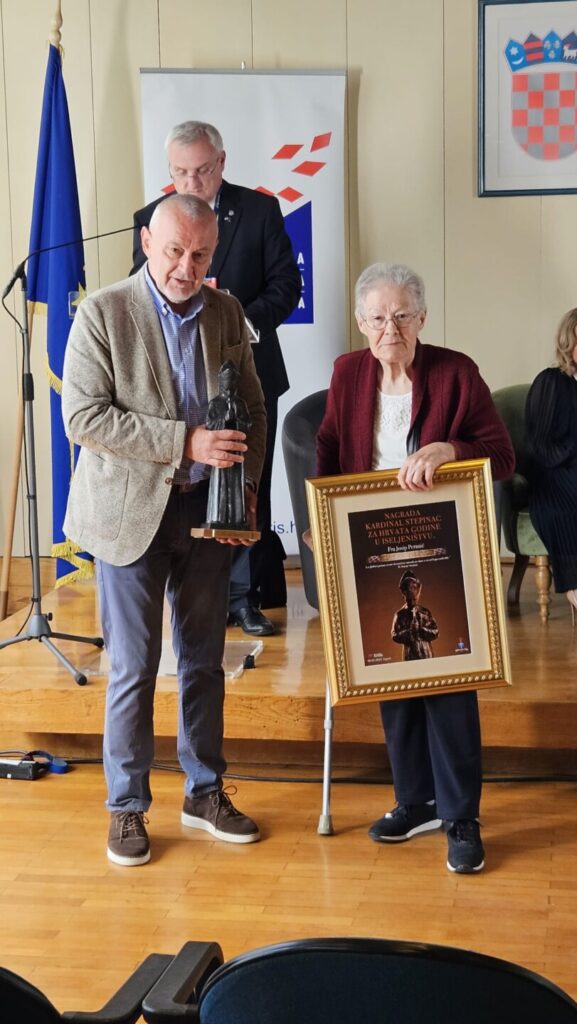
“Croats around the world enrich the culture, history and traditions of the places where Croats have integrated, where they have been accepted, where they have created added value – in the foreign country that they also consider their own, because wherever they went, they always held two flags. Symbols of belonging to their own people, but also belonging to the people of the country where they live. But a nation does not consist only of numbers, but rather what gives it its greatness is what it represents. And a Croat must, first and foremost, prove to be a true and honest person,” said Minister Šipić, who accented that the ministry is working actively through diverse demographic measures, and that it would continue in this direction. He added the interesting fact that, last year, more than 400 children of returnees enrolled in primary and secondary schools. Also in attendance from the Central State Office for Croats Abroad were Croatiana Gregurić, a special advisor for Croatian emigrant issues and Klara Kamenar, an associate in the Croatian Emigrant Projects and Programs Department. The opening ceremony was also attended by the President of the Parliamentary Committee for Croats Abroad, Member of Parliament Zdravka Bušić, M.Sc., as well as the special envoy of the Minister of Foreign and European Affairs, Vanda Babić Galić, Ph.D., Full Professor. Among the attendees were representatives of the diplomatic corps accredited in the Republic of Croatia, more specifically from Australia, Turkey, the Czech Republic, Bosnia and Herzegovina, Portugal, Romania, Kosovo, Montenegro and Hungary. Minister Šipić presented the annual Cardinal Stepinac Award to returnees Dennis and Bernadette Šimić, who, as the organizers pointed out, with their selfless efforts, contributions and charity efforts significantly contributed to the advancement of Croatia, as well as their own Croatian community in Australia.
The Diaspora – A Catalyst for Business Growth
After the introductory presentations, the conference continued with lectures by experts, moderated in the first session by Marin Sopta, Ph.D. Mr. Russell Dalgleish from the Scottish Business Network delivered a lecture on “Diaspora as the Driver for Value Creation”. Russell spoke about the strength of the diaspora network and how global diaspora communities in fact act as catalysts for business growth, investment and international trade. On the case study of the Scottish Business Network, he explained how they successfully connected Scottish entrepreneurs with opportunities worldwide. Sanja Klempić Bogadi, Ph.D. from the Institute for Migration Research in her lecture “Demographic Changes in Croatia: Challenges and Perspectives” presented part of the results of the project “How Do People Age in Croatia (DOBHR)”, funded by the European Union – NextGenerationEU. Delivering a presentation on the topic “Experiences of an Organization Gathering Members of the Diaspora” was the presenter from Belgium, Mirana Rajoharison from Alefa Diaspora Non-Profit Organizations. Furthermore, we had the opportunity to listen to a presenter from Germany, Paddy Siyanga Knudsen from M&E. She presented on the topic “Bridging Gaps in Migration Diplomacy: Diaspora as Brokers for Development”.
Exemplary Practices of Australian Multiculturalism
Also delivering a presentation at the conference was H.E. Richard Rodgers, Australian Ambassador to the Republic of Croatia, who spoke about migrations from an Australian perspective. Maria Levačić from Freie Universität in Berlin referred to the topic “From Gastarbeiter Phenomenon to Brain Drain? Dynamics and Notability of the New Croatian Diaspora in Germany”. The young graduate student of sociology spoke about the research she conducted for her master’s thesis. Maria also dedicated her lecture to the former director of the Croatian Heritage Foundation, esteemed poet Boris Maruna, opening her presentation by reciting a selection of his poems.
Croatian (E)Migrant Practices
Margareta Gregurović, Ph.D., Simona Kuti, Ph.D., Snježana Gregurović, Ph.D., Sanja Klempić Bogadi, Ph.D., and Sonja Podgorelec, Ph.D. from the Institute for Migration Research conducted the research entitled “Challenges of Integrating Foreign Workers in Croatia – Expert Perspectives”. Stjepan Šterc, Ph.D., Special Advisor to the Minister of Demography and Immigration, focused on the topic “Eternal Emigrant Dream of Returning – One Day”, while Snježana Gregurović, Ph.D. from the Institute for Migration Research dedicated her attention to the topic “Croatia’s Immigration Policy – Benefits and Risks of the Laissez-Faire Model”. Dragana Otašević, M.Sc. from the Center for Migration and Multiculturalism Policies in Podgorica shared her experience on the challenges in cooperating with the diaspora, “The Case of Montenegro and Its Emigrant Community in Latin America”. Katica Jurčević, Ph.D., Viktorija Kudra Beroš, Ph.D. and Krešo Bušić, Ph.D. from the Institute for Migration Research explored the topic of Croatian immigrants in German arrival cities. Sonja Breljak, editor-in-chief of the portal Croatian Voice of Berlin, questioned “Life in Emigration on the Example of Berlin – A Parallel World or Reality?”, enriching the conference with the practical experiences of an inventive publicist with a rich migrant experience. A presentation was also given by Kristina Posavec, Ph.D., who, together with Dora Bagić, M.Sc. from Teva Pharma, covered the topic “Challenges and Opportunities in Immigration, Employment and Integration of Croatian Returnees and Their Descendants”. The fourth conference session was moderated by lawyer and returnee Don Markušić. Along with Don, who is a returnee from Australia and a lawyer in three jurisdictions – Australia, Great Britain and Croatia, participating in the panel discussion on “Living and Doing Business in Croatia” were: musician, composer and actor James Dabney, an immigrant from the USA; young musician and rapper Mike Hoosen, an immigrant from Australia; and married couple Bernadette and Dennis Šimić, entrepreneurs and returnees from Australia. All panelists spoke honestly of their experiences and why they recently chose Croatia as their place to live. The conference continued with the gala dinner.

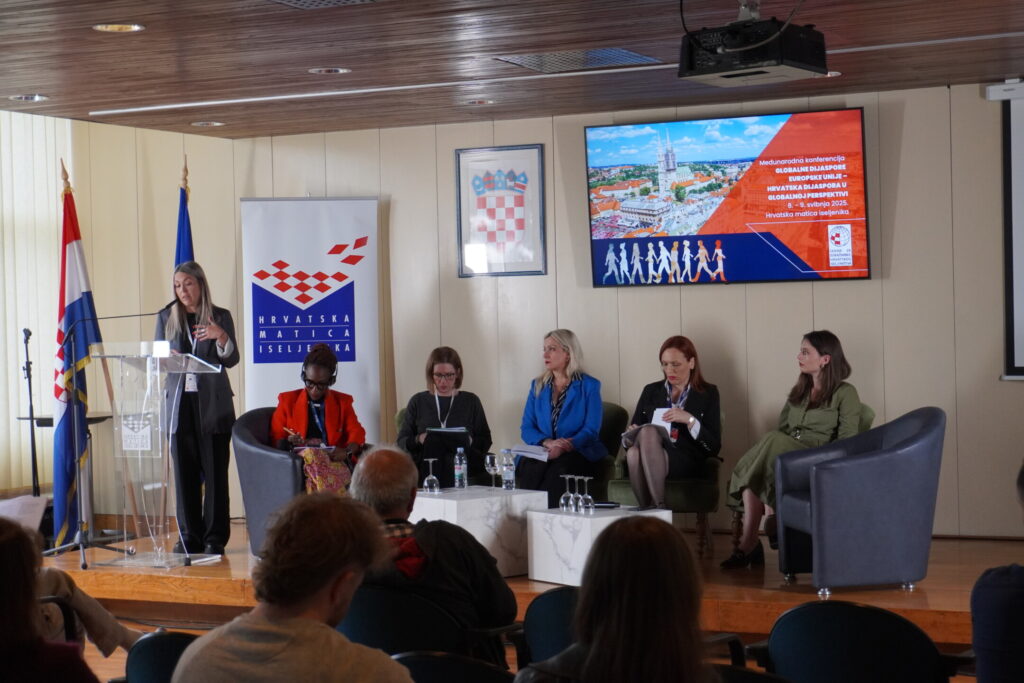


– Numerous experts and researchers participated in the two-day conference
Migration and Demographic Revitalization of Croatia
The second day began with a new set of lectures. On the agenda were numerous interesting topics. Renowned researchers Dražen Živić, Ph.D. and Sandra Cvikić, Ph.D. from the Ivo Pilar Institute of Social Sciences – Vukovar Regional Center discussed the topic “Migration and Demographic Revitalization of Croatia” on the basis of their own research projects. Attendees also had the opportunity to learn more about a personal migrant experience in Croatia shared by Saghar Manzoor from the Caritas of the Archdiocese of Zagreb. Also discussed was the measure “I Choose Croatia: Return Migration and Development in Less Developed Areas”, Tuga Tarle, Ph.D. from Matrix Croatica spoke about the topic “Metamorphoses of the Croatian Diaspora”. Overall, this conference exceeded expectations in terms of the respectable number of speakers and experts who provided interesting and inspiring answers to the current migrant phenomenology, which will certainly remain a topic of discussion long after the end of the conference. In conclusion, in several substantive sessions, i.e. sets of inventive lectures, the two-day International Conference “Global Diasporas of the European Union – Croatian Diaspora in a Global Perspective” provided an authentic description of the complex migration phenomena of our time in the European Union and particularly in the Republic of Croatia, highlighting the most successful integration practices of desirable migrant destinations of the Old Continent. Particularly beneficial among overseas migrant destinations was the presentation of exemplary practices of the Australian model of multiculturalism, with the Croatian community in Australia significantly contributing to this success. In addition to researchers, contributing to the success of the conference were emigrants with their own returnee experiences – emphasizing the benefits of the measures of the Government of the Republic of Croatia focused on the demographic revitalization of Our Beautiful Homeland and its returnee initiative for the Croatian diaspora.
Text: Željka Sablić Odrljin and Vesna Kukavica; Photo: Snježana Radoš 


